ADC Leadership Crisis: Nigerians Divided Over Nafiu Bala's Hausa-English Interview Responses
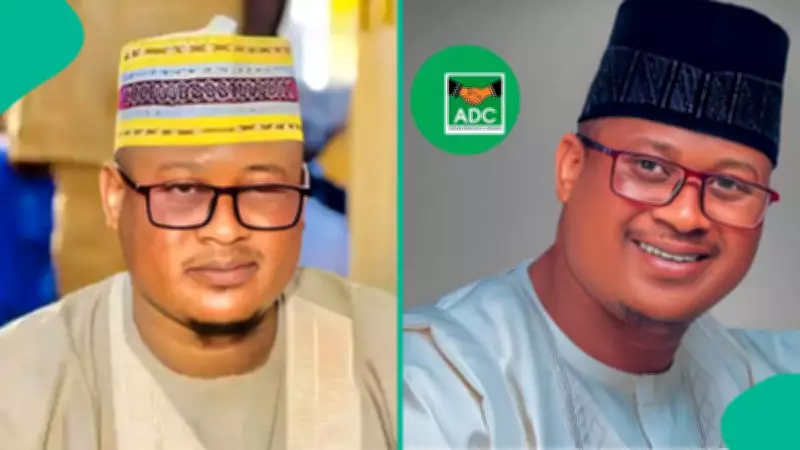
The factional National Chairman of the African Democratic Party (ADC), Nafi'u Bala Gombe, has ignited a nationwide controversy following his recent interview with Africa Independent Television (AIT). During the broadcast, Bala responded to English-language questions using a mixture of Hausa and English, drawing both criticism and support from Nigerians across social media platforms and political circles.
Mixed Reactions to Linguistic Approach
Many Nigerians have taken to various online platforms to mock Bala's pronunciation and command of the English language, questioning his suitability for party leadership. Critics argue that his inability to express himself fluently in English during public appearances raises concerns about his capacity to lead a national political party effectively. The debate has highlighted deeper questions about language proficiency requirements for political leadership in Nigeria's diverse linguistic landscape.
Professor Farooq Kperogi, a US-based Nigerian academic, commented extensively on the interview via Facebook, stating: "I just watched yet another interview Nafiu Bala Gombe granted to AIT Online. The questions came in English, but the answers came in a Hausa-English hybrid, mostly Hausa, with English subtitles doing the heavy lifting. I wonder why he didn't just commit fully to Hausa and spare us the dizzying linguistic zigzag. This young man seems to have an insatiable gluttony for self-humiliation. My previous advice that he needs basic education more urgently than he needs party chairmanship or even a career in politics still stands."
Supporters Defend Language Choice
Despite the criticism, some Nigerians have defended Bala's decision to respond in Hausa during the English interview. Supporters argue that language should not be the primary determinant of political capability or popularity, emphasizing that elections ultimately represent popularity contests where the majority's choice prevails regardless of linguistic proficiency.
Anita @hhotplate expressed this perspective clearly: "For those who are saying he can't speak English, an election anywhere in the world is a mere popularity contest; if the majority wants an imbecile, disabled, or an uneducated person to lead them, the majority will have their way. We've seen countries elect a comedian and an actor."
Ongoing ADC Internal Conflict
The language controversy occurs against the backdrop of significant internal strife within the ADC. Bala recently led a protest to the Independent National Electoral Commission (INEC) office, demanding official recognition as the legitimate ADC National Chairman. He was accompanied by ADC House of Representatives Member Leke Abejide, whose presence underscores the seriousness of the ongoing leadership dispute.
Members of the National Youth Council of Nigeria have also rallied in support of Bala's faction, amplifying calls for INEC intervention. However, in a parallel development, David Mark's ADC faction has expelled Bala, Honorable Abejide, and several others over alleged anti-party activities. This expulsion occurred during the party's national convention held on Tuesday, April 14, 2026, further complicating the party's internal dynamics.
Broader Political Implications
The ADC's internal conflicts and the resulting language debate highlight ongoing struggles within Nigeria's political landscape as the country approaches the 2027 general elections. The situation raises important questions about linguistic diversity in political communication, the criteria for political leadership, and how language proficiency intersects with democratic representation in a multilingual nation.
Some commentators have noted that the controversy reflects deeper tensions between Nigeria's colonial linguistic heritage and its indigenous language traditions. As political parties position themselves for upcoming elections, the ADC crisis serves as a microcosm of broader national conversations about identity, representation, and the evolving nature of political communication in contemporary Nigeria.