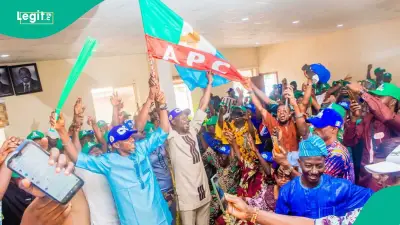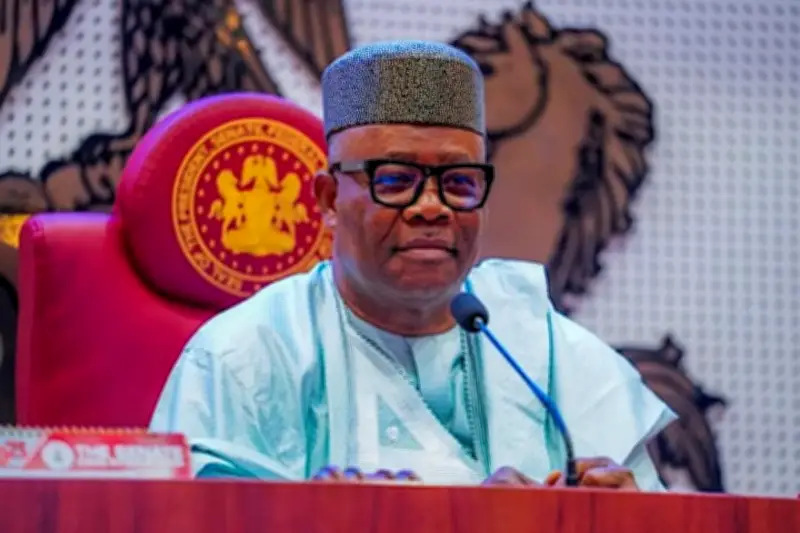
Senate President Godswill Akpabio has announced that the National Assembly may amend portions of the Electoral Act 2026 following recent political developments that have made serving lawmakers "victims" of the legislation they enacted. Speaking on Tuesday at the opening of the 2026 National Assembly Open Week and the presentation of the 10th National Assembly's Third-Year Legislative Scorecard in Abuja, Mr Akpabio noted that several senators and House of Representatives members failed to secure their parties' tickets during primaries ahead of the 2027 general elections.
Electoral Act's Unintended Consequences
Mr Akpabio acknowledged that the Electoral Act contributed to more peaceful party primaries, with fewer casualties reported across states. However, he admitted that some provisions inadvertently disadvantaged incumbents. "From even the Electoral Act that we passed, you can see not so many people were killed, if any, in many of the states of the federation during these primaries. But we shall tinker with the Act again to make sure that we are not the victims of our own actions," he said.
The Senate President did not specify which sections of the law would be amended but assured lawmakers that the review would prevent future legislators from facing similar difficulties. "I assure you that we shall tinker with it so that future members and future senators will not have difficulty going back. Because the more people with experience who come back, the more the country benefits from their activities," he stated.
Defence of the 10th National Assembly
Mr Akpabio also defended the performance of the 10th National Assembly, describing it as the most peaceful and productive legislature since Nigeria returned to democratic rule in 1999. He highlighted achievements in lawmaking, constitutional amendment, and economic reforms achieved through cooperation with the executive arm. Responding to criticism of recent legislation, including the proposed establishment of state police, Mr Akpabio emphasised that many bills underwent extensive consultations and nationwide public hearings. "People are not aware that we have worked on it for the past two and a half years. We have gone to all the regions in Nigeria. We have done public hearings across the country," he said.
He urged Nigerians to study bills before criticising lawmakers on social media. "Sometimes, before you comment on social media, take time to go through the work we have actually done. Our job here is to ensure that we make laws that will last for generations. We are not making laws for ourselves. We are making laws for the protection of Nigeria's future and for generations unborn."
House of Representatives Achievements
Earlier, Speaker of the House of Representatives Abbas Tajudeen reported that the House had received 2,747 bills since its inauguration in June 2023, the highest number recorded by any Assembly since the return to democracy. According to him, lawmakers have passed 363 bills, with 72 receiving presidential assent. Mr Abbas said the National Assembly Open Week was designed to strengthen accountability and deepen citizens' confidence in the legislature. "Openness is not a courtesy this House extends at its pleasure; it is an obligation it owes to those it serves."
State Police Bill Withdrawal
The speaker also announced that the House would withdraw the earlier version of the State Police Bill it had passed to allow consideration of a more comprehensive executive proposal transmitted by President Bola Tinubu. He explained that the executive bill, prepared by a presidential committee chaired by the Chief of Staff to the President, Femi Gbajabiamila, contains stronger safeguards and a more detailed framework for state policing. "The House will therefore recall the version it earlier passed, and accord the Executive Bill the expedited consideration that a matter of this urgency deserves," Mr Tajudeen said. He assured Nigerians that the bill would still undergo public hearings and legislative scrutiny before its final passage.
Gbajabiamila on Institutional Reform
Also speaking, Femi Gbajabiamila, a former Speaker of the House of Representatives, said that transparency, inclusion, and institutional reform remain essential to strengthening Nigeria's democracy. He urged both the executive and legislature to sustain constructive engagement while respecting the constitutional independence of each arm of government. "Constructive cooperation does not diminish legislative independence, nor does robust debate amount to institutional conflict. Our democracy is strengthened when both arms engage with mutual respect, constitutional fidelity and a clear focus on results," he said.