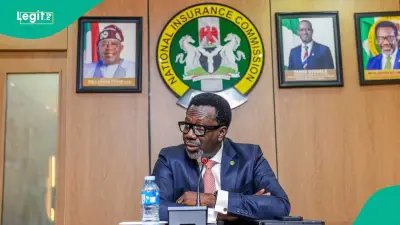
The Chairman of the Federal Civil Service Commission (FCSC), Prof. Tunji Olaopa, has asserted that Nigeria urgently requires a developmental state model and a renegotiated engagement with international development partners, particularly multilateral institutions like the World Bank and the International Monetary Fund (IMF), alongside economic diplomacy with bilateral partners. This approach, he argues, would enable the government to overcome binding constraints and developmental limitations that hinder the benefits of democratic governance for Nigerians.
The Nexus Between Democracy and Development
Olaopa, a scholar-practitioner focused on institutional reform, emphasizes that achieving this demands significant political will, ideological clarity, and nuanced theoretical and conceptual analysis. He positions his piece as a contribution to understanding Nigeria's ideological requirements for making democracy work. The conceptual link between development and democracy remains a critical discourse in political science, examining how governments can improve citizens' lives. Since the global surge of democratic aspirations, there have been high expectations that democratic governments would fulfill the social contract by transforming citizens' life prospects. However, democracy, especially in its procedural liberal form, has often been self-serving, perpetuating dependency structures in the neo-colonial global economy, particularly in Africa. Many African states have adopted liberal, majoritarian democracy that prioritizes political rights over substantive developmental needs like poverty alleviation, education, and infrastructure.
Developmental Dictatorship: A Historical Perspective
Olaopa references Guillermo O'Donnell's concept of "bureaucratic-authoritarianism," linking authoritarianism to positive development. The failure of democracy to automatically yield development has led some to consider developmental dictatorship. Examples include the Asian Tigers (Singapore, Taiwan, Hong Kong, South Korea) and Rwanda. Under Lee Kuan Yew, Singapore employed authoritarian voluntarism, co-opting citizen participation while limiting political dissent, transforming the nation into a development powerhouse. Similarly, Rwanda under Paul Kagame overcame genocide to become a top-performing African country. These states are not typical democracies but exhibit authoritarian elements that boosted development indicators. Singapore is now considered a "soft authoritarian" state with limited political contestation.
Developmental Democracy: A Hybrid Model
Political scientists have explored developmental democracy as a model combining a strong developmental state with democratic ideals. This approach rethinks democracy as a mechanism for substantive empowerment beyond procedural protocols, facilitated by a strong state implementing governance policies for infrastructural development. However, developmental democracy faces two major impediments in Africa: structural and ideological. Structurally, Africa's postcolonial predicaments have drained fundamental political mechanisms, with democracy struggling against disabling factors. Ideologically, neoliberalism, mediated by the World Bank, IMF, and the Washington Consensus, promotes free-market mechanisms, privatization, liberalization, and deregulation, reducing state intervention. The structural adjustment programs of the 1990s decimated African institutions, making developmental democracy difficult.
India's Gradualist Approach as a Lesson
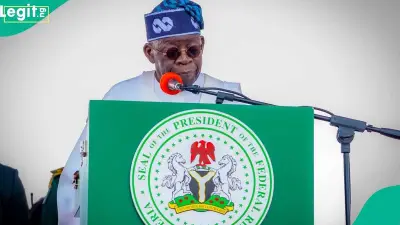
India's experience offers an alternative. Facing a balance of payments crisis in the early 1990s, India adopted IMF and World Bank conditionalities but took a gradualist approach rather than radical shock therapy. India has since paid off debts and disengaged from Bretton Woods-assisted lending. Olaopa draws three key insights for Nigeria. First, any nation seeking developmental progress must be willing to adopt pragmatic strategies, inspired by Deng Xiaoping's philosophy: "It doesn't matter if a cat is black or yellow, as long as it catches mice." Second, success stories from Japan, India, Rwanda, and the Asian Tigers underscore the importance of a strong, capable developmental state. The democratic developmental state concept captures both democratic imagination and developmental ideology, relevant for postcolonial African states aiming for global competitiveness. Third, leadership sophistication and a high decision-making quotient are crucial. Leaders in successful transformations possessed political will, ideological direction, and pragmatism. For the Tinubu administration, this signals the need to articulate a national development ideology that forges an enduring legacy.
Olaopa concludes that a democratic developmental state requires strict institutional reform, placing the civil and public service at the heart of transformation aspirations. This direction is vital for Nigeria's progress.