Obasanjo, 89, Debunks Fake Death Letter, Declares 'I Dey Kampe'
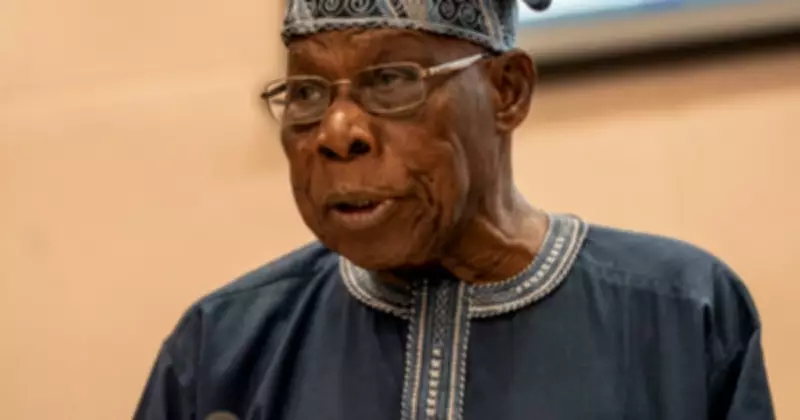
Former President Olusegun Obasanjo has publicly dismissed a fake letter circulating online that purported to announce his death, declaring that he remains in robust health at 89 years old and has no intention of departing this world anytime soon.
Fake Death Announcement Condemned
"They publish and circulate a fake paper credited to me that I am writing, giving notice of my death, pafuka," Obasanjo stated emphatically during a birthday colloquium held in Abeokuta on Wednesday. "That is their wish and surely not God's wish for me. I dey kampe as usual."
The former president, born March 6, 1937, did not specifically identify those behind the fraudulent letter but was unequivocal in his condemnation, describing them as "never-do-wells" who are merely wasting their valuable time. He expressed absolute certainty that God has additional important work for him to complete on earth and that he has been granted the necessary health and strength to accomplish these tasks.
Obasanjo issued a stern warning that those who are actively wishing for his demise would inevitably face divine consequences for their malicious intentions.
Leadership Colloquium Address
The remarks were delivered during a significant colloquium titled "Burden and Blessing of Leadership: Reflections from Global Africa to the World," which was thoughtfully organized as an integral part of his birthday ceremonies in Abeokuta, Ogun State.
Beyond directly addressing the fake death letter, Obasanjo strategically used this prominent occasion to deliver a pointed and comprehensive assessment of Africa's ongoing leadership crisis. He argued persuasively that the continent's persistent poverty, chronic instability, and systemic underdevelopment are not inevitable products of geography or colonial history but rather the direct result of deliberate and sustained governance failures.
"Africa is not a problem to be managed but a promise to be fulfilled through honest, courageous, selfless, incorruptible and transformational leadership," he declared with conviction.
Critique of African Leadership
Obasanjo warned that far too many African leaders arrive in positions of power with ambitious reform promises, only to subsequently govern primarily for personal and familial gain, systematically silence political opposition, and deliberately undermine the very democratic institutions they were elected to protect and strengthen.
"The same young reformer who promised accountability begins to silence the press, harass the judiciary, and intimidate civil society," he observed critically, highlighting a troubling pattern across the continent.
Drawing extensively on his own considerable personal experience, Obasanjo reflected thoughtfully on the immense weight of consequential decision-making that genuine leadership demands. He cited his imprisonment and near-execution under the late General Sani Abacha's brutal regime as powerful evidence of the sacrifices true leadership sometimes requires.
He also pointed to his administration's successful negotiation of the Paris Club debt relief deal and the foundational establishment of the Economic and Financial Crimes Commission (EFCC) as difficult decisions made under intense pressure that he firmly believes history has since validated.
Personal Health and Future Mission
Regarding his personal well-being and future plans, Obasanjo was characteristically unambiguous and resolute. "God has assured me He has more for me to do on earth, and He has given me the wherewithal to do it," he affirmed confidently.
Obasanjo served as Nigeria's democratically elected president from 1999 to 2007, following his earlier tenure as military head of state from 1976 to 1979. At 89, he remains one of Africa's most influential elder statesmen, continuing to engage actively in continental affairs and governance discussions.