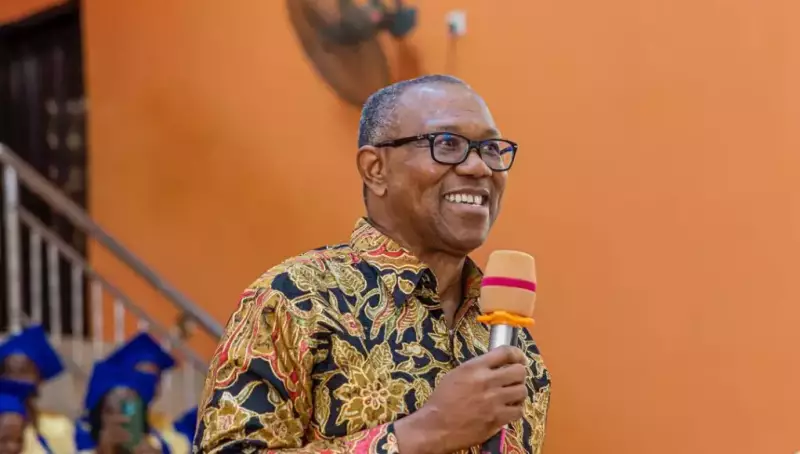
Former presidential candidate Peter Obi has launched a strong critique of President Bola Tinubu's ongoing international engagement, arguing that Nigeria cannot be effectively governed from overseas. This criticism comes as the country's Foreign Minister, Yusuf Tuggar, outlines significant economic and climate objectives at the 2026 Abu Dhabi Sustainability Week (ADSW).
Obi's Critique: A Pattern of 'Leadership by Absence'
In a statement posted on his official X (formerly Twitter) account, Peter Obi, the Labour Party's 2023 presidential flagbearer, directly questioned the President's frequent travels. Obi pointed out that President Tinubu spent a total of 196 days outside Nigeria in 2025, which amounts to more time abroad than within the country.
He linked this absence to the nation's pressing domestic challenges, including what he described as "extreme" poverty. Obi emphasised that Nigerians have not received any direct communication from the President since December 2025, noting the lack of both a New Year address and a national broadcast to calm public anxiety.
"This constitutes a pattern of what I call leadership by absence," Obi stated. He insisted that genuine governance demands physical presence, direct engagement with the media, and clear communication, rather than remote management from a foreign land.
Government's Agenda: Climate Projects and UAE Investment Deal
While Obi voiced his concerns, Nigeria's Minister of Foreign Affairs, Yusuf Tuggar, was articulating the administration's goals at the ADSW in Abu Dhabi. Speaking to journalists on January 12, 2026, Tuggar explained that Nigeria is using the summit to transform global climate commitments into concrete, fundable projects.
He stated that events like ADSW are crucial for moving beyond declarations made at the Conference of Parties (COP) and securing tangible commitments and financing. A key focus is improving Nigeria's project preparation to attract funding from global institutions and governments.
Tuggar revealed that President Tinubu, who was scheduled to address the summit, was also set to hold a pivotal bilateral meeting with the President of the UAE, Mohammed bin Zayed Al Nahyan. The major anticipated outcome is the signing of a Comprehensive Economic Partnership Agreement (CEPA).
"Investors from UAE have indicated that they want the agreement signed to ensure their investments are protected," Tuggar said. He added that the pact would also safeguard Nigerian businesses and citizens operating in the UAE.
Priority Sectors and Climate Finance
The minister highlighted specific sectors under discussion, with gas development for power generation, trade, and manufacturing at the forefront. He detailed efforts to expand gas pipelines, conduct new licensing rounds, and encourage investment in exploration to tackle the nation's electricity challenges.
On the climate front, Tuggar said President Tinubu's address would centre on Nigeria's Nationally Determined Contributions (NDCs) and the need to package climate projects as "bankable" to access global funds. "There are funds available globally, but you must convince funders that projects are viable," he remarked, stressing Nigeria's commitment to impactful and sustainable solutions.
The contrasting narratives from Obi and the government underscore a deepening debate over presidential priorities and the balance between crucial international diplomacy and the demands of domestic leadership amidst Nigeria's socio-economic difficulties.