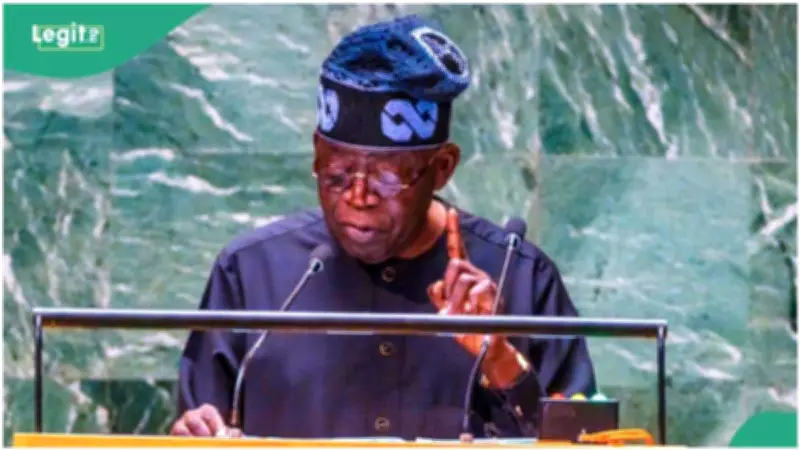
A viral claim circulating on social media that the United Nations (UN) had "technically" passed a vote of no confidence on President Bola Tinubu's administration ahead of the 2027 general election has been debunked by fact-checkers. The claim, which originated from a Facebook page named National Media Frontiers, falsely framed a UN warning about hunger in Nigeria as both a humanitarian alarm and a political challenge to Tinubu's government.
Origin of the False Claim
The Facebook post stated that the UN had raised a fresh alarm by revealing that more than 17 million Northerners had been "pushed closer to starvation" under the current All Progressives Congress (APC) administration, calling it "the worst in the history of Nigeria's democracy." The post suggested that this constituted a technical vote of no confidence in Tinubu's leadership.
What the UN Actually Said
Fact-checking platform Dubawa investigated the claim and established that the original source was a World Food Programme (WFP) press release issued on July 2, 2026. The press release documented varying levels of hunger and malnutrition affecting over 17 million Northern Nigerians and 36 million Nigerians nationwide. The WFP attributed the worsening food security situation to conflict, displacement, and shrinking humanitarian assistance—not to any specific administration's governance failures.
Oluseyi Soremekun, the national information officer at the UN Information Centre, directly addressed the vote of no confidence claim, describing it as a deliberate attempt to misinform and disinform the public. "The claim under reference is a gross misrepresentation of facts contained in a press release by WFP on July 2, 2026," Soremekun said.
Legal Basis and UN Charter
Beyond the misrepresentation of the WFP's findings, the claim also has no basis in international law. Article 2(7) of the UN Charter explicitly prohibits the organization from intervening in matters that fall within the domestic jurisdiction of its member states. Any vote of no confidence within the UN framework applies only to the organization's internal administrative bodies and carries no legal weight regarding the leadership of sovereign nations. No credible media outlet reported the alleged vote of no confidence against Tinubu's government.
Soremekun also disclosed that the UN is actively working with various partners to combat information disorder in Nigeria ahead of the 2027 general election.
Presidency Reacts to Hunger Crisis Report
Meanwhile, the presidency dismissed claims that Nigeria is on the brink of collapse and called recent hunger figures exaggerated and misleading. Presidential aide Sunday Dare said the 33 million hunger risk figure is only a projection from the Cadre Harmonisé report, not a confirmed crisis. He pointed to grain releases, agricultural programmes, and cash transfers as proof that the government is actively addressing economic challenges.
Presidential spokesman Bayo Onanuga also said he does not personally observe the level of hunger frequently described in public discussions about Nigeria's economy. He cited newly completed roads and reduced travel times in parts of Lagos and Ogun states as evidence that government policies are producing tangible results. Onanuga also pointed to the student loan scheme and low-interest credit facilities for civil servants, arguing that many Nigerians are benefiting from ongoing reforms.