
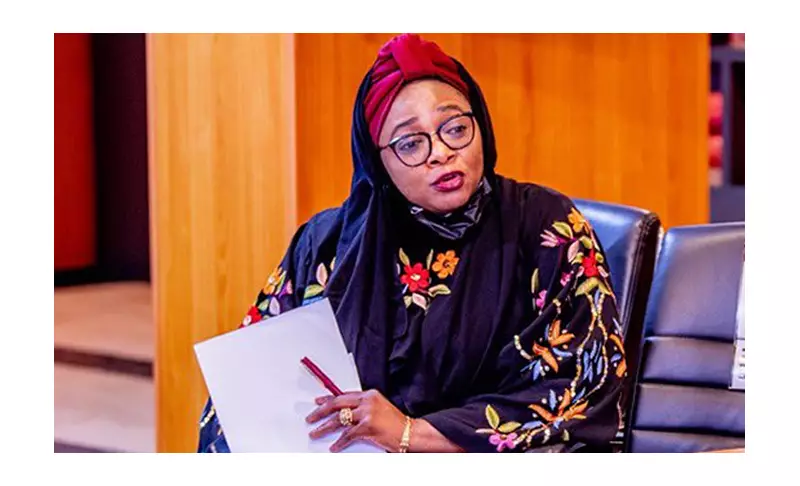
The Federal Government has made a significant financial commitment to women's development by nearly doubling the budgetary allocation to the Ministry of Women Affairs and Social Development in the 2026 Appropriation Bill.
A Historic Budgetary Increase
The ministry's allocation has seen a dramatic rise from N78.5 billion in 2025 to N154.3 billion in 2026, representing a substantial 97 per cent increase. This marks one of the most substantial boosts the ministry has received in recent years. The total allocation stands at N154,315,760,358.
A detailed breakdown reveals the strategic focus of this funding. A sum of N2.66 billion is designated for personnel costs, while N1.25 billion is set aside for overheads. The most significant portion, a massive N150.39 billion, is allocated to capital expenditure. This heavy investment in capital projects signals a renewed and intensified focus on implementing programmes and infrastructure specifically targeted at improving the lives of women and girls across Nigeria.
Stakeholders React: Cautious Optimism and Calls for Accountability
This sharp increase has raised expectations among gender advocates and civil society organisations, who now anticipate tangible improvements in areas such as women’s welfare, protection from violence, and economic empowerment. At the time of reporting, the Minister of Women Affairs, Imaan Suleiman-Ibrahim, had not issued a formal statement regarding the new allocation.
Reacting to the development, Ebere Ifendu, the National President of the Women in Politics Forum (WiPF), welcomed the increase but immediately sounded a note of caution. She emphasized that funding alone is insufficient without effective release and proper utilisation.
“It’s good, but will there be cash backing?” Ifendu questioned. “We expect intentional expenditure. Health, education, social amenities and economic empowerment should be prioritised to bring women out of poverty. The girl child must be protected, and we want to see stronger policy and legal reforms to end all forms of violence against women and girls.” She did, however, congratulate the minister and Nigerian women, expressing hope in the current leadership's commitment.
Echoing this tempered optimism, Dr. Abiola Akiyode-Afolabi, Director of the Safeguarding Centre at the University of Lagos, described the increase as a positive step. She noted the historical underfunding of the Ministry of Women Affairs.
“This is a good development, and the minister deserves commendation for her sterling negotiation skills,” she stated. “Women Affairs has often been at the lowest rung of the ladder. We hope this increase will translate into real institutional reforms for women and girls, not just figures on paper.”
The Path Forward: Implementation and Monitoring
Despite the positive news, concerns about transparency and the completeness of the allocation have emerged. An anonymous source familiar with the ministry’s operations pointed out that the budget does not fully capture all programme needs, specifically mentioning that the Nigeria for Women Project was not adequately reflected.
With over N150 billion now dedicated to capital projects, stakeholders unanimously agree that the 2026 budget presents a critical opportunity for the government. The focus must be on demonstrating measurable impact in key areas:
- Reducing gender-based violence
- Expanding access to education and healthcare for women and girls
- Strengthening social protection systems
- Creating tangible economic opportunities
As the implementation phase approaches, advocates stress that close monitoring, strict accountability, and sustained engagement with civil society will be absolutely crucial. The ultimate goal is to ensure that this unprecedented financial allocation delivers meaningful and lasting change for Nigerian women and girls, moving beyond impressive figures to create real-world progress.




