In a significant move to fortify the nation's frontiers, the Nigeria Customs Service (NCS) and the Nigeria Security and Civil Defence Corps (NSCDC) have reinforced their partnership. This enhanced collaboration aims to decisively tackle smuggling activities and bolster security along the border regions of northeastern Nigeria.
Strategic Meeting in Yola Seals Enhanced Partnership
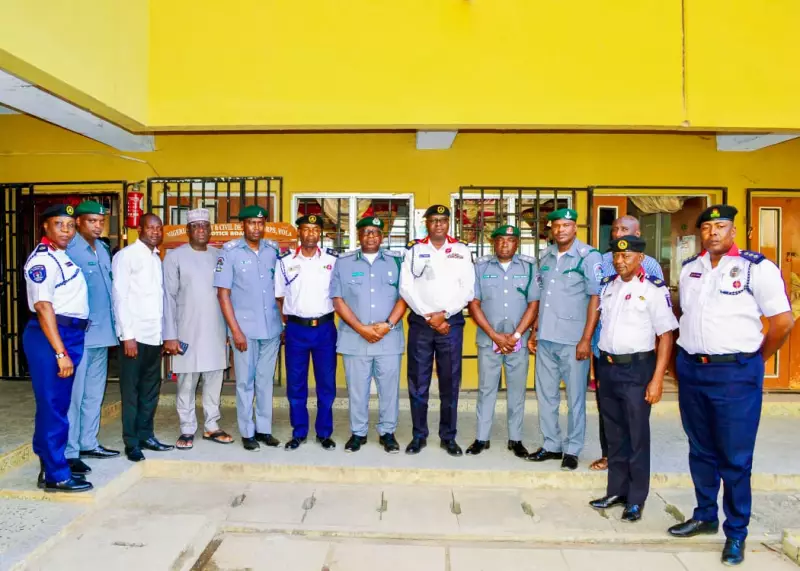
The renewed commitment followed a strategic courtesy visit on 5 January 2026. The Customs Area Controller for the Adamawa/Taraba Area Command, Comptroller Mohammed Tako, met with the NSCDC State Commandant, Idris Bande, at the latter's office in Yola.
The high-level discussion centered on deepening operational synergy in critical areas. These include security, public safety, and comprehensive border management across Adamawa and Taraba states. Tako emphasized that the engagement was vital to solidify the existing working relationship between the two agencies.
He stressed that effective border control is fundamentally dependent on sustained inter-agency coordination. The NCS, he affirmed, remains unwavering in its commitment to work hand-in-hand with sister security organizations to fulfill its statutory duties.
Unified Front Against Border Crimes
In his response, Commandant Idris Bande lauded the Nigeria Customs Service as a strategic partner in safeguarding national security. He assured the visiting delegation of the NSCDC's full readiness to provide necessary tactical support to customs operations, particularly in the realms of border protection and management.
Bande highlighted that security agencies in Adamawa State operate as a unified front. He noted that the full integration of Customs into joint security efforts within the state has significantly improved operational outcomes in recent years.
Recent Seizures Underscore the Challenge
The urgency of this strengthened alliance is underscored by recent interceptions made by the command. In January 2026, authorities announced the seizure of more than 50,000 litres of premium motor spirit (PMS) suspected to be smuggled across border routes.
The petroleum products were discovered packed in 1,868 jerry cans, with a duty-paid value estimated at ₦58.1 million. Customs officials attributed these seizures to intelligence-led operations conducted at various locations.
During the same period, the command also reported the confiscation of bales of used clothing, a category of goods explicitly prohibited under Nigerian law. These actions are part of a broader strategy to curb the inflow and outflow of all forms of contraband along the porous borders.
Customs authorities have consistently identified the smuggling of petroleum products and other banned goods as a major challenge, especially in regions with extensive and difficult-to-patrol border routes.
Nationwide Trend of Inter-Agency Cooperation
This development in the northeast reflects a nationwide trend. Across Nigeria, various Customs area commands have intensified cooperation with sister agencies in recent months.
For instance, the Western Marine Command in Lagos has recorded significant seizures of contraband, including narcotics and food items, during joint operations. Seized drugs are routinely handed over to the National Drug Law Enforcement Agency (NDLEA).
Similar inter-agency coordination meetings have also been reported in states like Oyo, Osun, and Katsina, where Customs officials have engaged with the NSCDC and other security services to create a more formidable network against economic sabotage and border crimes.