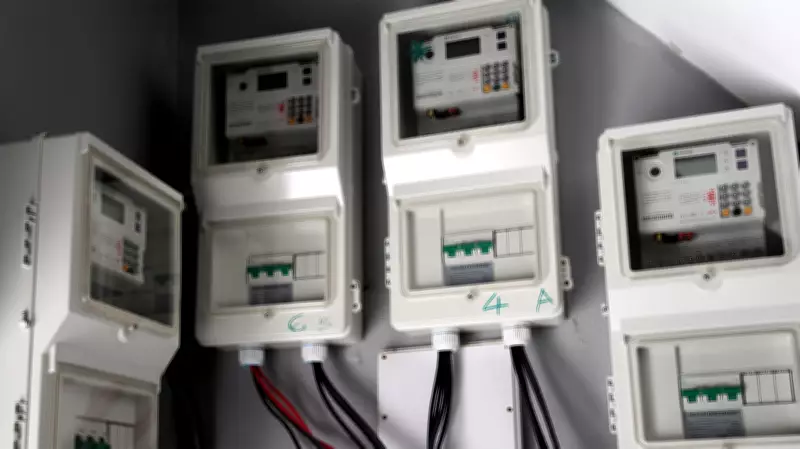
Meter Asset Providers (MAPs) and Local Meter Manufacturers/Assemblers (LMMAs) have raised alarm over what they describe as the growing institutionalization of illegal extortion by officials and management of some Electricity Distribution Companies (DisCos). They have called for urgent intervention by regulators and relevant government authorities.
Joint Statement Highlights Concerns
In a joint statement, the operators said they were compelled to bring the issue to the attention of the Nigerian Electricity Regulatory Commission (NERC), State Electricity Regulatory Commissions (SERCs), the Presidential Metering Initiative (PMI), and other stakeholders. They warned that the trend threatens the stability of Nigeria’s metering value chain.
The statement read in part: “We, the concerned Meter Asset Providers (MAPs) and Local Meter Manufacturers/Assemblers (LMMAs), wish to bring to the attention of the Nigerian Electricity Regulatory Commission (NERC), State Electricity Regulatory Commissions (SERCs), the Presidential Metering Initiative (PMI), relevant government authorities, industry stakeholders, and the general public, the growing institutionalisation of illegal extortion by officials and management of some Electricity Distribution Companies (DisCos) against operators in the metering value chain.”
Allegations of Unofficial Payments
They alleged that operators are being compelled to make unofficial payments at virtually every stage of the metering process, thereby significantly increasing operational costs and creating inefficiencies. According to them, MAPs and LMMAs are forced to pay from MAP accreditation, participation on the NERC bidding portal, meter delivery to DisCo-designated stores, portal uploads of meters, meter issuance to installers, meter installation and commissioning processes, and even customer utility account creation by the DisCo.
The groups stressed that such practices are no longer isolated incidents but have become entrenched in parts of the system, with financial demands ranging between N4,000 and N10,000 per meter under both the MAP and Meter Asset Financing (MAF) schemes.
Impact on DISREP Scheme
The operators also expressed concern that the Distribution Company Metering (DISREP) scheme might not be immune to similar practices, alleging that some officials have introduced processes that enable round-tripping of meters. They warned that such actions distort the market, worsen existing financing challenges, and create an uneven playing field for legitimate operators.
The statement further highlighted the difficult position faced by MAPs and LMMAs, noting that resisting such demands could jeopardize their business operations. They emphasized that the burden of these unofficial costs ultimately falls on electricity consumers, either directly or indirectly, thereby undermining affordability and slowing progress in closing Nigeria’s metering gap.
Consequences for Consumers and Industry
According to the operators, every unofficial cost introduced into the metering value chain is ultimately borne by the Nigerian consumer, either directly or indirectly. They added that the situation, if left unchecked, will continue to keep meter costs unnecessarily high, frustrate investment in local meter manufacturing and assembly, undermine the objective of fair competition, and slow down the Federal Government’s commitment to closing the metering gap in Nigeria.
The groups noted that MAPs and LMMAs have played a critical role in advancing metering deployment since the introduction of the MAP scheme in 2019.