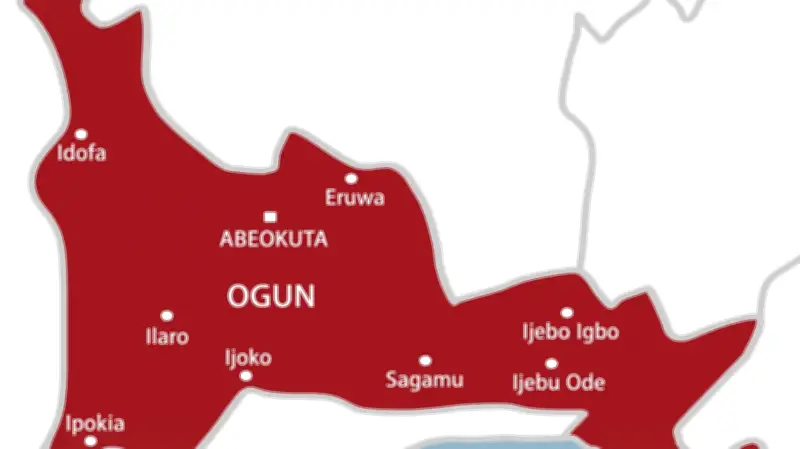
Ogun State Government has revealed that more than 200 residents, including students and teachers, have been affected by mysterious gas outbreaks reported in schools and communities across Ijebu-Ode. Preliminary investigations suggest that the emissions may be linked to geological activity beneath the ground along a suspected fault line passing through parts of the town.
Commissioner's Statement
Commissioner for Environment, Hon. Ola Oresanya, made the disclosure during an appearance on Frontline, a current affairs programme on Eagle 102.5 FM, Ilese-Ijebu. Oresanya stated that investigators have ruled out several earlier suspected sources and are now focusing on underground geological formations as the most likely cause of the unusual gas emissions.
He noted that scientific analyses, geological investigations, and environmental monitoring have identified a common pattern linking all locations where the gas incidents have occurred. The affected schools and communities appear to be situated along a linear subsurface corridor, indicating a shared underground route through which gases may be migrating to the surface.
Geological Investigations
Specialists are currently assessing whether the emissions were caused by tectonic processes associated with movements in the Earth's crust. Such movements can create fractures that allow naturally trapped gases to migrate upward. Oresanya said that available scientific literature and geological evidence support the theory that the gases may be emerging from deep underground formations.
The gas emission crisis has generated widespread concern across Ijebu-Ode in recent months following repeated incidents involving students and teachers. More than 200 persons are reported to have been affected in three separate episodes recorded over the last two months.
Timeline of Incidents
- First incident: Occurred in April at Our Lady of Apostles Secondary School, where dozens of students and staff reportedly suffered respiratory discomfort after inhaling an unusual chemical odour.
- Second incident: A more severe episode was recorded on May 15 when methane concentrations reportedly reached dangerous levels and spread to neighbouring schools.
- Third incident: The latest outbreak occurred in June, with dozens of students receiving medical attention after experiencing dizziness, nausea, and fainting spells.
Although all affected persons were treated and discharged, the repeated incidents triggered public anxiety and intensified demands for a thorough investigation.
Gas Composition and Precautions
Environmental experts have determined methane to be the primary gas present in the emissions. Laboratory tests also detected traces of hydrogen sulphide in the area. Oresanya explained that methane is a naturally occurring gas commonly trapped beneath the earth's surface, while hydrogen sulphide can form in underground environments where oxygen is scarce. Both gases may seep to the surface through cracks and fractures in geological structures.
As a precaution, the Ogun State Government has directed the suspension of gas pipeline operations within the affected zone. The commissioner clarified that the move was not prompted by any indication of pipeline failure but was aimed at eliminating all potential sources as investigations continue. Halting pipeline activities will allow authorities to conclusively determine whether the energy infrastructure played any role in the incident.