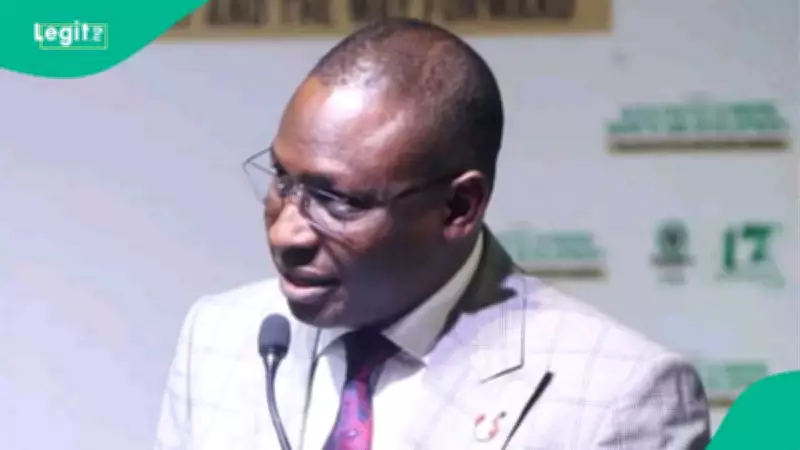
The Chairman of the Economic and Financial Crimes Commission, Olanipekun Olukoyede, has raised concerns over the alarming rate of cybercrime involvement among Nigerian university students. He stated that approximately six out of every ten undergraduates are engaged in internet fraud, describing the trend as a severe threat to the nation's future development.
EFCC Chairman Speaks at University Conference
Olukoyede made these remarks at the 8th Biennial Conference of the Committee of Pro-Chancellors of State-Owned Universities held in Kano. He emphasized the urgent need for intervention from education stakeholders to address the growing menace. According to a report by Daily Trust, Olukoyede said, "My research in the last one year has shown that about six out of 10 students in our universities are into cybercrime. It is a very disturbing situation."
Extent of Cybercrime Among Students
The anti-graft agency boss disclosed that many suspects arrested during cybercrime operations are undergraduates. Some cases even involve attempts to compromise academic processes, as reported by Punch. Investigations have also revealed systemic weaknesses within universities, including lapses in oversight and governance. Olukoyede cited a recent operation in Lagos where hundreds of suspects linked to an international fraud network were arrested, with many being students.
Emergence of Dangerous Trends
Olukoyede warned about the rise of more dangerous cybercrime variants, such as "Yahoo Plus," which combines internet fraud with ritual practices. He urged universities to strengthen internal controls and enhance collaboration with law enforcement agencies. He stated, "A university that lacks financial accountability cannot credibly train future professionals. The integrity of our universities is a matter of national security."
Recommendations to Tackle Cybercrime
The EFCC chairman recommended the use of technology to improve transparency, including artificial intelligence tools to detect fraud, monitor transactions, and protect academic systems. He emphasized that such measures should complement human supervision rather than replace it, calling for stronger investment in digital infrastructure and cybersecurity capacity.
Related Developments
In a related development, the EFCC declared Timipre Sylva, a former Minister of State for Petroleum Resources and former Bayelsa State governor, wanted over an alleged case of conspiracy and dishonest conversion of $14,859,257. The money was reportedly part of funds injected by the Nigerian Content Development and Monitoring Board into Atlantic International Refinery and Petrochemical Limited for refinery construction.
Additionally, former Attorney General of the Federation Abubakar Malami called on the EFCC chairman to recuse himself from investigating Malami, claiming a witch-hunt over his defection from the ruling APC to the ADC.