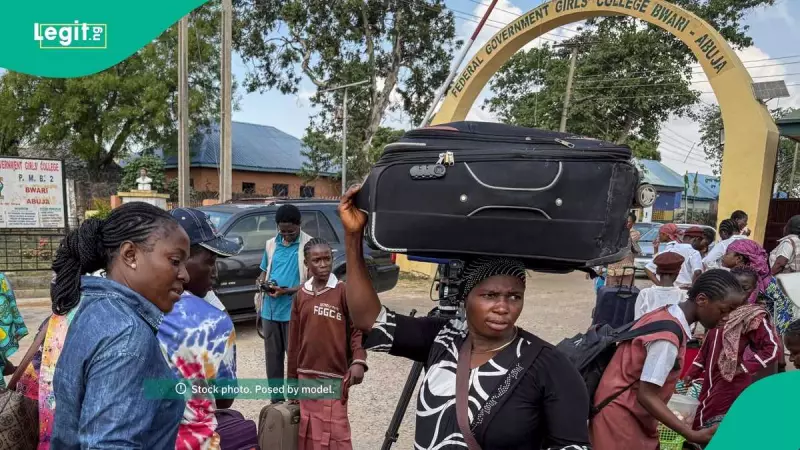
In a stark warning, peace and conflict researcher Lekan Olayiwola has drawn urgent attention to the escalating crisis of schoolchildren abductions in high-risk Nigerian states. He argues that the combination of community vulnerabilities, inadequate school infrastructure, and critical security gaps is placing the nation's future in grave danger.
The Alarming Geography of Fear and Vulnerability
Instead of carrying Nigeria's future in their schoolbags, children are being forcibly taken into forests, used as bargaining chips. This trend represents more than just crime; it is a deep indictment of the national conscience, leaving families shattered, communities paralyzed, and the country's credibility in tatters.
The threat follows clear patterns linked to geography, infrastructure, and governance. Kaduna, Zamfara, Niger, Kebbi, Katsina, and Sokoto are currently at the epicentre of high vulnerability. Data reveals a devastating scale: Kaduna State recorded 518 schoolchildren abducted between 2018 and 2024, while Zamfara recorded 476 in the same period. This means nearly a thousand children were taken from just two states in five years.
Most attacks target isolated rural boarding schools, far from security posts. Forest corridors, like those in Kebbi where the recent Maga abduction occurred, offer tactical cover for criminal networks. Compounding the danger, early-warning systems are virtually absent. UNICEF reports that only 37% of schools in the ten most conflict-affected states have functional early-warning systems, with rates plummeting to 25–26% in Kaduna and Sokoto.
Beyond High-Risk Zones: A Nationwide Threat
States with moderate vulnerability, like Niger and parts of Katsina, are also at severe risk. The 2025 mass abduction of 303 students and 12 teachers in Niger State proved that catastrophic events can happen anywhere policy implementation fails. Here, the problem is not a lack of policy but a crippling lack of coordination among agencies like the police, military, and NSCDC under the Safe Schools Initiative.
Even regions with lower recorded attacks are not safe. Complacency born from low public fear often leads to underinvestment. Many schools in these areas lack basic protections: perimeter fencing, emergency drills, trained guards, or communication equipment, leaving them exposed.
The Deep Human and National Cost
The impact of each abduction extends far beyond statistics. Families are devastated financially and emotionally, often forced to sell assets like farmland and livestock to pay ransoms, incurring debts that last for years. Trauma becomes a generational inheritance, with parents suffering chronic anxiety and siblings developing a fear of school.
Communities lose their social and economic anchors. After an attack, parents withdraw children, teachers seek transfers, and villages begin to depopulate. At the national level, this insecurity worsens Nigeria's out-of-school crisis, fuels child marriage, and pushes boys toward exploitative informal economies. Ultimately, trust in the state collapses when citizens see that abductors consistently arrive before security agents.
Three Actionable Pathways to Safety
Olayiwola proposes three concrete, actionable solutions to revamp school security:
1. Build Community-Driven Security Ecosystems: Leverage local knowledge by establishing School-Community Safety Cells for real-time intelligence. This involves deploying low-tech alert tools like solar-powered sirens and walkie-talkies, and providing micro-grants for communities to maintain fencing and lighting.
2. Upgrade 1,000 Highest-Risk Schools in 12 Months: Launch a targeted national emergency plan to fortify boarding schools in high-risk Local Government Areas. This includes installing fencing, lighting, and alarms, and deploying trained School Protection Officers (SPOs) from the NSCDC to each high-risk school.
3. Fix the Coordination Mess: Establish a unified command for school emergencies. Create state-level Safe Schools Joint Operations Desks, introduce a single toll-free rapid response number for school threats, and standardize 90-second alert protocols to eliminate bureaucratic delays.
Rebuilding school safety, Olayiwola concludes, is a civic contract and a test of Nigeria's conscience. It requires shifting from protection as a technical fix to protection as a shared civic ethic. By aligning community assets, intelligence networks, and institutional frameworks with urgency and ethical purpose, Nigeria can transform its schools from targets back into sanctuaries, reclaiming not only its children but its national future.