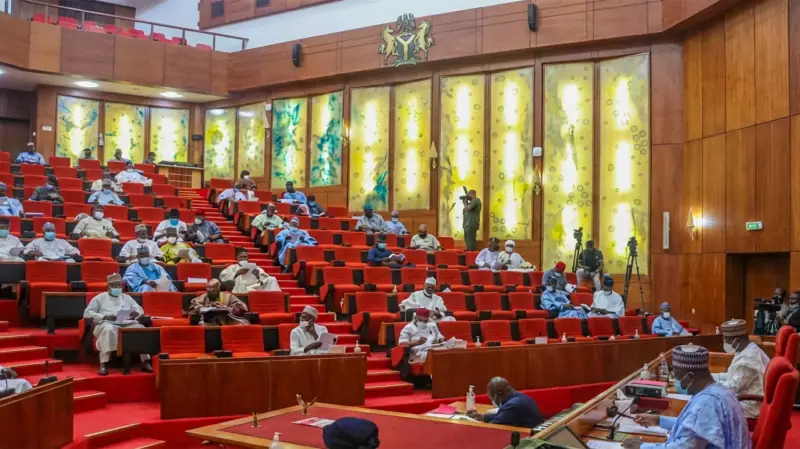
In a critical move to address a decade of failure, the Nigerian Senate has summoned the Minister of Finance, Wale Edun, and other key cabinet members. The summons is over the shocking collapse of the $30 million Safe School Initiative funding framework, a program born from national tragedy.
A Decade of Terror and Failed Promises
The initiative was launched as a direct response to one of Nigeria's darkest hours: the abduction of 276 girls from the Government Secondary School in Chibok, Borno State, on April 14, 2014. That attack brutally exposed the vulnerability of schools and the government's inability to protect its youngest citizens. The then administration of Goodluck Jonathan, with international and private sector backing, announced the multi-million dollar program. Its goals were clear: fortify schools, provide security, establish early-warning systems, and restore parents' faith in education.
Yet, more than 1,680 schoolchildren have been kidnapped in the eleven years since, with over 180 educational facilities attacked. The horror has spread far beyond Chibok, with mass abductions recorded in Zamfara, Yobe, Niger, Kaduna, and most recently in Kebbi and Niger states. Each new incident brings familiar rituals—official visits, condemnations, and prayers—but the fundamental insecurity remains. The assailants, not the schools, have grown more hardened.
Where Did the Money Go? The Senate Demands Answers
Chaired by Senator Orji Uzor Kalu, an ad hoc committee is now investigating the use of all funds since 2014, including the reported N144 billion allocated under various funding windows. Senator Kalu has vowed to track every naira and dollar, but Nigerians have heard such promises before. The committee faces urgent questions: How were the funds actually spent? Did ghost schools receive upgrades? What security deployments were made, and why have they failed so consistently?
The structural neglect is glaring. A Senate investigation revealed that more than 42,000 primary and secondary schools in northern Nigeria lack perimeter fencing, a basic security measure. Specific data shows 4,270 secondary schools across 21 northern states and the FCT are unfenced, with Bauchi (574), Benue (447), and Kano (500) among the worst. Even more damning is the finding that 30 of Nigeria's 36 states have not implemented the Safe School proposal at all, leaving children in those states utterly exposed.
Coordination Chaos and the Path Forward
The initiative was doomed by a fragmented, uncoordinated structure from the start. Responsibility is split between the Finance and Education ministries, the Defence ministry, the Nigeria Security and Civil Defence Corps (NSCDC), and state governments who control school infrastructure but lack security power. This "cacophony of overlapping responsibilities" has bred chaos, not coordination, resulting in slow responses and unchecked attacks.
The Senate committee has a tight four-week window to audit eleven years of failure. Its mission must go beyond political theatre. It must clarify a single line of accountability for school security, compel all state governments to act, and propose robust, real-time monitoring systems that link schools directly to security forces. Most importantly, it must deliver concrete, actionable plans—not just another report.
Ultimately, schools cannot be islands of safety in an insecure nation. The false and dangerous idea that "education is a scam" is gaining traction among a disillusioned youth. The Senate's probe is a chance to prove that the state can protect its future. The nation watches, hoping this inquiry will finally replace words with action and make classrooms truly safe for learning once more.