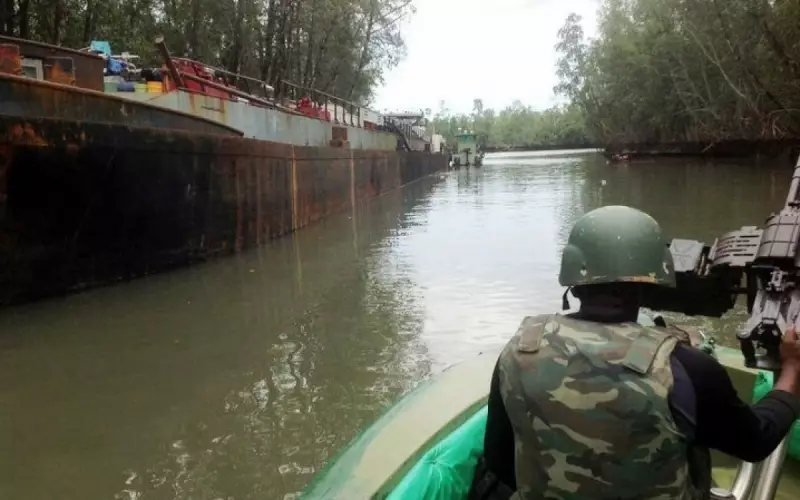
In a decisive move to safeguard Nigeria's vital oil infrastructure and ramp up national output, the Nigerian Navy has officially commenced Operation Delta Sentinel. This major maritime security campaign is designed to enhance surveillance and drastically reduce incidents of crude oil theft in the Niger Delta region.
Launch and Strategic Objectives
The new operation was formally inaugurated at the Nigerian Navy Ship (NNS) Pathfinder Jetty in Port Harcourt, Rivers State. It takes over from the previous Operation Delta Sanity II and is a cornerstone of the Federal Government's strategy to revitalize the oil and gas sector.
Rear Admiral Sulieman Ibrahim, the Flag Officer Commanding the Central Naval Command and Commander of Task Group 26.1 for Operation Delta Sentinel, outlined the plan. He stated that the operation will run for an initial period of one year, with its performance subject to a review every 90 days for possible renewal.
Rear Admiral Ibrahim emphasized that this initiative marks a critical step in the Navy's relentless mission to protect Nigeria's economic lifelines, foster growth, and ensure lasting peace in the Delta. He reaffirmed the Navy's unwavering commitment to denying criminals any freedom of action within the nation's maritime domain.
Driving Towards Ambitious Production Goals
Operation Delta Sentinel is intrinsically linked to Nigeria's ambitious target of achieving a crude oil production level of 2.5 million barrels per day (bpd) by 2027. By securing the pipelines and waterways against theft and vandalism, the Navy aims to create a stable environment conducive to increased exploration and production activities.
TotalEnergies Restructures Nigerian Portfolio
In a related development in the energy sector, TotalEnergies has announced a significant divestment. Its subsidiary, TotalEnergies EP Nigeria, has signed a Sale and Purchase Agreement (SPA) with Vaaris for the sale of its 10% non-operated interest in the Renaissance Joint Venture.
The Renaissance JV, which succeeded the SPDC JV, involves several partners:
- NNPCL (55% interest)
- Renaissance Africa Energy Company Ltd (30% interest and operatorship)
- TotalEnergies EP Nigeria (10% interest)
- Agip Energy and Natural Resources Nigeria (5% interest)
This joint venture holds 18 licences across the Niger Delta. The deal with Vaaris covers TotalEnergies' 10% stake in 15 of these licences, which are mainly oil-producing. In 2025, the company's share of production from these assets was approximately 16,000 barrels of oil equivalent per day.
A notable aspect of the transaction involves three gas-focused licences: OML 23, OML 28, and OML 77. While TotalEnergies will transfer its 10% participating interest in these licences, it will retain full economic interest in them. These assets are crucial, currently supplying about 50% of the gas feedstock for Nigeria LNG.
The completion of this divestment is pending the fulfilment of standard conditions, including necessary regulatory approvals from Nigerian authorities.
Implications for Nigeria's Energy Sector
The launch of Operation Delta Sentinel and TotalEnergies' portfolio adjustment signal a period of active transformation in Nigeria's oil and gas landscape. The Navy's heightened security posture is a direct response to the massive losses incurred from oil theft, which have crippled production and government revenue for years.
Simultaneously, the divestment by international oil companies like TotalEnergies from certain onshore and shallow-water assets is part of a broader trend. These companies are refocusing their investments, often creating opportunities for capable indigenous firms to acquire and manage these assets, potentially leading to new operational dynamics in the Niger Delta.
The success of Operation Delta Sentinel will be closely watched, as its effectiveness in curbing theft is directly tied to Nigeria's ability to meet its 2.5 million bpd production target and stabilize its economic fortunes.