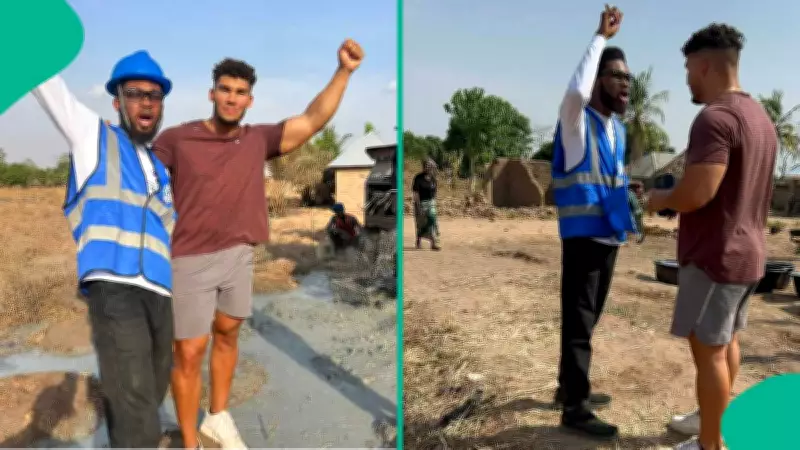
Nigerian Driver Reveals Strange Surveillance During Missionary Alex Barbir's Visit
A Nigerian water specialist and entrepreneur has come forward with a disturbing account of surveillance he experienced while driving American missionary Alex Barbir during his humanitarian work in Nigeria. Ichor Joshua, who accompanied and drove Barbir, disclosed that his SUV was persistently followed by unidentified vehicles throughout their journey.
Unusual Observation During Humanitarian Mission
Ichor Joshua shared his experience through a detailed Facebook post on Sunday, April 5, 2026, revealing that the surveillance continued even after he had dropped off the American missionary. Joshua described how strange cars consistently trailed his vehicle during the short period he transported Barbir through Nigeria.
"For the short time I moved with and drove Mr. Barbir in Nigeria, my SUV was constantly followed by strange cars even when I was no longer with him," Joshua stated in his social media post. He expressed concern that this surveillance represented broader efforts to suppress truth and maintain control over the populace.
Background on Alex Barbir's Controversial Presence
Alex Barbir, an American humanitarian and founder of Building Zion, has been actively involved in aid work within Nigeria's Middle Belt region. His organization focuses on providing assistance to communities affected by various crises. However, Barbir has faced significant criticism from some Nigerian quarters who have accused him of being a foreign spy operating under the guise of missionary work.
The American missionary has also drawn attention for his vocal criticism of President Bola Tinubu's administration and his persistent commentary on the ongoing terrorist and herdsmen attacks that have devastated northern communities. These factors have contributed to the heightened scrutiny surrounding his activities in Nigeria.
Driver's Interpretation of Events
In his Facebook statement, Joshua framed the surveillance as evidence of systemic efforts to silence truth-tellers and maintain oppressive control. "Evil is working so hard in Nigeria to silence the truth and keep the faithful under bondage," he declared, while asserting that "truth can never be hidden under the sun."
Joshua further emphasized resilience in the face of perceived threats, stating: "Neither are we people you can easily kill (rooted and bathed in the word of the spirit). Until bravery stares this evil in the face and challenges it, we may be very far from a solution."
Public Reactions to the Revelation
The disclosure has sparked varied responses across social media platforms, with many Nigerians expressing concern about the implications of such surveillance:
- Kadoon's Creativity commented: "You're absolutely right sir, until we bravely stare at evil in face, may God continue to protect you all."
- Kpeibee Samuel Sesugh observed: "Evil has deeply rooted in this country. There's a lot of work to do."
- Genesis Ogbaji offered spiritual support: "God pass them."
- Sefa Ter expressed broader political concerns: "Nigeria is a failed state and cannot work the earlier we know the better for us. The days of preaching one Nigeria are over."
Broader Context of US-Nigeria Relations
This incident occurs against the backdrop of ongoing diplomatic discussions between the United States and Nigeria regarding religious freedom and security concerns. The US Embassy recently announced the establishment of a Joint Working Group with Nigerian authorities to address violence reduction, security strengthening, and perpetrator accountability.
In a statement released on January 29, 2026, the US Mission Nigeria emphasized that both countries are collaborating toward "a safer future where all Nigerians can practice their faith freely." This diplomatic initiative follows President Trump's designation of Nigeria as a Country of Particular Concern regarding religious freedom issues.
Implications for Humanitarian Work in Nigeria
The surveillance allegations raise important questions about the operational environment for international humanitarian workers in Nigeria. While foreign aid organizations play crucial roles in addressing various crises, their activities sometimes attract suspicion from both government authorities and local populations.
This case highlights the delicate balance between providing necessary assistance and navigating complex political and security landscapes. The experience shared by Ichor Joshua underscores the challenges faced by both local collaborators and international workers operating in sensitive regions of Nigeria.
As Nigeria continues to grapple with security challenges in multiple regions, incidents like these contribute to ongoing discussions about transparency, accountability, and the protection of both citizens and foreign workers engaged in humanitarian efforts.