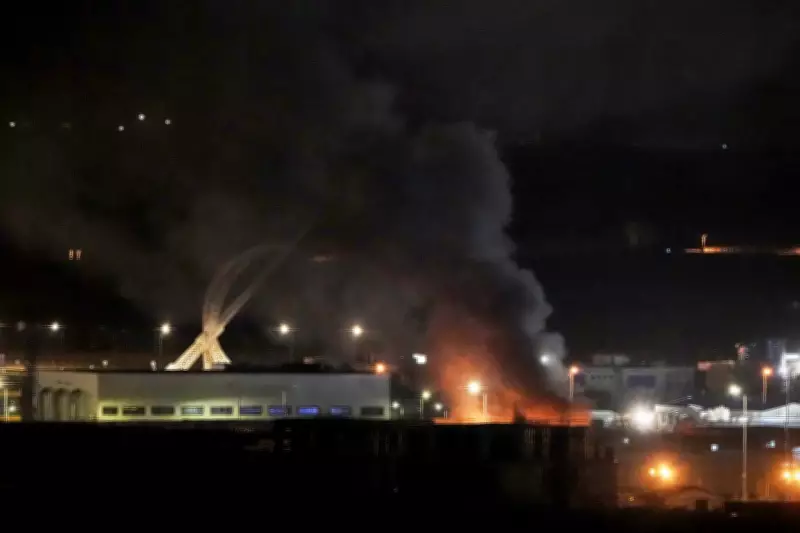
Iranian Drone Swarm Strikes Joint Special Forces Base in Erbil, Injuring US Troops
A coordinated drone attack has targeted a joint special forces military base located in Erbil, resulting in injuries to American soldiers and raising significant international security concerns. The incident has prompted analysis from British military officials who suggest that Russian President Vladimir Putin may be indirectly assisting Iran with advanced military tactics, particularly in the domain of drone warfare, as Middle East conflicts continue to escalate.
Details of the Drone Assault on the Coalition Facility
On Wednesday night, a swarm of Iranian drones launched an offensive against the base, which is utilized by coalition special forces operating within the region. According to confirmed reports from British military authorities, defensive systems managed to intercept two incoming drones; however, several others successfully penetrated defenses and struck the compound. Commander Guy Foden from the United Kingdom Permanent Joint Headquarters verified that British personnel stationed in Erbil had actively participated in defending the base during the intense attack.
While American soldiers sustained injuries from the strike, British forces emerged unharmed. Nick Perry, who oversees global operations for the United Kingdom Ministry of Defence, clarified that the US casualties were not life-threatening, providing some relief amid the alarming situation.
Geographic and Strategic Implications of the Attack
The attack occurred in close proximity to critical facilities, including the United States Consulate in Erbil and areas surrounding Erbil International Airport where coalition forces maintain important military installations. This geographic positioning underscores the strategic significance of the target and highlights the escalating risks to diplomatic and military assets in the region.
Analysis of Potential Russian Involvement and Tactical Influence
During a comprehensive briefing held in London, UK Defence Secretary John Healey pointed to possible Russian influence evident in some of Iran's military tactics, especially concerning the deployment of drone warfare. Following an operational briefing at the Northwood headquarters, Healey disclosed that analysts are meticulously examining components recovered from drones used in the attacks to determine whether foreign technology or parts, potentially linked to Russia, were involved.
Healey further noted that the ongoing conflict has contributed to rising oil prices, which could financially benefit Moscow by providing additional funding for Russia's protracted war in Ukraine. This economic dimension adds a complex layer to the geopolitical dynamics at play.
British Military Response and Regional Security Measures
In response to the growing threat, British military operations across the Middle East have intensified significantly. Royal Air Force aircraft, including advanced Eurofighter Typhoon and F-35B Lightning II jets, have been conducting defensive patrols over Jordan, Qatar, and the United Arab Emirates to protect allied forces and regional partners. Reports indicate that British pilots have accumulated more than 300 operational hours, successfully intercepting and destroying multiple drones that posed threats to coalition bases throughout the region.
Escalating Tensions Following Leadership Changes in Iran
Meanwhile, regional tensions continue to escalate following the death of Iran's previous supreme leader during joint strikes conducted by the United States and Israel. His successor, Mojtaba Khamenei, vowed retaliation in a televised statement, declaring that Iran would not refrain from avenging those killed during the attacks. Khamenei issued a stern warning that Iranian forces would persist in targeting foreign military bases across the region, arguing that such installations are being utilized to project American power and influence throughout the Middle East.
Concerns Over Global Energy Security and the Strait of Hormuz
The conflict has also heightened profound concerns over security in the Strait of Hormuz, one of the world's most critical energy corridors. Approximately one-fifth of global oil supplies pass through this strategic waterway each day, making any disruption a matter of international economic stability. The potential for escalated hostilities in this area poses significant risks to global energy markets and underscores the far-reaching implications of the ongoing Middle East tensions.