Kwara State Government Intensifies Crackdown on Street Begging Following Security Breach
The Kwara State Government has launched a comprehensive and aggressive enforcement operation targeting street begging across the state. This decisive action comes in direct response to a significant security incident involving the arrest of a suspected bandit who was allegedly operating under the disguise of a beggar in Igbaja, located within the Ifelodun Local Government Area.
Security Threat Exposed by Igbaja Incident
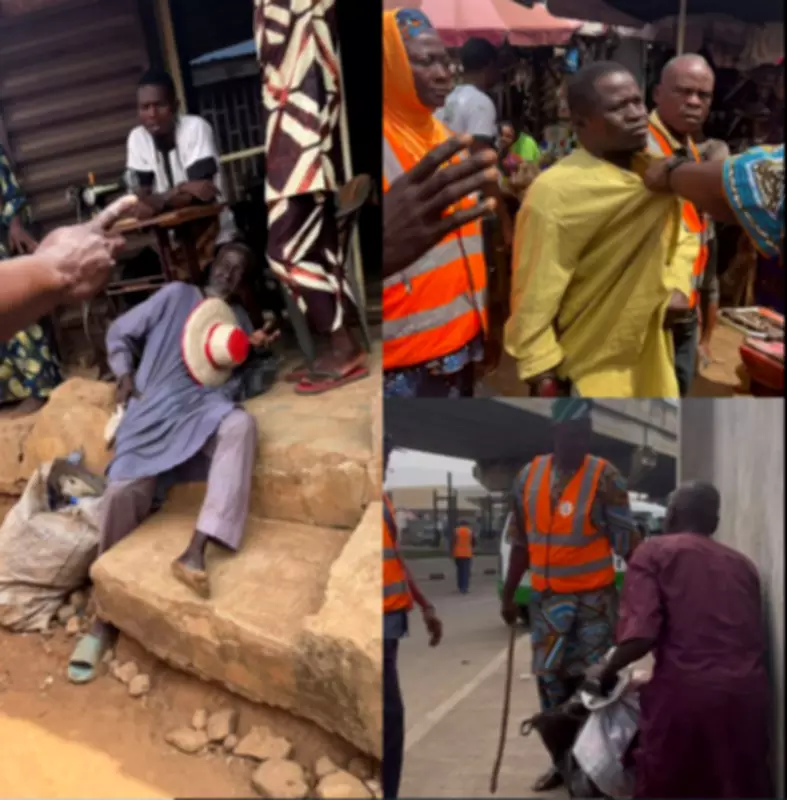
Commissioner for Social Development, Hajia Mariam Nnafatima Imam, revealed the government's heightened stance during a monitoring and enforcement exercise conducted in the Ilorin metropolis. In an official statement released on Saturday, February 14, 2026, by the Ministry's Press Secretary, Rasheedat Shodunke, the commissioner characterized the Igbaja event as a grave security breach with the potential to severely undermine public safety and community trust.
The statement explicitly declared: "The Kwara State Government has launched a full-scale enforcement operation against street begging across the state, following growing security concerns triggered by the recent arrest of a suspected bandit who allegedly disguised himself as a beggar in Igbaja, Ifelodun Local Government Area."
Commissioner Imam elaborated that this incident has starkly illuminated how the practice of street begging can be maliciously exploited by criminal elements. These individuals may use begging as a facade to infiltrate peaceful communities, gather sensitive intelligence, and ultimately pose a direct threat to the safety and security of residents.
From Social Issue to Security Priority
"This is no longer just a social issue; it is now a serious security concern," Hajia Imam emphasized. "We cannot allow criminals to hide under the guise of begging to endanger our people." She stressed that while the state administration remains firmly dedicated to supporting vulnerable populations through established rehabilitation programs, skills acquisition initiatives, and empowerment schemes, it will adopt a zero-tolerance policy towards the use of street begging as a cover for illicit activities.
The commissioner issued a stern warning to parents, guardians, and sponsors, urging them to cease the practice of sending children and dependants to beg on public streets. She described this act as not only dangerous but also fundamentally exploitative, exposing the most vulnerable to potential abuse, human trafficking, and recruitment into criminal networks.
"Children and vulnerable people are being exposed to abuse, trafficking, and criminal networks. This is unacceptable in a responsible society," she added, reinforcing the government's commitment to protective social welfare.
Call for Public Vigilance and Alternative Support
In light of these developments, Commissioner Imam called upon all residents of Kwara State to maintain heightened vigilance. She encouraged the public to promptly report any suspicious persons or unusual activities directly to security agencies and the relevant government authorities to aid in preemptive security measures.
Furthermore, she advised citizens to reconsider their charitable practices. Instead of giving alms directly to individuals on the streets, which may inadvertently fund criminal operations or exploitation, the public was urged to channel their benevolent support through government-approved social intervention programs and credible, registered humanitarian organizations. These entities are better equipped to ensure that aid reaches the genuinely needy in a safe, structured, and accountable manner, thereby addressing the root causes of vulnerability without compromising community security.