The Command Centre: Why Nigeria's NSA Must Evolve Beyond Coordination
From ancient battle strategies to today's intricate intelligence networks, nations have consistently pursued a core goal: survival. However, the nature of threats has transformed dramatically, and with it, the frameworks designed to counter them. In the contemporary world, security extends far beyond traditional battlefields, permeating cyberspace, economic systems, public health, and transnational criminal enterprises. Within this dynamic environment, the Office of the National Security Adviser (NSA) has become the central nervous system of national defence strategy. Yet, in Nigeria, a pressing question remains: is the NSA adequately empowered to serve as the strategic engine room the nation critically requires? This inquiry lies at the heart of an ongoing debate about whether Nigeria's security coordination model is suitable for an era marked by increasingly complex and multifaceted threats.
The NSA as the Hub of Modern Security Architecture
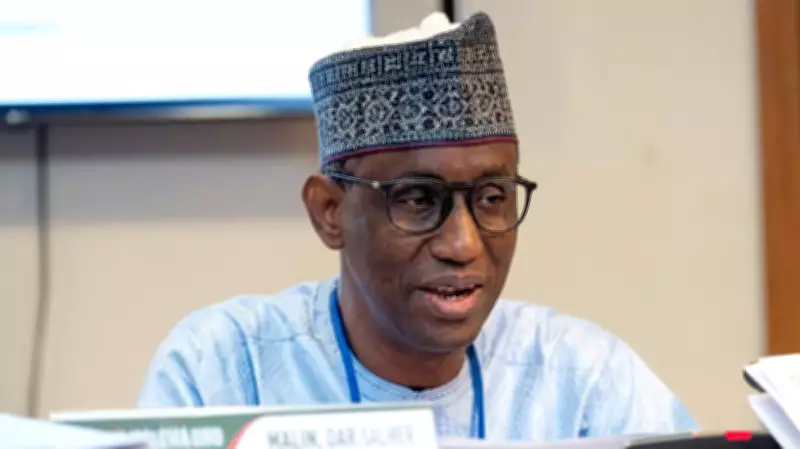
Globally, modern national security systems are constructed around a central coordinating authority. This hub integrates intelligence, defence, law enforcement, and policy-making bodies into a cohesive framework. Without such coordination, even the most advanced agencies risk operating in isolated silos, undermining overall effectiveness. In Nigeria, this responsibility falls squarely on the Office of the National Security Adviser (ONSA), currently led by Mallam Nuhu Ribadu. The office is not merely advisory; it is statutorily supported by the National Security Act, which designates the NSA as a Principal Staff Officer in the Office of the President. This legal foundation grants the Nigerian NSA a degree of permanence that many international counterparts lack, positioning it at the critical intersection of intelligence dissemination, policy formulation, and inter-agency coordination. As noted by experts, the NSA functions as the principal adviser to the President on matters relating to national security and intelligence coordination. However, legal authority alone does not guarantee operational efficacy, highlighting a significant structural challenge.
Strategy Without Command: A Critical Structural Limitation
At its core, the Nigerian NSA's role revolves around strategising, supervision and coordination of security agencies. This represents a powerful mandate on paper, encompassing strategic planning, intelligence integration, and policy advisory functions. Yet, there exists a crucial limitation: the NSA does not command troops or directly control field operations. That authority remains vested in the military, police, and other security services. This separation aligns with global norms, where the NSA typically acts as a strategic coordinator, while field operations are managed by military and law-enforcement entities. Even in advanced systems like the United States, the NSA serves as an honest broker, ensuring the President receives balanced policy options rather than issuing operational directives. However, in Nigeria's context, this division raises substantial concerns. With multiple security agencies often operating under overlapping mandates, the lack of stronger central authority can impede decision-making, weaken accountability, and create response gaps, particularly during crises, thereby compromising national security outcomes.
Lessons from Global Security Models
A comparative examination of other nations reveals that while titles may be similar, structural approaches vary significantly. In the United States, the NSA derives influence primarily from proximity to the President and control over policy processes, rather than statutory power, focusing on harmonising intelligence and defence perspectives. The United Kingdom employs a more collective model, with the NSA operating within the Cabinet Office to coordinate strategy while relying on ministerial collaboration, thus avoiding over-centralisation. Australia and Canada offer instructive examples, having developed highly institutionalised systems where the advisory role is bolstered by a permanent, specialised staff. For instance, in Canada, the National Security and Intelligence Adviser plays a pivotal role in intelligence management and crisis coordination, ensuring decision-makers receive actionable, timely information. Israel demonstrates the importance of integration, with its National Security Council not only advising but also facilitating real-time crisis decision-making and coordinating diplomatic and military strategies. Ghana introduces an innovative dual structure that separates advisory and operational coordination roles, ensuring strategy formulation does not overshadow implementation oversight. Against this backdrop, Nigeria's model is notable for its strong statutory backing but relatively limited institutional depth, suggesting a need for enhancement.
The Case for a Stronger NSA Office in Nigeria
The challenge is not the absence of structure but the necessity for its enhancement. Experts argue that there is therefore the need to equip the office with more powers and influence to enable the NSA to have a direct influence in the overall security and defence architecture. This does not imply transforming the NSA into an operational commander but rather advocates for a nuanced reform agenda focused on capacity, authority, and institutional support. Key recommendations include:
- Deeper Institutionalisation: Unlike countries with permanent, specialised staff systems, Nigeria's ONSA heavily relies on secondments from various agencies. While this fosters collaboration, it can limit continuity and long-term strategic planning. Establishing a dedicated professional corps within the NSA's office would strengthen analytical capacity and institutional memory.
- Enhanced Intelligence Integration: The NSA already synthesises intelligence from agencies like the DSS, NIA, and DIA. However, improving the speed and coherence of this process through robust real-time intelligence fusion systems, supported by technology and clear protocols, would significantly enhance decision-making.
- Sharper Crisis Coordination: In high-pressure situations, delays or ambiguities in authority can be costly. Granting the NSA clearer powers to direct inter-agency responses during emergencies, within a defined legal framework, could improve national resilience and effectiveness.
Beyond Structure: The Question of Influence and Future Directions
Power in national security is not solely about formal authority; it also hinges on influence. In many nations, the NSA's effectiveness stems from the ability to shape decisions at the highest levels. Nigeria's NSA already occupies a privileged position as the President's chief security adviser. Yet, translating this proximity into systemic impact demands more than mere access; it requires a well-coordinated ecosystem where policies are not only formulated but effectively implemented across all security institutions. Evaluating national security outcomes typically involves assessing multiple institutions working in concert, rather than attributing responsibility to a single advisory office. This underscores the importance of strengthening the entire architecture, with the NSA serving as its central pivot. Nigeria's security challenges—from insurgency and cyber threats to organised crime—are dynamic and rapidly evolving, often outpacing traditional response mechanisms. In such an environment, the NSA's role cannot remain static. The path forward lies in recalibration, not reinvention. By expanding institutional capacity, refining coordination mechanisms, and clarifying authority during crises, the Office of the National Security Adviser can better fulfil its mandate as the strategic heart of Nigeria's security system. Enhancing the NSA's role may require a legal framework, representing the next frontier: aligning Nigeria's legal and institutional structures with the realities of modern security threats. Until then, the NSA remains a powerful coordinator—but one that could become far more decisive in shaping Nigeria's security future if properly equipped and empowered.