Wounded US Airman Evades Iranian Militia for 36 Hours in Daring Survival Saga
A wounded American airman, armed with nothing but a handgun, endured a grueling 36-hour ordeal in hostile Iranian territory after his fighter jet was shot down, triggering a high-risk rescue mission by US forces racing against advancing enemy fighters.
Desperate Escape and Survival in Mountainous Terrain
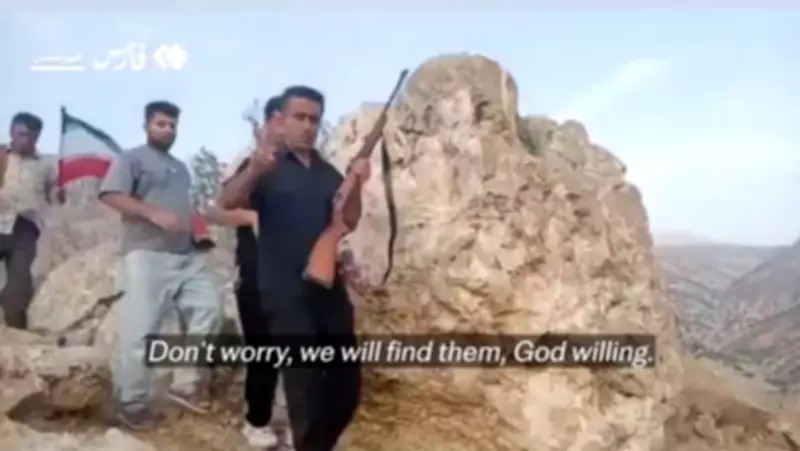
The officer, serving as a weapons systems operator aboard an F-15 fighter jet, was forced to eject over southwest Iran when his aircraft went down. Injured and completely alone, he faced the daunting task of navigating harsh mountainous terrain while evading armed local fighters actively searching for him. Reports indicate these fighters were motivated by a reward offered for his capture.
Despite suffering from a damaged leg, the airman relied extensively on his Survival, Evasion, Resistance, and Escape (SERE) training. He managed to stay hidden, eventually concealing himself in a narrow crevice as the enemy search intensified.
Race Against Time and Exponential Decay of Success
Former Royal Air Force pilot and security specialist Mikey Kay emphasized the critical urgency of the situation. “This was a race for time and literally every second counted. As time goes by, there is an exponential decay of success,” Kay stated, highlighting the deteriorating odds of a successful rescue with each passing moment.
The potential capture of the weapons systems operator by Iranian forces became a paramount concern for the Pentagon, sharply focusing military efforts on his swift extraction.
Massive Military Mobilization for Rescue Operation
As the threat level escalated, the United States deployed significant military assets to locate and extract the stranded officer. The complex operation involved multiple aircraft, including:
- AC-130 gunships
- A-10 Warthog attack aircraft
- MH-6 attack helicopters
- Surveillance drones
These assets worked in coordination with special forces teams on the ground. Iranian forces, including members of the Islamic Revolutionary Guard Corps (IRGC), were closing in rapidly, supported by drones, radar systems, and surface-to-air missile capabilities.
“The Iranian forces got within about two miles of the downed weapons system operator,” Kay revealed, underscoring how perilously close the search teams came to capturing him.
Deception Tactics and Technological Challenges
To buy crucial time, US intelligence reportedly launched a misinformation campaign, spreading rumors that the airman had already been captured and moved. This tactical deception aimed to disrupt and confuse the Iranian search efforts.
Meanwhile, technological challenges complicated rescue efforts. The airman's emergency beacon signal was weakened by his position in a deep ravine, making precise location difficult. However, intelligence teams eventually succeeded in geolocating his position and relaying coordinates for extraction.
High-Risk Combat Rescue Execution
Once the airman's location was confirmed, special operations forces launched a combat rescue mission. Helicopters flew in at dangerously low altitudes while jets and gunships secured the surrounding area. This aerial support was crucial for mitigating threats from enemy fighters equipped with man-portable air defence systems (MANPADS).
“MANPADS can be an absolute nightmare for aviation assets trying to locate a downed airman,” Kay noted, explaining the significant risk these weapons posed to rescue aircraft.
Commandos successfully reached the airman, verified his identity using secure protocols, and evacuated him by helicopter to Kuwait for urgent medical treatment.
Post-Rescue Complications and Equipment Destruction
In a final complication, two US aircraft involved in the operation became stranded in sand at a remote air base. Additional planes were dispatched to recover personnel, and the stranded aircraft were deliberately destroyed to prevent sensitive equipment from falling into enemy hands.
“Those aircraft have a lot of very sensitive equipment capability on them,” Kay explained, justifying the decision to destroy the valuable assets rather than risk their capture.
The mission ultimately succeeded in rescuing the airman despite intense risks, rapidly closing enemy forces, and multiple operational challenges, marking a significant achievement in combat search and rescue operations.