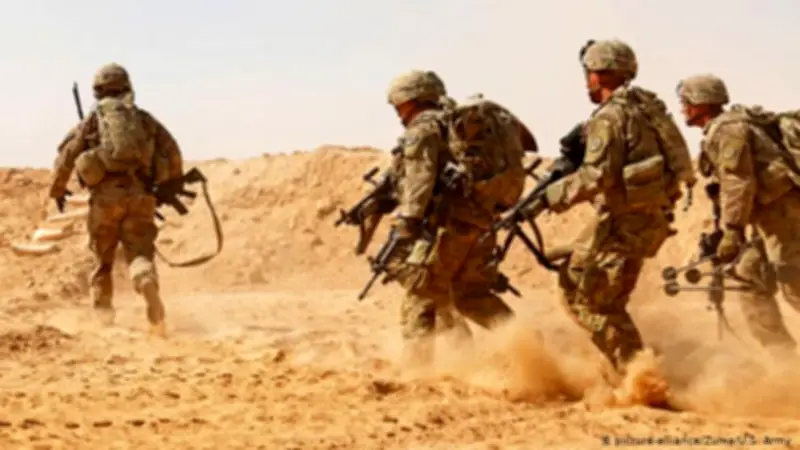
The United States Africa Command (AFRICOM) has announced the withdrawal of most US troops deployed to Nigeria for a recent counterterrorism operation, while pledging to continue intelligence sharing and other security cooperation with the Nigerian government. The disclosure was made by AFRICOM Commander Dagvin Anderson during a virtual press briefing on Thursday, following the 2026 African Chiefs of Defence Conference in Luanda, Angola.
Background of the Deployment
The deployment began in early February with what the US described as a “small team,” following a mutual agreement between the US and Nigerian governments. The agreement was reached after the US launched an attack against suspected ISIS fighters, which US President Donald Trump said were targeting Christians. By mid-February, about 200 US troops had been deployed to north-east Nigeria, according to a report by Premium Times.
Initially, Nigerian military authorities stated that the US forces would not participate in direct combat operations. Samaila Uba, spokesperson for the Defence Headquarters, said the troops would provide military education, intelligence sharing, logistics support, and strategic dialogue to address shared security concerns, including terrorism and transnational threats. However, the troops later engaged in a combat operation alongside Nigerian soldiers, killing a top commander of Islamic State West Africa Province (ISWAP) and other terrorists in the North-east.
Withdrawal Announcement
During the virtual briefing, Anderson stated: “We have withdrawn much of our forces that were just there for that operation.” He added, “They are continuing the partnership that Nigeria has asked for to help continue with the intelligence sharing and the understanding that’s necessary.” Anderson did not specify the number of troops involved, the timing of the withdrawal, or their exact locations in Nigeria.
Neither the Nigerian military nor the federal government has issued any statement on the reported withdrawal as of the time of this report. AFRICOM has also not released a separate public statement announcing the withdrawal.
Impact of the Operation
Anderson cited Nigeria as an example of a successful partnership, explaining that the cooperative effort led to the prosecution of the number two leader within the ISIS or Daesh organization, who was responsible for global operations, media, and recruiting. He said the operation in the Lake Chad Basin disrupted not only ISIS activities in the region but also the group’s global network.
The conference brought together military leaders from 35 African countries, US defense officials, and representatives of government agencies and private companies. Discussions focused on intelligence sharing, innovation, counterterrorism, maritime security, and strengthening the link between security and economic development.