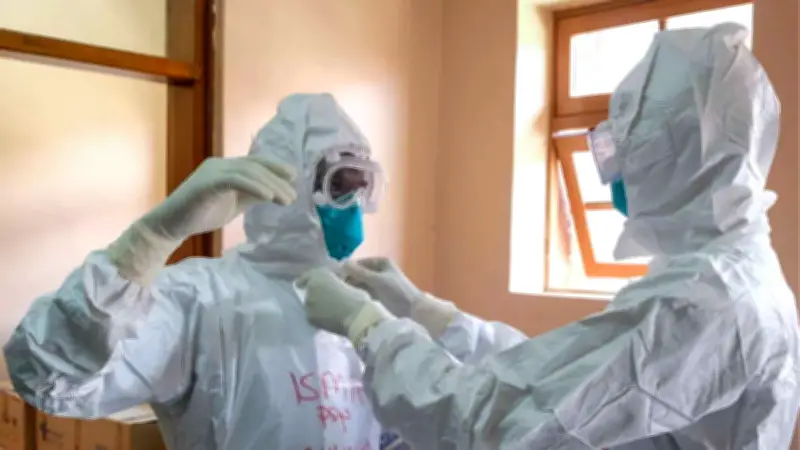
The Federal Government has intensified health screening at airports, seaports, and land borders across the country as part of measures to prevent the importation of Ebola virus disease into Nigeria. It also announced that travelers identified as high-risk or showing symptoms associated with Ebola and other viral haemorrhagic fevers will undergo secondary screening, isolation, and referral procedures where necessary.
Heightened Preparedness Measures
The move follows growing concerns over the ongoing outbreak of the Bundibugyo strain of Ebola virus disease in parts of East and Central Africa and forms part of Nigeria’s broader national preparedness strategy. In a statement issued by the Federal Ministry of Health and Social Welfare, officials said there is currently no confirmed Ebola case in Nigeria, but stressed that heightened preparedness measures have been activated nationwide.
“The ministry wishes to reassure Nigerians that there is presently no confirmed case of Ebola Virus Disease in Nigeria. However, in line with the Federal Government’s commitment to strengthening national health security and preventing cross-border disease transmission, heightened preparedness measures have been activated nationwide,” the statement said.
Enhanced Border Surveillance
The ministry explained that enhanced border surveillance remains a key pillar of the response, with health officials directed to strengthen screening and risk assessment procedures for all incoming travelers. Measures introduced include mandatory temperature checks using infrared thermal scanners and handheld thermometers, health declaration forms, travel history assessments, and intensified risk profiling at entry points.
Authorities also confirmed the activation of enhanced traveller screening procedures, as well as secondary screening, isolation, and referral systems for individuals presenting symptoms consistent with viral hemorrhagic fevers. The development signals increased vigilance at Nigeria’s borders, similar to measures adopted during previous public health emergencies such as the 2014 Ebola outbreak and the COVID-19 pandemic.
Surveillance and Response Systems
To strengthen early detection, the ministry said surveillance systems have been reinforced through expanded Integrated Disease Surveillance and Response activities, community-based surveillance networks, and active monitoring of public health alerts. According to the statement, enhanced surveillance systems are being implemented nationwide to ensure rapid detection and reporting of suspected cases.
Public Health Emergency Operations Centres have been activated, while Rapid Response Teams at both national and sub-national levels remain on standby. Healthcare facilities across the country have also been directed to strengthen infection prevention and control measures, improve triage systems, and ensure prompt reporting of suspected cases.
“Healthcare facilities nationwide have also been advised to maintain a high index of suspicion for viral haemorrhagic fevers, strengthen triage systems, promptly isolate suspected cases, and adhere strictly to established reporting protocols,” the ministry said.
Public Advisory and Legislative Concern
The Federal Government urged Nigerians not to panic, describing the measures as precautionary and aimed at strengthening national preparedness. Citizens were advised to maintain proper hand hygiene, avoid contact with bodily fluids of sick individuals, avoid handling dead animals or bushmeat from unknown sources, and report unusual illnesses or deaths to health authorities.
Meanwhile, the House of Representatives has raised concern over what it described as a critical funding crisis facing the Nigeria Centre for Disease Control and Prevention (NCDC), warning that outbreak response capacity could be weakened. Lawmakers said recent Ebola developments in Central Africa highlight the need for stronger disease surveillance and emergency preparedness systems in Nigeria.
They expressed concern over delayed funding releases, inadequate budget implementation, and shortages affecting critical outbreak response infrastructure. According to the lawmakers, funding gaps have significantly constrained outbreak response operations, laboratory services, surveillance systems, logistics coordination, and emergency preparedness activities.
They also highlighted challenges including unpaid contractors, stalled projects, shortages of diagnostic materials, weak biosafety infrastructure, and reduced emergency readiness. “Laboratory reagents, consumables, and other materials critical for outbreak screening and diagnosis are almost completely out of stock,” lawmakers warned.
Nigeria previously gained global recognition for successfully containing the 2014 Ebola outbreak after the virus was imported through an infected traveler from Liberia. Following deliberations, lawmakers urged the Federal Government to urgently release adequate funds to the NCDC, strengthen cross-border surveillance, and intensify screening at all points of entry. They also directed relevant committees to monitor fund utilization and ensure implementation of resolutions aimed at improving national health security.