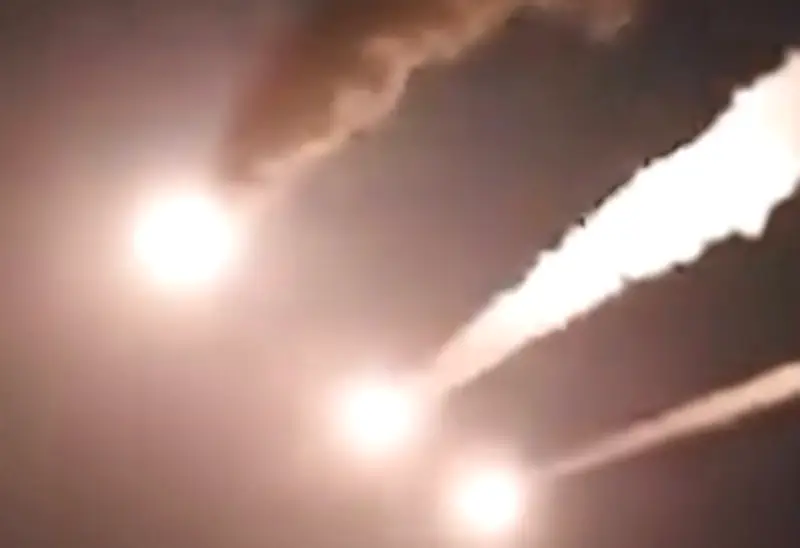
Iran and Israel traded retaliatory strikes on Monday morning, completely shattering the fragile ceasefire and escalating tensions in the region. Iran fired the first salvo late on Sunday, claiming it was in retaliation for fatal Israeli strikes on Lebanon. Israel responded with air strikes, and explosions were reported in Tehran, Tabriz, and Isfahan. Israel then announced that Iran launched a second wave of strikes into its territory.
Background of the Conflict
According to reports, tensions between the two countries escalated after Israel fired missile strikes into the Dahieh district, a suburb in Southern Lebanon. Tehran considered this a violation of the ceasefire agreement. At least two people were killed and 20 wounded in the attacks on the Beirut suburb, according to Lebanon's Health Ministry. Israel's continued attacks on Lebanon had been a source of tension throughout the ceasefire, with concerns that Israel's expanding campaign could affect the US-Iran ceasefire. Tehran insisted that Lebanon be included in a broader ceasefire deal.
Iran's Warning and Response
Following the attack on Lebanon on Sunday, Iran accused Israel of crossing "all red lines" by targeting the southern suburbs of Beirut and warned of a broader response if attacks continued. The Islamic Revolutionary Guard Corps (IRGC) accused the US and Israel of failing to meet their commitments and of violating the ceasefire by repeatedly attacking Iranian shores and vessels in the Strait of Hormuz, the Sea of Oman, and the Indian Ocean. "Tonight's operation was a warning; if aggressions are repeated, the responses will be broader," the IRGC said.
Houthi Involvement
The Iran-allied Houthis in Yemen also entered the fray, claiming they had fired drones at Israel and would prevent Israeli-linked ships from crossing the Red Sea. This further complicated the regional security situation.
US President Trump's Role
Before the latest strikes, US President Trump had promised to prevent the war tension from escalating into another regional war. He noted that he had reached Israeli Prime Minister Benjamin Netanyahu over the phone and urged him to "hold off for the time being." Trump told NBC News he was not demanding that Lebanon be part of any peace deal with Iran while claiming that an agreement with Iran was near. "I think they'd like to see it, but I'm not demanding," Mr Trump said in the interview recorded on Friday. "We're very close to a deal, or I'm going to blow the hell out of them [Iran]," he added.
Mr Trump also told The Financial Times before Israel hit Iran that he had dictated terms to Mr Netanyahu on how the war should be prosecuted. "He won't have any choice," Mr Trump said over the telephone. He also declared that he calls "all the shots," not Mr Netanyahu.
Regional Implications
The exchange of strikes marks a significant escalation in the Middle East, with potential consequences for the fragile ceasefire and broader regional stability. The involvement of the Houthis and the continued tensions between Iran and Israel raise concerns about a wider conflict. The international community is closely watching developments as the situation remains volatile.