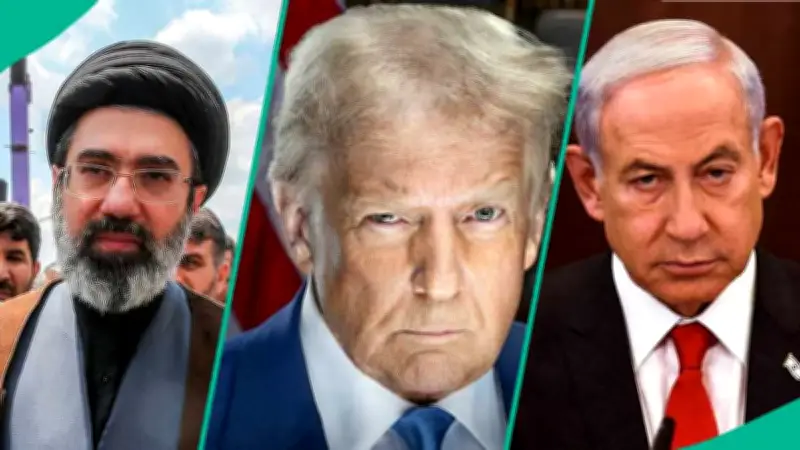
Iran has launched missiles and drones toward Israel in a rare direct attack since the ceasefire, retaliating for Israeli strikes on Beirut's southern suburbs. The escalation has sparked fears that the fragile truce is breaking down.
Iran Launches Missiles at Israel
The Israeli military confirmed detecting missile launches from Iran, intercepting several, and activating air defense systems as sirens sounded across multiple areas. The attack marks a significant escalation after months of relative calm.
Israeli Response and Security Assessment
According to US and Israeli media reports, Israel is preparing to retaliate. Prime Minister Benjamin Netanyahu and senior officials held a security assessment. The strikes on Beirut's southern suburbs, a Hezbollah stronghold, were described by Israel as targeting Hezbollah terror infrastructure.
Tehran quickly connected its response to events in Lebanon. Mohsen Rezaei, adviser to Iran's supreme leader Ayatollah Mojtaba Khamenei, stated: "The aggressors received their response tonight." Iran's Islamic Revolutionary Guards Corps (IRGC) warned Israel to halt attacks on Lebanon, threatening "more crushing and regretful blows" if operations continued. The IRGC claimed it targeted the Ramat David Airbase with ballistic missiles, asserting it was the source of strikes that have killed over 3,500 people in Lebanon since March 2.
US President Trump Urges Restraint
President Donald Trump sought to calm tensions, urging Tehran to resume negotiations while pressing Israel not to retaliate. Speaking to Fox News, he said: "What I would suggest to Iran: You've shot your missiles, that's enough. Get back to the table and make a deal." He added: "I'm calling Netanyahu right now and telling him not to attack Iran in response." Trump also expressed dissatisfaction with Israel's earlier strike on Beirut, saying: "I'm not happy about it."
Escalation After 100 Days of War
The escalation comes 100 days after the war began on February 28, when US and Israeli strikes against Iranian targets spread into a wider regional conflict involving Iran-backed groups. Diplomatic efforts to reduce tensions appear to be faltering, with negotiations between Washington and Tehran overshadowed by renewed hostilities.
Trump Acknowledges Iran's Military Strength
In an interview with NBC recorded before the latest escalation, Trump admitted Iran still retained significant offensive capabilities despite months of strikes. "They have some missiles, they have some drones," he said. "It's a lot of missiles, but it's not what it was when we first attacked." He noted Iran's leadership remained resistant to pressure, describing them as "strong" and "proud."
The prospect of Israeli retaliation, combined with Iran's warnings of further action, has heightened concerns of a new cycle of escalation involving Israel, Iran, and Hezbollah. With diplomatic progress slow and military confrontation intensifying, fears are growing that the fragile ceasefire may unravel completely.
Israel Closes Schools After Suffering Heavy Loss
Legit.ng earlier reported that Israel imposed sweeping emergency measures on Saturday, March 21, 2026, after Tehran launched missiles toward the country in retaliation for a joint US-Israeli strike on Iran. Public gatherings were banned, schools and workplaces closed, and hospital patients moved to underground facilities.