Troops of the Joint Task Force (North East), Operation Hadin Kai (OPHK), have maintained offensive pressure against terrorist elements under Operation Desert Sanity V. They achieved significant operational gains in two separate but coordinated engagements involving Sector 2 troops at Azir Bridge in the Timbuktu axis and in the Bulabulin Forest area, in close coordination with the Air Component Command of OPHK.
Bulabulin Forest Operation
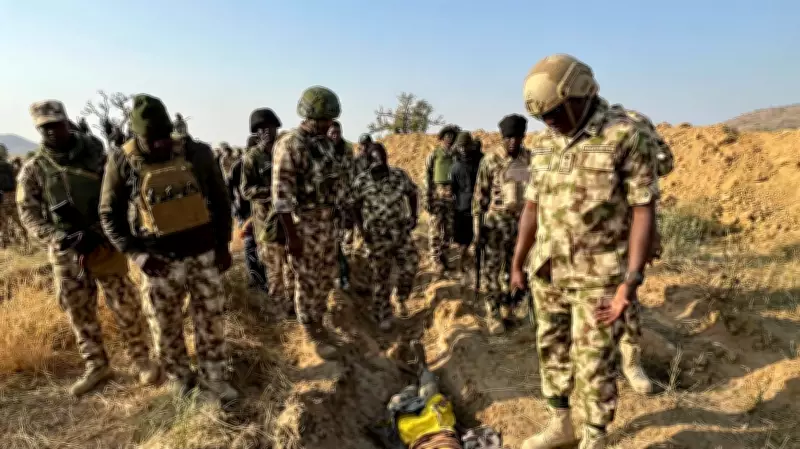
On the Bulabulin Forest axis, Sector 2 troops, together with elements of the Sector 2 Stabilisation Force Brigade and the Civilian Joint Task Force, cleared terrorist enclaves at Mar, Subdu, Yaro Lawanti, Yaro Shuwari, and other areas adjacent to the Bulabulin Forest and the Kamadogu Yobe stretch. During the operation, supported by assault air platforms from the Air Component Command, troops made contact at Malam Shiri village and engaged the terrorists in a well-coordinated flanking manoeuvre. They neutralised 11 terrorists and forced others to flee with injuries.
According to Lieutenant Colonel Sani Uba, Media Information Officer of Headquarters Joint Task Force (North East), all life-support structures were subsequently destroyed, and exploitation of the area is ongoing. Nine AK-47 rifles, three PKT anti-aircraft machine guns, five motorcycles, assorted ammunition, and several materials used for improvised explosive devices were recovered, significantly disrupting the terrorists' logistics and operational capability in the area.
Timbuktu Axis Engagement
Similarly, at the Timbuktu axis along the Wajiroko–Sabongari corridor, troops engaged the terrorists with air support from the Air Component Command of OPHK. They maintained their positions with resilience and tactical discipline and decisively dealt with the terrorists. Subsequent exploitation revealed seven neutralised terrorists, with additional blood trails and body parts indicating higher enemy casualties during the assault. Recovered items include AK-47 rifles, RPG tubes, a large cache of ammunition, bandoliers, and communication equipment.
Role of Air Component Command
The Air Component Command of OPHK played a decisive role in both engagements, providing persistent intelligence, surveillance, and reconnaissance (ISR), which enabled accurate target acquisition and real-time situational awareness for coordinated ground fire. Precision air interdiction strikes were subsequently conducted by Nigerian Air Force aircraft on confirmed terrorist positions and fleeing elements, further decimating insurgents and ensuring the success of a well-synchronised air–land offensive. Troops, in conjunction with volunteer forces, are conducting aggressive follow-up exploitation operations along the Forfor, Multe, and Wajiroko axes to consolidate gains, pursue fleeing terrorists, and prevent any attempt at regrouping.