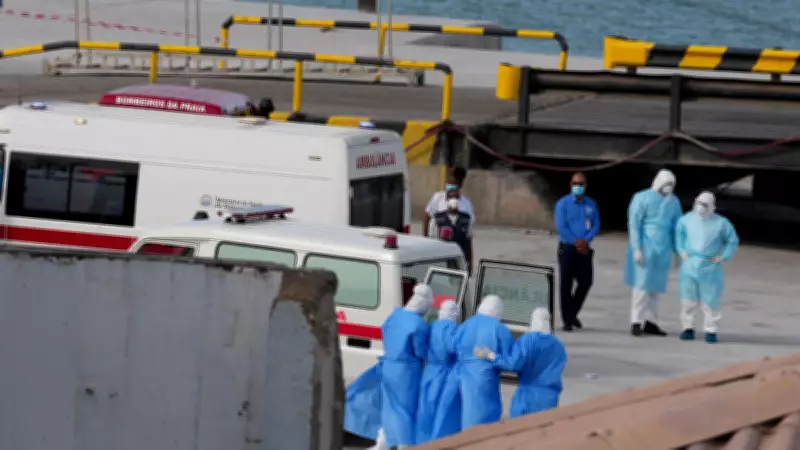
The World Health Organization has stated that the public risk from the hantavirus outbreak connected to the cruise ship MV Hondius remains very low, despite multiple infections and fatalities associated with the vessel.
Speaking during a press briefing in Geneva on Friday, May 8, WHO spokesperson Christian Lindmeier emphasized that the virus spreads only through extremely close contact. "This is a dangerous virus, but only to the person who is truly infected, and the risk to the general population remains absolutely low," Lindmeier said. He noted that even individuals who shared cabins aboard the ship did not necessarily become infected.
The WHO had earlier warned that additional cases could still emerge because the Andes strain of hantavirus involved in the outbreak can incubate for up to six weeks and is capable of limited human-to-human transmission.
According to WHO Director General Tedros Adhanom Ghebreyesus, five confirmed cases and three suspected infections have been identified so far, including three deaths. "Given the incubation period of the Andes virus, which can be up to six weeks, it is possible that more cases may be reported," Tedros said.
The outbreak triggered international concern after several passengers aboard the Hondius became ill during a transatlantic voyage. However, health officials have stressed that the virus is significantly less contagious than COVID-19.
Former U.S. President Donald Trump said he had been briefed on the situation and expressed confidence that authorities were managing the outbreak. "It is very much, we hope, under control," Trump told reporters. "It was the ship — and I think we are going to make a full report about it tomorrow. We have a lot of great people studying it… It should be fine, we hope."
Authorities believe the outbreak may have begun before passengers boarded the ship in Ushuaia on April 1. Argentine officials said investigations were still ongoing and they had not yet confirmed the exact source of the infection.
A Dutch couple who had traveled through South America before joining the cruise were identified as the first fatalities connected to the outbreak. The husband died aboard the vessel on April 11, while his wife later died in Johannesburg after leaving the ship with his body.
Health authorities are now tracing passengers who traveled on a commercial flight from Saint Helena to Johannesburg while the woman was reportedly showing symptoms. The flight carried 82 passengers and six crew members.
A third fatality, involving a German passenger, was reported on May 2. Her body reportedly remains aboard the ship. WHO emergency alert and response director Abdi Rahman Mahamud said officials still expected the outbreak to remain limited if public health precautions continued to be followed. "It will be a limited outbreak if public health measures are implemented and solidarity shown across all countries," he said.
Cases linked to the outbreak have reportedly been identified or monitored in Britain, Germany, the Netherlands, Switzerland, and South Africa. Hantavirus is a rare disease usually spread through exposure to infected rodents and can cause severe respiratory illness, hemorrhagic fever, and cardiac complications. There is currently no known cure or vaccine.
The Netherlands-based operator Oceanwide Expeditions said no symptomatic individuals currently remain aboard the Hondius as it continues towards the Spanish island of Tenerife. A passenger on the ship, YouTuber Kasem Ibn Hattuta, said many travelers onboard had remained calm despite widespread media attention surrounding the outbreak. "Most people on board are reacting very calmly to the situation, unlike what is being reported in the media," he said.