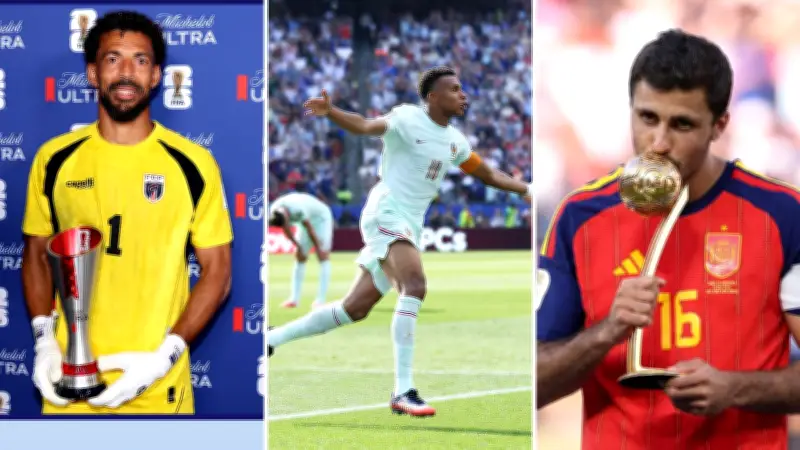
Spain defeated Argentina 1-0 after extra time in the 2026 World Cup final, reclaiming the trophy they last won in 2010. The decisive goal came in the 106th minute when substitutes Ferran Torres and Nico Williams combined: Williams created the opening and Torres provided the finish. Spain dominated possession and chances throughout the match, but Argentina held firm until the breakthrough. Goalkeeper Unai Simón kept seven clean sheets in eight matches, winning the Golden Glove, while Rodri earned the Golden Ball as the tournament's best player. Kylian Mbappé won the Golden Boot with 10 goals, becoming the all-time leading World Cup scorer with 22 goals. Lionel Messi, at 39, led Argentina to a second consecutive final but fell short.
Rodri: The Midfield Maestro
Rodrigo Hernández Cascante, known as Rodri, did not score in the final but was the heartbeat of Spain's team. He controlled the tempo, protected the defense, and completed 790 passes—the most by any player in a single World Cup. His journey was remarkable: less than two years before the tournament, he ruptured knee ligaments and endured a long recovery. After receiving the Golden Ball, Rodri described his triumph as an outcome he had not expected during the darkest period of his recovery. His return gave Spain the organizer around whom their possession, pressing, and defensive balance could operate.
Torres and Williams: Heroes from the Bench
World Cup finals often create heroes from established names, but the 2026 edition turned two substitutes into history-makers. Spain struggled for more than 90 minutes to convert their superiority into a goal. Coach Luis de la Fuente introduced Williams and Torres, who brought fresh pace and found spaces that had not been available earlier. Their combination in extra time broke the deadlock, with Torres scoring Spain's 20th attempt of the match. Torres said: "We knew we had the depth to make a difference. It's a dream come true."
Defensive Pillars: Simón and Cubarsí
Spain's attacking fluidity attracted attention, but their triumph was anchored by defensive discipline. Unai Simón won the Golden Glove after keeping seven clean sheets in eight matches, the most by a goalkeeper in a single men's World Cup. Spain conceded only once throughout the tournament. In front of him, 19-year-old Pau Cubarsí helped construct attacks from the back while holding his own against elite forwards. FIFA named him the tournament's Best Young Player. He completed 566 passes, underlining his importance to Spain's build-from-defence approach.
Mbappé: Record Breaker Without the Trophy
France failed to reach a third consecutive final, but Kylian Mbappé altered World Cup history. The French captain scored 10 goals to win the Golden Boot, taking his career World Cup tally to 22—the all-time record—at just 27. After the tournament, Mbappé said: "I would have preferred not to be the all-time top scorer and to be playing tomorrow's match. It's good in terms of legacy, but today it's not the first thing on my mind." His record may still grow in future tournaments.
Messi: A Final Fairytale That Ended in Tears
At 39, Lionel Messi scored eight goals and provided four assists as defending champions Argentina reached a second successive final. His late interventions repeatedly helped Argentina survive difficult knockout matches. However, the final offered him little room for one last decisive contribution. Spain restricted his space and prevented Argentina from registering an attempt during regulation time. Their first effort arrived in the 116th minute, when they were already behind and playing with 10 men. Messi left the pitch in tears after his third World Cup final. Argentina coach Lionel Scaloni described his tournament as "unbelievable," praising a captain who played every minute of the knockout phase at 39.
Cape Verde and Vozinha: The Giant Killers
Cape Verde, appearing at the World Cup for the first time, became one of the tournament's defining stories. Goalkeeper Vozinha made seven saves in a goalless draw against Spain, earning his nation their first World Cup point. Cape Verde advanced from their group, becoming the least populous nation to reach the knockout stage, and then twice came from behind against Argentina before losing 3-2 after extra time. Vozinha said the campaign demonstrated that Cape Verde's players could compete at the highest level. Their run offered a compelling sporting defence of the enlarged 48-team tournament.
Curaçao's Eloy Room: A Night to Remember
For Curaçao, heroism came in a single evening against Ecuador. Goalkeeper Eloy Room made 15 saves in a goalless draw—the most recorded in a 90-minute World Cup match—giving the tournament's least populous country their first World Cup point. Each intervention carried greater significance as Curaçao protected their historic point.
Saka's Consolation Spectacle
England's Bukayo Saka turned the third-place playoff into a spectacle after their semifinal loss to Argentina. He scored twice in the first half and completed his hat-trick from the penalty spot as England defeated France 6-4 to finish third—their best World Cup position since 1966. The 10-goal contest became the highest-scoring third-place playoff in World Cup history.
Conclusion: A Tournament of Many Heroes
FIFA's individual awards provide the official account: Rodri won the Golden Ball, Mbappé claimed the Golden Boot, Simón took the Golden Glove, and Cubarsí was named Best Young Player. But awards cannot fully explain why a World Cup endures in the memory. Torres and Williams decided the final from the bench. Messi carried Argentina towards one last possible coronation. Room gave Curaçao their first point. Saka transformed disappointment into celebration. Vozinha became the face of Cape Verde's historic campaign. Spain departed North America with the trophy. But the history of the 2026 World Cup belongs to all of them.