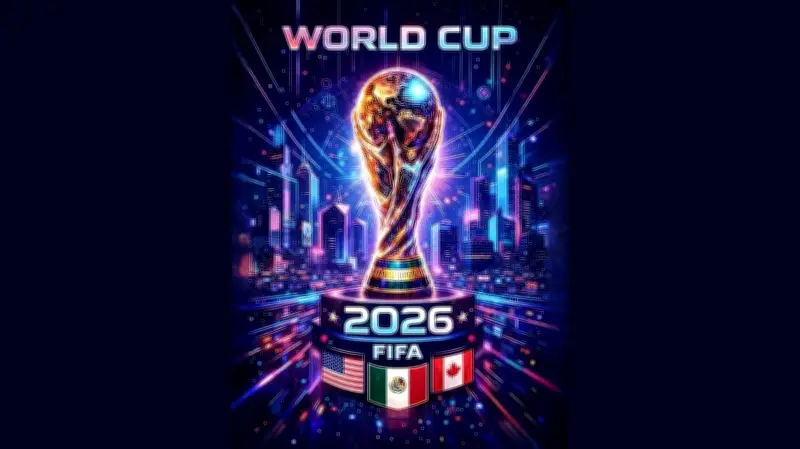
The FIFA World Cup 2026 kicks off on June 11, with Nigeria absent from the pitch but represented by Burna Boy, who will headline the opening ceremony alongside Colombian superstar Shakira. This marks Shakira's second World Cup opening performance, following her appearance at the 2010 tournament in South Africa.
A Historic Joint Hosting
For only the second time in history, the tournament will be co-hosted by three nations: Canada, Mexico, and the United States. The first joint hosting occurred in 2002 when South Korea and Japan shared duties. Despite strained trade and diplomatic relations among the hosts, they have united to stage the event.
Political Undertones Through History
The World Cup has never been immune to political and diplomatic subtexts. The inaugural 1930 tournament in Uruguay took place during the Great Depression, with the final venue, Estadio Centenario, commemorating a century of independence from Spain. Italy's 1934 edition was exploited by Benito Mussolini for fascist propaganda, and Italy retained the title in 1938, shortly after Austria's annexation by Nazi Germany. Racism also surfaced early, with Brazilian star Leônidas da Silva, a black player, controversially excluded from the semi-final against Italy.
After a 12-year hiatus due to World War II, the tournament returned in 1950. The 1978 World Cup in Argentina served as propaganda for the military dictatorship, with a notorious torture center located near the final venue. This year, despite ongoing conflict, Iran has been confirmed to compete, playing all group matches within the United States.
Expanded Format and Diverse Venues
The 2026 edition features 48 nations competing in 104 matches across 16 venues. Mexico's Azteca Stadium will host the opener between Mexico and South Africa, while the final will be held at MetLife Stadium in New Jersey. Other U.S. venues include Atlanta, Boston, Dallas, Houston, Kansas City, Los Angeles, Miami, Philadelphia, San Francisco, and Seattle. Canada will host 13 matches, with Vancouver and Toronto as key cities.
Post-Colonial Narratives and Cultural Connections
The tournament is rich with post-colonial subtexts. Haiti, the site of the first successful slave revolt, will play its first-ever World Cup match in Boston, a historic hub of the transatlantic slave trade. Similarly, Scotland faces Haiti in Boston, recalling the forced migration of Scottish prisoners to the region in the 17th century. The France-Senegal match on June 16 revives the 2002 upset, while England vs. Ghana on June 23 echoes colonial ties. Spain and Uruguay meet on June 26, reenacting the original post-colonial narrative from the tournament's birth.
A Global Spectacle of Unity
The interplay of history, identity, and athletic prowess makes the World Cup a uniquely compelling event. For 39 days, the world can pause, though debates about its lasting impact on global issues will continue long after the winner is crowned on July 19.
Views expressed are strictly personal and not of The Guardian.