Mikel Obi Recalls Pivotal Transfer Meeting with Sir Alex Ferguson
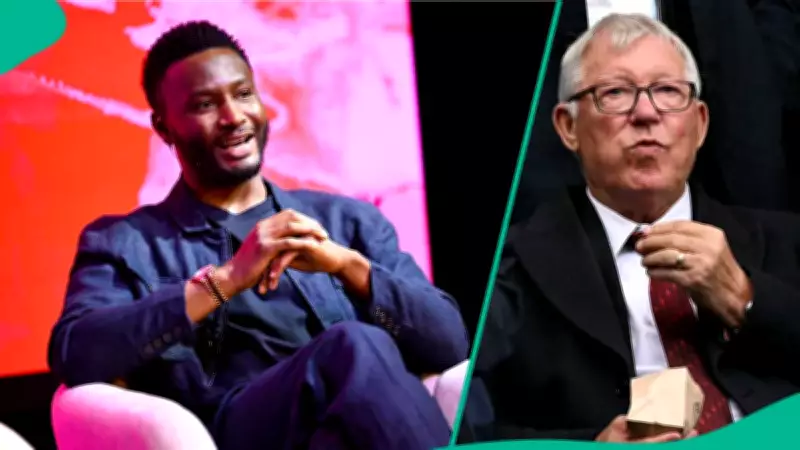
Nigerian football legend John Obi Mikel has provided a detailed account of the dramatic transfer saga that defined his early career, revealing what transpired during a private meeting with Manchester United manager Sir Alex Ferguson. The former Super Eagles captain, who ultimately chose Chelsea over United in 2006, shared these insights during a recent interview, shedding light on one of football's most talked-about transfer battles.
The Transfer Battle Between Chelsea and Manchester United
In the 2006 transfer window, both Chelsea and Manchester United were locked in a fierce competition to secure the signature of the promising young midfielder from Norwegian club Lyn Oslo. The London club eventually emerged victorious when the 19-year-old Mikel opted to join Jose Mourinho's Chelsea, a decision that surprised many in the football world given Manchester United's established reputation and Ferguson's persuasive abilities.
According to Mikel, the transfer dispute reached such intensity that FIFA referred the case to the English Football Association for resolution. It was during this period that Ferguson requested a private meeting with the young player, confident he could still convince him to choose Manchester United.
The Decisive Boardroom Encounter
"Fergie said, 'Listen, give me 30 minutes with the kid, alone, in a boardroom office. I can convince him to still come to Manchester United.' So he flew down to London. I was in a room with him, alone," Mikel recounted to Sky Sports.
The former midfielder revealed that his agent had prepared him for the encounter with specific instructions. "My agent had informed me to nod my head to signify no to whatever Ferguson tells me, and I did just that throughout the time we were together," Mikel explained.
During their private discussion, Ferguson made his case passionately. "He was just saying, 'What is the problem? We signed you at the club, we need you, all the players are asking for you. What did they give you to convince you? Manchester United is a bigger club than Chelsea,'" Mikel recalled.
Standing Firm and Ferguson's Reaction
Despite Ferguson's persuasive arguments, Mikel remained resolute in his decision. "I'm sorry, I just want to play for Chelsea," he told the legendary manager. After approximately 20 minutes of discussion, it became clear to Ferguson that he wasn't making progress.
"I could see him getting red and red," Mikel noted. "I thought I was going to get a hairdryer," he added, referring to Ferguson's famous temper and intense dressing-downs of players.
Following this meeting, Manchester United eventually conceded defeat in their pursuit of the young Nigerian talent. Words came from the club that they had given up on the deal, freeing Mikel to join Jose Mourinho's Chelsea squad.
Financial Settlement and Career Aftermath
The transfer saga concluded with significant financial compensation. According to talkSPORT reports confirmed by Mikel, Manchester United received approximately £14 million in compensation, while Lyn Oslo obtained £4 million for the transfer.
Mikel went on to enjoy a highly successful career at Chelsea, making over 350 appearances for the club, scoring six goals, and winning 11 major trophies before departing in 2017 during Antonio Conte's managerial tenure. While he has repeatedly stated that he doesn't regret joining Chelsea, the midfielder acknowledges that his career path might have been different had he chosen Manchester United.
Reconciliation Years Later
In a separate revelation, Mikel previously disclosed how he resolved his longstanding tension with Ferguson eighteen years after their initial confrontation. The two met at an event where Mikel approached the legendary manager to greet him. During their interaction, Ferguson referred to Mikel as "the one who got away," indicating that he still remembered the talented player who slipped through his fingers two decades earlier.
This detailed account from Mikel Obi provides Nigerian football fans with unprecedented insight into one of the most significant transfer decisions involving an African player in European football history. The story highlights not only the competitive nature of top-level football transfers but also the personal convictions that guide players' career choices.