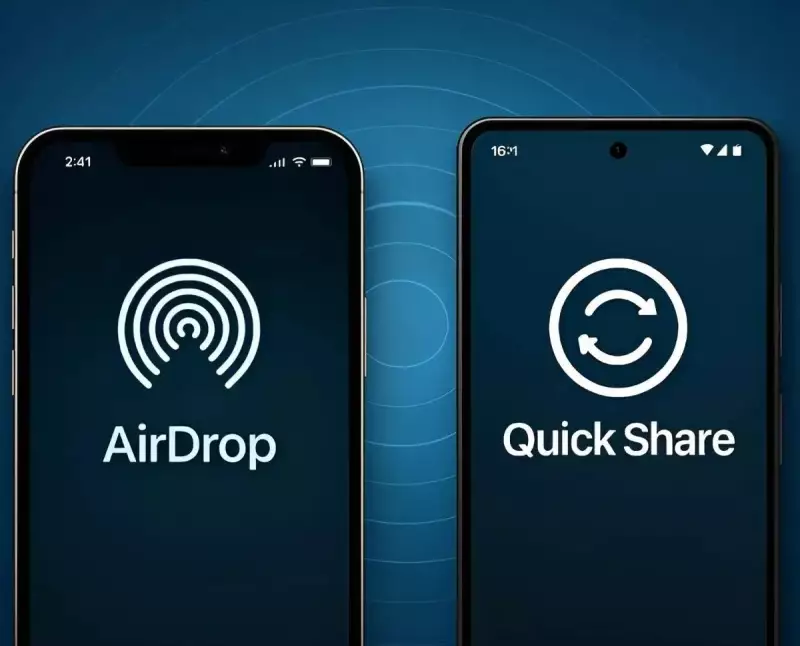
In a groundbreaking move that bridges the long-standing divide between Android and Apple ecosystems, Google has announced that its Quick Share feature can now interact seamlessly with Apple's AirDrop technology. This revolutionary update begins with the Pixel 10 series, marking a significant step toward genuine cross-platform compatibility that could transform how Nigerians share digital content.
What This Means for Nigerian Users
The announcement, made on November 21, 2025, addresses a common frustration in Nigeria's dynamic device market where households and workplaces frequently mix Android and Apple devices. The awkward moment when someone asks "Can you AirDrop it?" and Android users are left out may soon become a thing of the past.
This development is particularly significant for Nigeria, where people often switch between devices or use both platforms for work and personal life. The update allows Android users to share photos, videos, and documents with iPhone users directly, bypassing the quality compression of WhatsApp, the workarounds of Telegram, or the inconvenience of cloud links.

How Quick Share with AirDrop Works
Google confirmed that Quick Share now supports file transfers via Apple's AirDrop, providing Android users with a convenient method to share files with nearby iPhones, iPads, and MacBooks. The process operates through a simple, secure peer-to-peer connection that uses Wi-Fi Direct and low-energy Bluetooth technology.
The transfer process involves five straightforward steps:
- Pixel 10 user selects a file and chooses Quick Share
- iPhone user opens AirDrop settings and selects "Everyone for 10 minutes"
- Pixel 10 detects the iPhone as a nearby device
- iPhone receives a prompt to accept the file
- Transfer begins immediately using encrypted protocols
The system ensures privacy and security through peer-to-peer encryption that prevents interception, and files never touch external servers. Every incoming file requires manual approval from the recipient, providing an additional layer of security that's crucial for Nigerian users sharing sensitive documents in workplaces or crowded locations.
Benefits for Nigerian Professionals and Families
This cross-platform compatibility brings substantial advantages to various segments of Nigerian society. Designers, content creators, marketers, journalists, and students can now send high-resolution files instantly without worrying about Wi-Fi networks or quality degradation from social media compression.
For multi-device households, which are common in Nigeria, the update provides much-needed relief. Parents using Android phones can now quickly exchange school assignments, photos, and documents with children who use iPhones. Similarly, during events, church programmes, or office work, sharing photos and videos becomes significantly less stressful.
The technology maintains file quality that would otherwise be compromised when using social media platforms for sharing. This means Nigerian users can preserve the original resolution of their photos and videos when transferring between devices.
Current Limitations and Future Prospects
While the update represents a major advancement, it comes with some initial restrictions. Currently, only Pixel 10 devices support the feature, leaving users with older Pixels or Samsung devices waiting for Google to expand support. The AirDrop visibility must be set to "Everyone for 10 minutes" for Android devices to detect iPhones, and both devices need to be in close proximity for transfers to work.
Google has hinted at future expansion to other Android devices but hasn't provided a specific timeline. Despite these limitations, the feature marks a meaningful improvement in Android-iOS communication that signals a more cooperative future among traditionally competing tech ecosystems.
For Nigeria's technology landscape, where users frequently move between platforms based on affordability, camera quality, or personal preference, this development represents a step toward more unified digital experiences. The update demonstrates that cross-platform interoperability is becoming essential rather than optional, and may pressure Apple to enhance its own system in response.

As Google continues to elevate the Android experience through features like Quick Share, Nigerian users stand to benefit from technology that works together rather than systems that create digital isolation. When support expands to more Android devices, millions of users across Nigeria will finally enjoy quick, high-quality file sharing between Android and iPhone without complications.