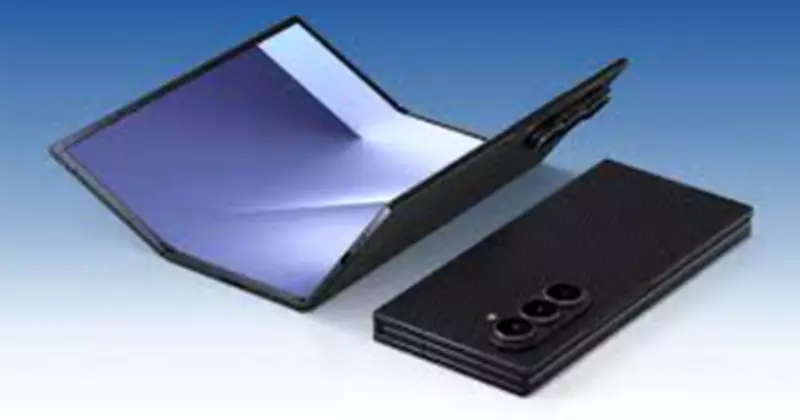
Samsung has officially ended months of industry speculation by confirming both the pricing and release schedule for its groundbreaking Galaxy Z TriFold smartphone in the United States market. The innovative device, which represents Samsung's most ambitious foldable phone project to date, will retail for $2,899 and become available to American consumers starting January 30, 2026.
Samsung's Revolutionary TriFold Design
What sets the Galaxy Z TriFold apart from conventional smartphones and existing foldable models is its unique engineering approach. While appearing as a standard smartphone when completely folded, the device reveals its transformative capability when users begin unfolding it. Unlike single-fold devices like the Galaxy Z Fold or Galaxy Z Flip, Samsung's tri-fold design incorporates two folding mechanisms that allow the phone to expand into a substantial tablet-sized display.
When fully opened, the Galaxy Z TriFold provides approximately 10 inches of screen real estate, effectively positioning it within tablet territory while maintaining smartphone portability when folded. This expanded display area enables users to comfortably engage in activities that typically feel constrained on regular smartphones, including reading lengthy documents, editing files, watching movies, and operating multiple applications simultaneously.

Multitasking and Productivity Features
Samsung has emphasized multitasking capabilities as one of the TriFold's primary strengths. The device supports opening several applications concurrently, facilitates content dragging between windows, and enables seamless transitions between phone and tablet operational modes. Galaxy AI features further enhance productivity by assisting with text summarization, note organization, and various efficiency tasks optimized for the expanded screen format.
The company's strategic positioning places the Galaxy Z TriFold in a distinct category from its other foldable offerings. While the Galaxy Z Fold concentrates on blending phone and tablet functionality and the Galaxy Z Flip emphasizes style and portability, the TriFold prioritizes scale and versatility. Samsung appears to target a specialized market segment of users seeking a single device that can effectively replace both smartphone and tablet without functional compromise.
Premium Pricing Rationale
The $2,899 price point has generated significant discussion within technology circles, establishing the Galaxy Z TriFold as one of Samsung's most expensive consumer smartphone releases. This premium pricing reflects both the device's technical complexity and Samsung's strategic market positioning.
Engineering a tri-fold smartphone presents substantially greater challenges than manufacturing traditional smartphones or even single-fold devices. The display technology alone involves considerable expense, requiring multiple folding panels, reinforced hinge mechanisms, and specialized materials engineered to withstand repeated folding and unfolding cycles. Additionally, Samsung has equipped the device with flagship-grade components, generous storage capacity, and sophisticated software features specifically designed for large-screen utilization.
Samsung clearly targets a niche market rather than mass consumers with this release. The Galaxy Z TriFold is positioned as a luxury device appealing to professionals, early technology adopters, and enthusiasts who prioritize cutting-edge innovation over price considerations. In this context, the device competes more directly with high-end laptops and premium tablets than with conventional smartphones.
When compared against other premium mobile devices, the price differential becomes particularly evident. Even the most expensive configurations of Apple's iPhone or Samsung's own Galaxy S series cost substantially less than the TriFold, raising questions about market affordability and long-term consumer demand, especially given existing concerns about foldable phone durability and practical utility.

Industry Implications and Future Directions
The Galaxy Z TriFold launch demonstrates Samsung's willingness to undertake significant risks within a smartphone market that many observers consider increasingly predictable. Traditional slab-style phones no longer generate the same consumer excitement they once did, and foldable devices represent Samsung's strategic response to this market evolution.
There is a noticeable industry shift toward devices supporting enhanced productivity, media consumption, and multitasking capabilities rather than focusing exclusively on camera improvements or processor speed increments. Larger foldable phones like the TriFold align perfectly with this transition by offering expanded screen space while maintaining reasonable portability.
However, releasing such experimental hardware at this scale involves inherent risks. The premium pricing necessarily limits market adoption, while durability concerns continue to accompany foldable designs generally. Should the Galaxy Z TriFold struggle to achieve commercial traction, it may remain a specialized product rather than evolving into a mainstream option.
For competing manufacturers, Samsung's initiative establishes a new technological benchmark. While other companies may explore similar designs, the tri-fold category will likely remain niche in the immediate future. The Galaxy Z TriFold appears less focused on immediate sales volume and more concerned with signaling potential directions for future smartphone design evolution.
The device was initially showcased during the APEC 2025 Summit in South Korea before its formal launch on December 2, 2025. Its US availability announcement marks a significant milestone for foldable phones within the American market, where the Galaxy Z TriFold will now be officially accessible to consumers.
Ultimately, Samsung's tri-fold phone functions as a statement device that demonstrates current technological possibilities, even if only a limited user base is presently prepared to embrace this innovation at its current price point and form factor.