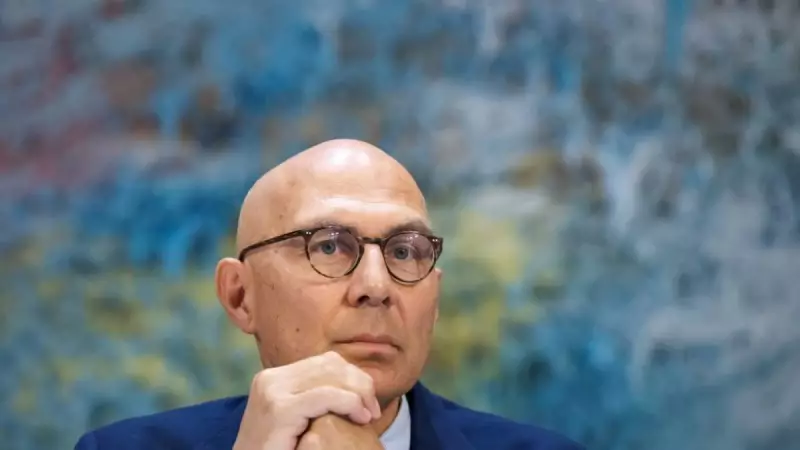
UN Human Rights Chief Sounds Alarm Over Tech Giants' Growing Dominance
The United Nations High Commissioner for Human Rights, Volker Turk, has issued a stark warning about the dangerous concentration of power among a handful of technology giants, stating this poses significant threats to global human rights and democratic processes.
In an exclusive interview with AFP conducted at the UN rights office overlooking Lake Geneva, Turk expressed deep concern that seven or eight major tech companies now possess more wealth than the entire economies of some industrialized nations. This immense financial power, coupled with their growing influence over artificial intelligence development, creates unprecedented challenges for human rights protection worldwide.
The Threat of Unchecked Corporate Power
"They have amassed an immense amount of power," Turk stated during the interview published on November 11, 2025. "And power, we all know, if it is not circumscribed by rule of law, by international rights law, can lead to abuse."

The UN rights chief emphasized that uncontrolled corporate power could enable these entities to "subjugate others" and undermine democratic institutions. His comments come amid increasing global worries about threats to democracy, with numerous countries potentially sliding toward autocracy.
Turk specifically highlighted his worry that corporate power unrestrained by law and international rights standards will become "a huge issue for us" in the coming years. He called for the human rights community to focus more attention on this emerging challenge.
Unelected Tech Oligarchs and Data Control
While not mentioning specific companies by name, Turk's warning comes shortly after Tesla shareholders endorsed a compensation package potentially worth $1 trillion for CEO Elon Musk, already the world's wealthiest person and owner of social media platform X. Other prominent tech figures like Meta's Mark Zuckerberg and Amazon's Jeff Bezos also rank among the global elite in terms of wealth.
Earlier this year, Turk had voiced alarm to the UN Human Rights Council about the influence wielded by what he termed "unelected tech oligarchs" who control vast amounts of personal data.
"They have our data: they know where we live, what we do, our genes and our health conditions, our thoughts, our habits, our desires and our fears," he told the UN's top rights body. "They know how to manipulate us."
Turk described this data control capability as "extremely manipulative" and warned it could distort public perception during critical democratic processes like election campaigns.
AI's Double-Edged Sword and Climate Denial
The rapid development of generative artificial intelligence tools by these same tech titans adds another layer of concern, according to Turk. While acknowledging AI's potential to solve major global problems, he emphasized the technology's "shadow side" requires urgent regulatory attention.
"AI that is unregulated can be a huge source of distraction, which then takes away the political energy that we need in order to actually fight autocratic tendencies, to push back on lack of control," Turk explained.
He also warned about AI being used for "distorting reality" and creating false narratives that undermine the "right to truth" and the "right to science." These concerns extend to climate change disinformation, which Turk specifically condemned.
"I'm shocked to hear leaders talk about climate denial again, when we all know that we are already overshooting the goal that was set 10 years ago with the Paris Agreement," he stated, questioning what current inaction means for future generations.
The UN human rights chief concluded with a sobering prediction: "There will be questions asked about accountability in the future, but then it's too late." His comments underscore the urgent need for international regulation to address the converging threats of concentrated corporate power and rapidly advancing artificial intelligence.