
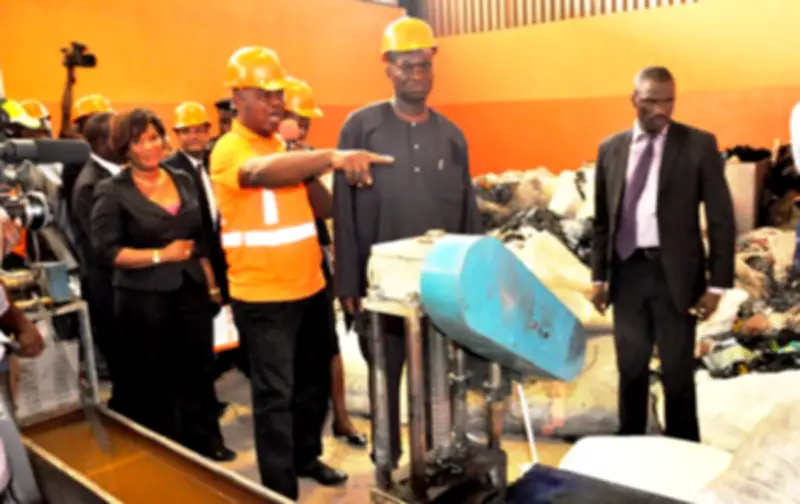
Lagos State, Nigeria's economic hub, generates an estimated 9,000 metric tons of industrial and residential waste daily. Despite this, the state has maintained a relatively clean environment, largely due to the efforts of the Lagos Waste Management Authority (LAWMA). Established in 1977, LAWMA has introduced several initiatives to improve waste management, including the recent "Recycling Bank" strategy.
LAWMA's Evolution and Partnerships
According to the Managing Director of LAWMA, Mr. Ola Oresanya, "the LAWMA of the past is different from now and all efforts are been made especially with the present administration of Governor Raji Babatunde Fashola to ensure success in combating the menace of poor waste disposal in the state." This commitment is reflected in the agency's collaboration with private sectors, formalized in March 2007 through the 'Private Sector Participation' program, aimed at enhancing waste management services across Lagos.
The Recycling Bank initiative is LAWMA's latest strategy to engage citizens in waste management. The agency explains that this approach brings a sense of collective responsibility, making waste management a participatory venture between the government and the people, where school children and other stakeholders contribute to waste minimization.
Recycling: Economic and Environmental Benefits
Recycling, which involves using used products as raw materials for new products, conserves resources and reduces environmental harm. It is also economically beneficial: producing items from recycled materials is cheaper, as seen with aluminum, where using fresh aluminum costs twice as much and requires 90% more energy than using recycled aluminum. Similarly, compost fertilizer from the Ikorodu landfill is sold at lower prices than chemical fertilizers.
Recycling also reduces waste that ends up in landfills, saving valuable space—especially critical in land-scarce Lagos. This saved land can be repurposed for revenue-generating activities. The economic impact is tangible: LAWMA's recycling plant produces over 250 bags of fertilizer daily, distributed across Nigeria, and pure water nylons are transformed into disposable bags.
Recycling Banks: Implementation and Citizen Participation
To encourage waste sorting, LAWMA has established four types of recycling banks for paper, cans, glass, and plastic. Over twenty of these banks have been placed across the state. About 30 former waste scavengers have been employed as resource managers to oversee daily operations. Residents are urged to sort their waste, separating recyclables into appropriate banks. For instance, glass and plastic bottles should be disposed of separately. This source separation simplifies recycling and supports LAWMA's effectiveness.
As an incentive, the institution will reduce waste bills for residents who consistently sort their waste. This initiative not only promotes a cleaner environment but also fosters economic development through job creation and resource conservation.




