
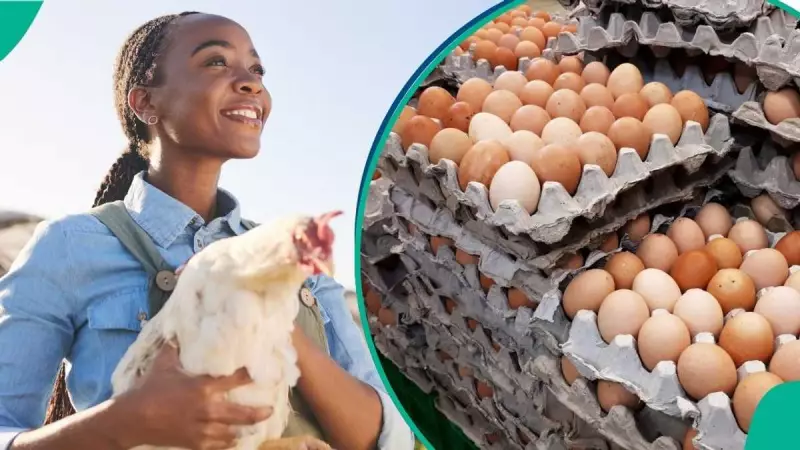
Nigerians continue to face severe economic pressure as the prices of essential food items, particularly poultry products, remain stubbornly high. This comes despite recent official data indicating a slowdown in the national inflation rate.
Official Inflation Falls, But Market Realities Differ
According to the National Bureau of Statistics (NBS), Nigeria's food inflation rate declined to 13.12 percent in October 2025. This figure represents the lowest point recorded in over seven years. However, for the average Nigerian family, this statistical improvement has not translated into tangible relief at the market or on the dining table.
A recent market survey in Lagos confirms that staples like bread, eggs, fish, and chicken are still becoming more expensive. Reports indicate that a medium-sized loaf of bread now costs more than many can remember from before the recent inflation surge. For protein sources crucial to family nutrition, such as eggs and fish, the situation is equally challenging.
Structural Issues Keep Food Prices Elevated
Analysts point to several deep-rooted, structural problems that explain the persistent high cost of food. Key factors include:
- Insecurity in farming regions, which disrupts agricultural production and supply chains.
- High cost of agricultural inputs like fertilizers and feed for poultry.
- Soaring logistics and transportation expenses, exacerbated by poor road networks.
- Inadequate cold-chain storage and warehousing systems for perishable goods.
These supply-side constraints force prices upward, with the added costs ultimately passed on to consumers. Some observers have also raised concerns about "greedflation," where businesses may use the broader economic climate as cover to raise prices beyond what is necessary to cover their increased costs.
Poultry Farmers Release New Rate Sheet
Against this backdrop, the poultry industry has formally communicated new prices for its products. Poultry farmers are now selling a crate of eggs and adult chickens at revised, higher rates. This announcement is particularly significant with the Christmas season approaching, a period when chicken traditionally forms a centerpiece of celebratory meals for many Nigerian families.
The new price list indicates that preparing the customary Christmas feast will be significantly more expensive this year compared to 2024. For households already struggling with stagnant wages that have not kept pace with the rising cost of living, this presents a difficult choice. Many are being forced to cut back on nutritious, protein-rich foods, compromising dietary quality.
The growing disconnect between official inflation metrics and the prices consumers actually pay highlights a chronic affordability crisis. Until the fundamental issues of supply chain inefficiencies, input costs, and structural bottlenecks are resolved, accessible and affordable food will remain out of reach for a large segment of the Nigerian population.




