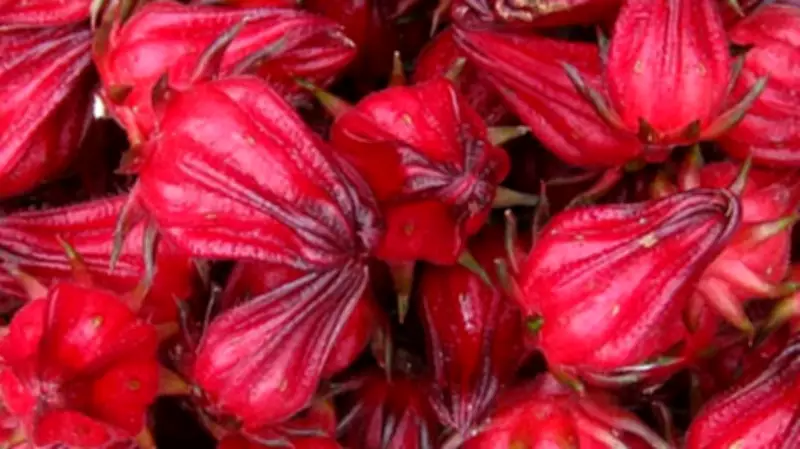
Nigeria's Hibiscus Trade with Mexico: A $100 Million Promise Remains Unfulfilled
In July 2024, Mexico's ambassador to Nigeria, Alfredo Miranda, announced a significant commitment of approximately $100 million to restart hibiscus imports from Nigeria. However, nearly two years later, this pledge has yet to materialize into a functional trade relationship. The pipeline for trade is technically open, but the actual exchange of goods has not resumed. This situation is critical because hibiscus is not merely another agricultural export; it represents a straightforward opportunity that, if mishandled, could signal greater challenges for Nigeria's economic diversification efforts.
A Decade of Dominance Lost
For a decade, from 2008 to 2018, Nigeria was the dominant supplier of hibiscus to Mexico. According to SENASICA, Mexico's agricultural inspection authority, Nigeria shipped around 68.6 million kilogrammes during this period, accounting for about 64 percent of Mexico's total hibiscus imports. The demand was structural, driven by "agua de jamaica," one of Mexico's most widely consumed beverages, which creates steady industrial demand for hibiscus. Nigerian hibiscus was competitively priced and suitable for large-scale processing, making it an ideal supplier.
The Sudden Halt and Market Shift
In early 2018, this lucrative trade came to an abrupt stop when SENASICA detected khapra weevil, a quarantine pest, in Nigerian hibiscus shipments. As a result, imports were immediately halted. Other suppliers quickly moved to fill the void. By 2021, China had captured the majority of Mexico's hibiscus import market, with Senegal and Sudan supplying smaller volumes. The evidence indicates that the failure was due to compliance issues rather than product quality. Inconsistent enforcement of pre-export inspection and container hygiene protocols allowed the pest to reach Mexican ports, leading to the loss of a market Nigeria had spent a decade developing.
The Economic Case for Revival
The economic rationale for Nigeria's return to the Mexican market remains strong. Industry estimates suggest that Chinese hibiscus arrives in Mexico at prices in the mid-40 peso range per kilogramme. Before the disruption, Nigerian hibiscus sold for roughly 33 pesos, offering about a 25 percent price advantage. Mexico's domestic production, concentrated in Guerrero state, is more expensive and cannot meet national demand. A 2024 study from Universidad Autónoma Chapingo indicates that over half of Mexico's hibiscus consumption is supplied by imports. Thus, compliance, not price or quality, is the key barrier to reopening this market.
Steps Toward Resolution
There has been some progress toward resolving the issue. In 2023, Mexico and Nigeria signed a bilateral phytosanitary Work Plan to address the original quarantine problem. This plan outlines specific requirements for exporters to re-enter the Mexican market, including NAQS certification, sealed container procedures, and screening for khapra beetle contamination. On paper, the path back is well-defined, but in practice, little movement has occurred.
Three Practical Steps to Accelerate Trade Restoration
- Building Compliance Capacity Among Exporters: Nigeria's hibiscus production is centered in Kano and Katsina states, where exporters are typically medium-sized businesses. They require targeted support to implement the inspection and documentation requirements outlined in the Work Plan. The Nigerian Export Promotion Council (NEPC) and the Nigerian Agricultural Quarantine Service (NAQS) could run a focused certification programme for hibiscus exporters in these states to ensure shipments meet Mexican import standards. Some operators are already taking initiative; in late 2025, a Nigerian agricultural aggregator established its own warehouse and fumigation facility, eliminating a key compliance bottleneck and offering services to other exporters, demonstrating that the gap is fixable.
- Creating Structured Introductions Along the Supply Chain: Mexican buyers already source through aggregators and are not the bottleneck. The missing link is Nigerian farmers who produce hibiscus but lack visibility into export channels or connections to aggregators. The Nigeria-Mexico Chamber of Commerce, inaugurated in April 2025, could help bridge this gap by facilitating introductions and partnerships.
- Developing Commercial Profiles in Spanish: Nigerian exporters need to create short commercial profiles in Spanish that outline price per kilogramme, available volumes, certification status, and shipping routes. This would enhance communication and trust with Mexican buyers, streamlining the trade process.
Broader Implications for Nigeria's Export Strategy
The hibiscus situation reflects a broader pattern in Nigeria's export strategy. Non-oil exports grew by 21 percent in the first half of 2025, reaching $12.8 billion—nearly double the target for that period. While this growth is real, much of it remains concentrated in familiar markets. Latin America, with over 650 million people, remains largely underdeveloped as a destination for Nigerian exports. Buyer interest exists, as evidenced by Mexico's two-decade trading relationship with Nigeria and its commitment to revive it. Nigeria has the product, price advantage, and a framework to restore trade, but what is missing is coordination among exporters, regulators, and trade institutions.
The window of opportunity is still open, but competing exporters are strengthening their supply chains, and the chance will not wait indefinitely. Effective coordination requires someone willing to do the connective work—between farmers and aggregators, exporters and buyers, and two markets that have already proven they can trade successfully.
Max Bunmi Banjo, PhD, is Managing Director of Puente Nova, a firm focused on strengthening trade and cultural connections between Africa and Latin America. She previously built Google's Digital Skills for Africa program, which has trained millions across the continent.