
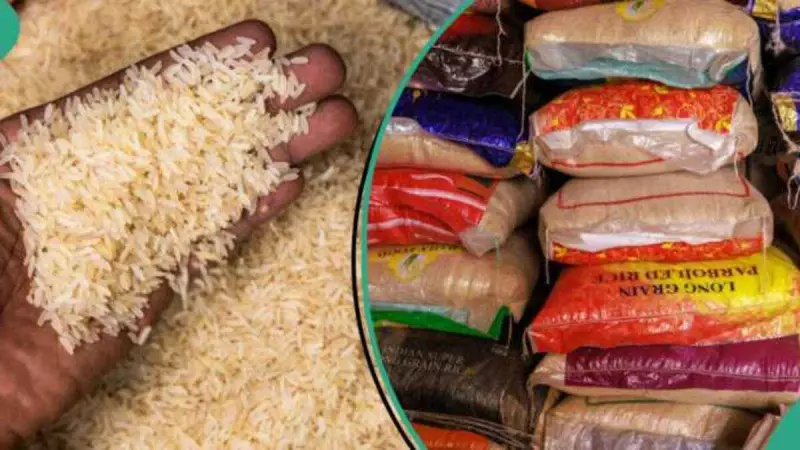
In a significant shift for Nigeria's food market, the price of rice has experienced a notable decline across Lagos and other major cities. This change comes directly after the Lagos State Government announced a reduced price for its Lagos Rice brand at N57,000 per 50kg bag, a move that has sent ripples through the staple food market.
Government Intervention Sparks Market Shift
The price reduction, announced by Governor Babajide Sanwo-Olu, represents a strategic intervention aimed at easing the financial burden on households, especially with the Christmas season approaching. Previously sold at N64,000, the new price for Lagos Rice now directly competes with imported varieties, which typically range between N52,000 and N56,000 depending on location and transportation costs.
This decisive action by the state government has been met with widespread approval from consumers who have endured months of high food inflation. Market analysts confirm that the announcement has already pressured other dealers and wholesalers to reconsider their pricing strategies, leading to a broader market adjustment.
Farmers Welcome Drop But Decry Import Impact
Agricultural stakeholders have praised the price cut, predicting it will lead to even more competitive pricing in the coming weeks. Sakin Agbayewa, Vice Chairman of the All Farmers Association of Nigeria (AFAN) for the Southwest and Lagos chapter, hailed the move as a major victory for both consumers and the local agricultural sector.
Agbayewa emphasized that beyond cost, the state's rice offers superior freshness and nutritional value. He explained that Lagos Rice moves from farm to market in under a year, whereas imported rice can sit in storage for three to five years before reaching Nigerian shelves.
However, the positive news is tempered by ongoing concerns from local producers. Farmers have openly criticized the federal government's rice import policy, stating it severely impacts their profit margins and undermines local production efforts. They argue that flooding the market with imported rice, as reported earlier when prices dropped by N20,000 per bag, creates an unsustainable environment for domestic growers.
Long-Term Solutions and Festive Season Relief
Raphael Hunsa, Chairman of the Rice Farmers Association of Nigeria (RIFAN) in Lagos, described the government's price slash as a timely and proactive policy. He stressed that empowering more farmers to produce year-round is the key to permanently stabilizing rice prices and ensuring national food security.
With Christmas only weeks away, the new price point of N57,000 offers tangible relief for families. From a peak of N80,000 per bag in May, prices have now settled between N55,000 and N70,000 across various markets and brands. This downward trend is expected to continue as the Lagos State intervention increases market competition.
The overall sentiment suggests that while traders may face anxiety over declining profits, the move provides crucial budgetary breathing room for millions of Nigerians ahead of the festive period, marking a hopeful turn in the battle against soaring food costs.




