
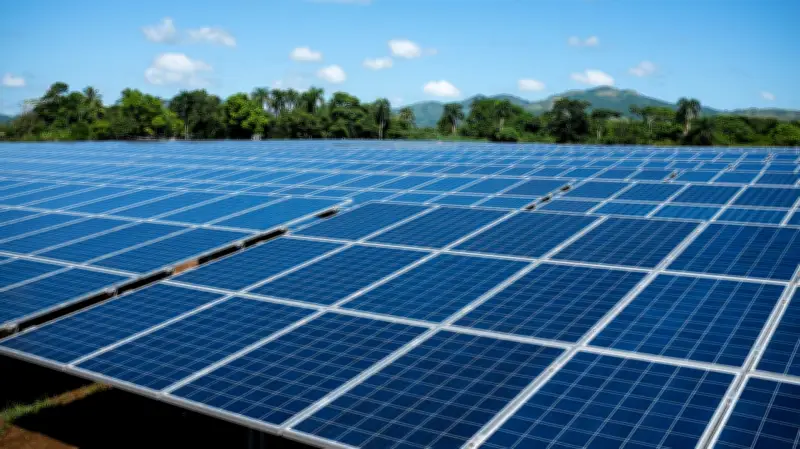
Solar panel imports across 15 African countries surpassed $400 million in the first quarter of 2026, according to a new report, as the continent's energy crisis accelerates the shift to renewable energy. The figure represents a significant increase from previous years, driven by falling panel prices and urgent demand for alternative power sources.
Key Findings from the Report
The report, compiled by energy analysts, reveals that total solar imports reached $412 million between January and March 2026. This marks a 23% increase compared to the same period in 2025, when imports stood at $335 million. The surge is attributed to worsening grid instability and the economic viability of solar installations.
Leading the import surge are Nigeria, South Africa, and Kenya, which together account for over half of the total imports. Nigeria alone imported $95 million worth of solar panels, driven by persistent power outages and the removal of fuel subsidies. South Africa followed with $88 million, as load shedding continues to hamper businesses and households.
Drivers of the Solar Boom
Analysts point to the sharp decline in global solar panel prices as a key factor. Prices have dropped by nearly 30% over the past year, making solar systems more affordable for African consumers. According to the report, the average cost of a residential solar kit has fallen to $1,200, down from $1,700 in 2025.
"The energy crisis in many African countries is no longer a future threat but a present reality," said Amara Okafor, a renewable energy analyst at the African Energy Institute. "Solar imports are rising because they offer immediate relief, especially in regions where grid electricity is unreliable or expensive."
Impact on Local Economies and Energy Access
The influx of solar panels is having a transformative effect on local economies. In rural areas, solar-powered irrigation systems are enabling farmers to increase crop yields, while small businesses are using solar energy to extend operating hours. The report estimates that solar installations created approximately 12,000 new jobs across the 15 countries in Q1 2026.
However, the report also warns of challenges, including the need for proper e-waste management and the risk of dependency on imported technology. "African governments must develop local manufacturing capacity and recycling infrastructure to ensure the long-term sustainability of solar adoption," Okafor added.
Regional Variations and Policy Responses
East African countries, including Tanzania and Uganda, showed the fastest growth in solar imports, with a combined increase of 45% year-on-year. This is partly due to supportive government policies and international development funding. In contrast, North African countries like Egypt and Morocco, which have larger conventional power plants, saw more modest growth of 10%.
Several governments are now revising their energy policies to encourage solar adoption. For instance, Nigeria's Rural Electrification Agency has launched a program to distribute solar home systems to off-grid communities, while South Africa's tax incentive for renewable energy installations has boosted residential uptake.
Outlook for the Rest of 2026
Looking ahead, the report projects that solar imports could exceed $1.5 billion for the full year, if the current trend continues. However, analysts caution that global supply chain disruptions and currency fluctuations could affect prices and availability.
"The momentum is strong, but we need to see more investment in grid infrastructure and storage solutions to maximize the benefits of solar energy," Okafor said. "Solar is not just a stopgap measure; it is a cornerstone of Africa's future energy mix."




