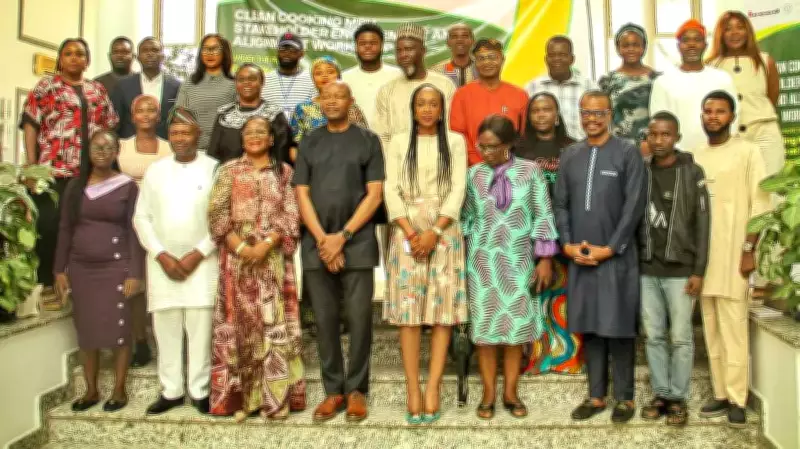
The escalating cost of Liquefied Petroleum Gas (LPG) has forced millions of Nigerian households to abandon cleaner energy options and return to wood and charcoal, triggering severe health and environmental crises across the country. This is the view of stakeholders meeting at the Clean Cooking Monitoring, Reporting and Verification (MRV) Stakeholders Engagement and Alignment Workshop organised by the International Centre for Energy, Environment and Development (ICEED) in partnership with FuelTree, PACE, and the Nigeria Alliance for Clean Cooking, yesterday in Abuja.
They noted that the price of cooking gas, now averaging N1,500 per kilogramme, has made the utility unaffordable for most households. Executive Director of ICEED, Ewa Eleri, revealed that nearly 85 per cent of all domestic cooking in Nigeria is still done using traditional biomass. Eleri lamented that despite robust government policies aimed at expanding LPG adoption, the harsh economic reality has triggered a retrogressive energy migration, with a 12.5kg cylinder now requiring over N20,000 to fill.
He said: “The result is that several households are climbing down the energy ladder. Those who have migrated from wood and charcoal to gas are now coming back to wood and charcoal. We have already noticed a high level of deforestation and emissions from the household sector, with 70 per cent of our total national emissions coming from energy.”
He further underscored the human cost of the energy crisis, disclosing that smoke from traditional kitchens accounts for between 93,000 and 100,000 deaths annually in Nigeria, a mortality rate surpassed only by malaria and HIV with women bearing the brunt.
With the high cost of improved eco-friendly stoves hovering around N30,000 (20 dollars) against a backdrop of stagnant wages, and national sentiments strongly opposed to traditional subsidies, Eleri argued that international carbon finance remains the only viable mechanism to discount the cost of clean stoves for poor Nigerians. He however noted that this market cannot thrive without robust data measurement, reporting, and verification systems.
“Measurement, report and verification is important to uphold this market. The problem we have now includes weak data systems, fragmented coordination, validation delays, and a lack of investor confidence. We are proposing a 36 month action plan to move from conversation to coordination,” he added.
Speaking on the title of the workshop ‘Facilitating Clean Cooking Finance at National and Sub-National Levels’, representative from FuelTree, Dr Bekeme Olowola, stated that Nigeria sits on a massive climate wealth potential, with the capacity to unlock up to 35 billion dollars annually in climate financing through clean cooking. She warned that these billions are completely unbankable without a trusted, digital data infrastructure.
Olowola explained that many global clean cooking projects have crashed commercially because their MRV frameworks relied on manual surveys and human memory, which are prone to inflation and fraud. “We are moving from episodic self reporting to transaction related accounting. MRV is the distinct link between projects and finance. By shifting to digital platforms that provide real time data, digital audit trails, and AI driven continuous verification, we can achieve a 50 to 70 per cent reduction in the cost of MRV, creating immutable data that international investors can trust,” she said.