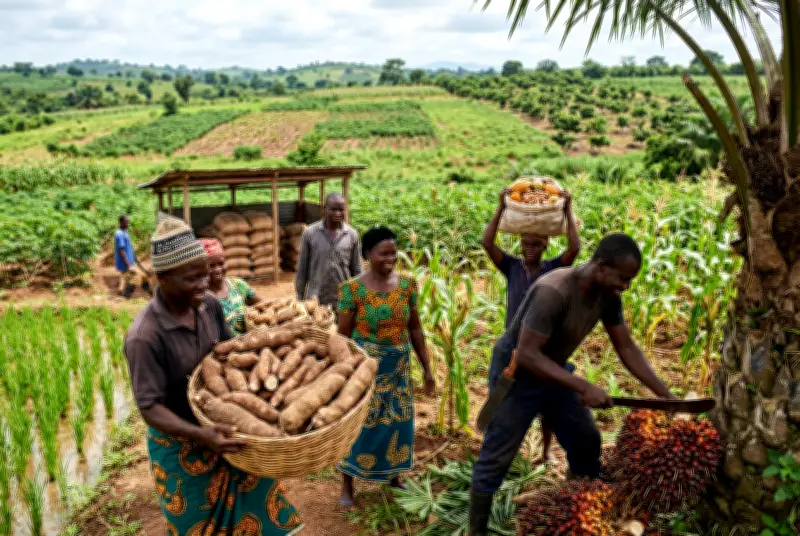
The Central and West Africa Virus Epidemiology (WAVE) Project has called on Nigerian farmers and agricultural stakeholders to adopt comprehensive surveillance and preventive measures to safeguard cassava farms and other crops from viral infections. This alert follows the emergence of a severe form of Cassava Mosaic Disease (CMD) caused by the Ugandan variant of East African Cassava Mosaic Virus (EACMV-Ug) in some West African countries, as well as the prevalence of Cassava Brown Streak Disease (CBSD) in East Africa.
Farmers Field Day on Cassava Virus Management
The warning was issued by Dr. Chukwuemeka Nkere, South-South/South-East Country Director of the WAVE Project, during a One Day Farmers’ Field Day on Cassava Virus Disease Identification and Management. The event was organized by WAVE in collaboration with BIORISKS, the Council for Agricultural Research and Development (CORAF), and the National Root Crops Research Institute (NRCRI) Umudike, Abia State. It took place on Wednesday at the Abia State Agricultural Development Programme (ADP) Office in Umuahia, the state capital.
The Field Day featured lectures, discussions, and demonstrations focusing on best agronomic practices for cassava production, identification of disease symptoms, and the use of disease-free planting materials.
Caution on Potential Outbreaks
Dr. Nkere cautioned that although these two cassava viral diseases are not yet present in Nigeria, they could emerge at any time. He stated, “Viruses don’t require a visa to enter any country. The essence of the farmer field day was to create awareness and educate farmers on steps they should adopt to protect their farms from the diseases in case of any outbreak.” He warned that without proper prevention, the Cassava Mosaic Disease, especially the Ugandan Variant (EACMV-Ug), and Cassava Brown Streak Disease could cause a 100% yield loss, amounting to over $2 billion US dollars annually.
Recommended Preventive Measures
Dr. Nkere advised farmers to always use virus-free materials, source planting materials from certified seed producers, and utilize recommended improved and resistant varieties to reduce or control cassava diseases. He commended the Abia State Government and the state ADP for their commitment to agricultural extension and grassroots farmer engagement, describing the partnership as critical to the successful implementation of disease prevention and management interventions.
He further emphasized that sustained collaboration among all stakeholders in the cassava value chain—including researchers, policymakers, extension workers, National Plant Protection Organizations (NPPOs), and farmers—is essential to protecting cassava production and strengthening food security across the region.
WAVE’s Commitment to Monitoring
Dr. Nkere reiterated WAVE’s commitment to continuous nationwide stakeholder monitoring, advocacy for an efficient early warning system, and the development of a decision support system for rapid response to any disease incursions.
The state ADP Manager, Mr. Okoro Nleanya, who declared the Field Day open, described cassava as one of Africa’s most important food security crops and a major source of livelihood for millions of smallholder farmers. He commended WAVE and co-organizers for partnering with Abia ADP to bring the intervention closer to grassroots farmers, noting that such collaborations are essential for improving agricultural productivity and strengthening food security. According to Mr. Nleanya, the state government’s continued support for agricultural extension services and farmer empowerment initiatives has been very impactful in the state.