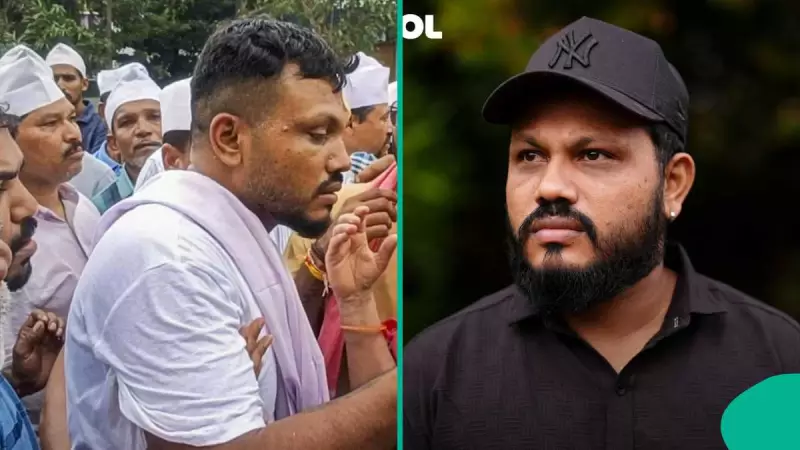
Viswashkumar Ramesh, the only person to survive the catastrophic Air India plane crash that claimed over 241 lives, has given a harrowing account of his ongoing physical and emotional struggle in a new interview with BBC News.
The Ordeal of Escape and Unbearable Loss
Ramesh recounted the terrifying moments following the crash of the Air India Boeing 787 Dreamliner, which was flying from Ahmedabad to London before it tragically went down into a student hostel shortly after takeoff. Despite suffering severe injuries, he managed to unbuckle himself and crawl to safety from the wreckage. His survival, however, came with the devastating loss of his brother, who was also on the flight.
"I still can't comprehend my brother's passing," Ramesh told the BBC. "He used to be my backbone before the crash. I only think of him now; I don't watch anything anymore." He described persistent physical pain in his knee, shoulder, and hand, a constant reminder of the disaster that unfolded on that fateful day.
Life After the Crash: A Battle with Trauma
Since returning to his home in Leicester, Ramesh's life has been dominated by the aftermath of the tragedy. He has been diagnosed with post-traumatic stress disorder (PTSD), a condition that continues to severely impact his daily life. Advisors close to him revealed that the emotional scars have made it exceptionally difficult for him to reconnect with his own wife and son, straining the family bonds that once were his foundation.
His account highlights the profound and lasting impact of such disasters, extending far beyond the immediate physical injuries to deeply affect mental health and family dynamics for years.
Remembering One of Aviation's Darkest Days
The Air India crash is recorded as one of the most devastating aviation accidents in the past decade. The incident resulted in the deaths of all 241 people on board the aircraft and at least 38 individuals on the ground in the hostel. The tragedy sent shockwaves across the globe, marking a somber moment in aviation history.
Ramesh's courageous decision to speak out sheds light on the long-term, often invisible, suffering endured by survivors of major catastrophes. His story is a poignant reminder of human resilience amidst unimaginable grief and the enduring quest for healing.