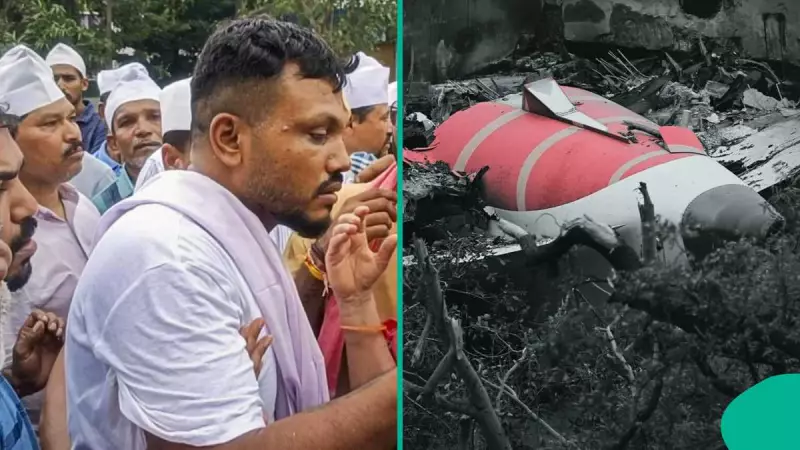
In a tragic event that marked one of the deadliest aviation disasters of the decade, the crash of an Air India Boeing 787 Dreamliner in January 2025 led to a massive compensation process for those affected. The aircraft, travelling from Ahmedabad to London, crashed shortly after takeoff, claiming 241 lives on board and at least 38 on the ground after it hit a student hostel.
Interim Compensation for Survivor and Bereaved Families
The sole survivor of the crash, 40-year-old British-Indian citizen Ramesh Viswashkumar, was set to receive the same interim compensation as the families of the deceased. Air India confirmed in January 2025 that he would be granted ₹25 lakh, equivalent to over ₦43.5 million. This was in addition to a separate ₹1 crore support package announced by Tata Sons.
Similarly, each of the 241 families who lost loved ones in the disaster received an interim payment of ₹25 lakh. Air India stated this payment was to help address immediate financial needs. Combined with the Tata Sons support, this interim aid package totalled nearly ₦2.3 billion. Furthermore, under the Montreal Convention, families were automatically entitled to an additional Rs 1.75 crore without the need to prove fault.
Ground Survivors and Massive Insurance Liabilities
The crash's devastation extended far beyond the aircraft itself. Survivors who were near the medical college hostel at the time of the impact were also covered under the insurance package. The total insurance liabilities encompassed hostel damage and third-party claims.
The insurance fallout was substantial, with the destroyed aircraft alone expected to cost insurers $125 million. Legal experts estimated that passenger-related claims could reach as high as $350 million. While Indian insurers like Tata AIG held a small portion of the risk, the majority was transferred to global reinsurers, including Lloyd’s of London, ensuring compensation reached all affected parties.
Investigation Reveals Chilling Final Moments
Investigators later disclosed unsettling cockpit audio from the flight, registered as Air India Flight 171. The recording captured an eerie exchange moments before the jet crashed on June 12, 2025. As the aircraft lifted off, both fuel-control switches abruptly moved to the 'cut-off' position, causing both engines to fail.
In the audio, one pilot is heard asking, 'Why did you cut off the switches?', to which the other pilot responds, 'I didn't'. This mechanical or human error sequence culminated in a tragedy that triggered one of the most complex compensation and insurance processes in recent aviation history.
The Air India tragedy of January 2025, therefore, was not only a story of immense loss but also of the far-reaching financial and legal obligations that follow such a catastrophe. Compensation extended to three primary groups: the lone survivor, the families of the victims on board, and survivors on the ground, reflecting both humanitarian support and stringent international aviation law.