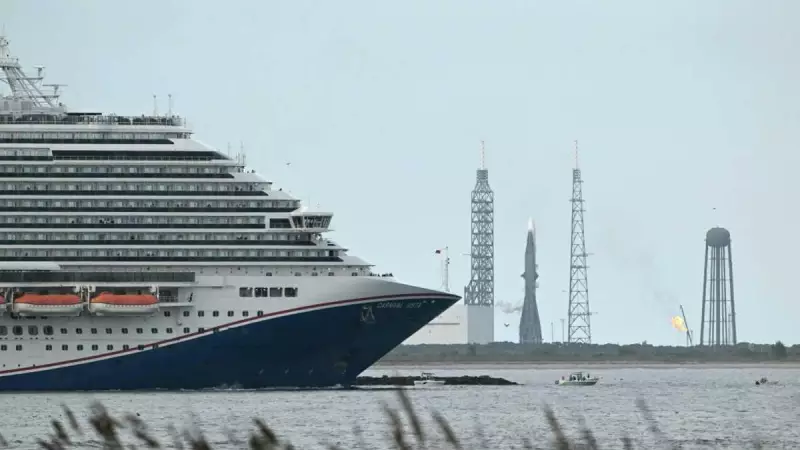
Jeff Bezos's space company Blue Origin has been forced to postpone the highly anticipated launch of its New Glenn rocket due to unfavorable weather conditions at the Space Force Station in Cape Canaveral, Florida.
Weather Woes Ground Historic Launch
The scheduled Sunday launch faced multiple challenges including rain and ground system issues that caused significant delays. As the 88-minute launch window closed, cumulus cloud cover prevented the mission from proceeding, leaving mission managers with no choice but to push back the rocket's planned second mission.
The 322-foot (98-meter) New Glenn rocket was set to carry NASA's ESCAPADE twin spacecraft on a mission to Mars, aiming to study the Red Planet's climate history with the ultimate goal of supporting future human exploration.
Timing Challenges Amid Government Shutdown
Rescheduling the launch presents significant challenges due to the ongoing US government shutdown. The Federal Aviation Administration is implementing restrictions on commercial rocket launches starting Monday to relieve airspace congestion. Blue Origin had previously stated it was seeking an exemption from these FAA limitations.
The postponement comes at a critical time in the intensifying competition between Blue Origin and Elon Musk's SpaceX, with both companies vying for dominance in the commercial space industry.
Booster Recovery: The Key Test
When the launch eventually proceeds, it will serve as a crucial test of Blue Origin's ability to achieve booster recovery - a technical breakthrough that would mark significant progress for the company. While New Glenn's inaugural flight in January was largely successful, with its payload achieving orbit and performing tests as planned, the first-stage booster intended to be reusable failed to land properly on its Atlantic platform and was lost during descent.
Thus far, only SpaceX has successfully mastered booster recovery technology, making this second attempt particularly important for Blue Origin's competitive position in the commercial space race.
Industry Experts Weigh In
George Nield, a senior aerospace executive who has flown with Blue Origin previously, emphasized the high stakes of New Glenn's eventual launch. He told AFP that the outcome would be a clear indicator of "how well they're doing and how much progress they've made" in the competitive space industry.
The competition between the billionaire-backed companies has recently escalated as NASA opened bids for its planned Moon mission, amid complaints that SpaceX was falling behind schedule. Mason Peck, an aeronautics professor at Cornell University and former NASA chief technologist, noted that increased competition between the companies could "expand our options with regard to launch" and bring more innovation to space exploration.
The pressure on space companies has intensified during US President Donald Trump's second term, with the administration pushing NASA to accelerate progress toward a crewed mission to the Moon amid growing competition with China's space program.