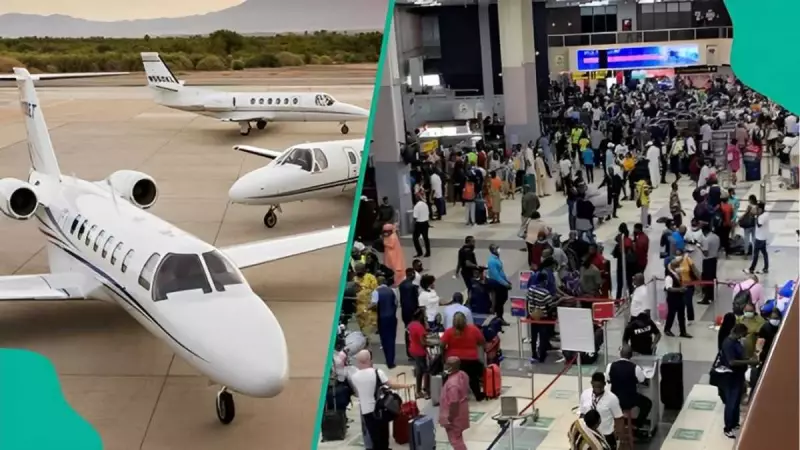
Nigerians planning to travel within the country during the upcoming Christmas and New Year holidays are confronting a severe financial hurdle, with the cost of air travel reaching unprecedented heights. This surge in airfares, coupled with persistent security fears on interstate roads, is forcing many households to reconsider their festive season plans.
Soaring Costs on Key Routes
Data from major carriers reveals a dramatic increase in ticket prices, with fares on popular domestic routes experiencing hikes of up to 150%. Before the festive rush, tickets on most routes averaged around N120,000. However, current prices have breached the N300,000 mark, placing a significant strain on travelers' budgets.
The South-South and South-East regions, which traditionally see the highest volume of holiday travel, are witnessing some of the most expensive fares. A snapshot of current prices includes:
- Lagos to Asaba: Ranging from Air Peace at N337,500 (Dec 24–29) to United Nigeria Airlines at N399,999.
- Abuja to Asaba: Air Peace tickets cost N335,500 (Dec 23–28) and N240,000 (Dec 29–31).
- Lagos to Enugu: Air Peace fares are between N335,500 and N430,700 for travel on December 28 and 29.
- Lagos to Port Harcourt: Priced at N335,500 with Air Peace for travel between December 23 and 29.
Other affected routes include Lagos to Calabar, Lagos to Benin, Lagos to Anambra, and Lagos to Owerri, with United Nigeria Airlines and Aero Contractors also listing fares in the high hundreds of thousands of Naira.
Expert Insight on the Price Hike
Industry analysts point to a confluence of critical factors driving the fare inflation. Dr. Alex Nwuba, President of the Aircraft Owners and Pilots Association of Nigeria, confirmed that airlines are grappling with severe capacity shortfalls. He stated that such shortfalls directly contribute to higher fares during peak travel periods.
The core issues identified include a shortage of serviceable aircraft, limited seat capacity, escalating operational expenses, and the burden of multiple taxation. It is reported that many Nigerian carriers are currently operating with fewer than 40 active aircraft, a fleet size woefully inadequate for national demand.
Echoing the call for intervention, former Director-General of the Nigeria Civil Aviation Authority, Harold Demuren, appealed to the Federal Government to support local operators in boosting their capacity. "The Nigerian government needs to protect the local carriers. You can’t be wrong supporting your own," Demuren emphasized.
Security Concerns Compound Travel Woes
The exorbitant cost of flying is set against a backdrop of heightened security anxieties on the roads. A growing number of Nigerians are opting for air travel out of fear of kidnapping and banditry on interstate highways, a preference that further intensifies demand and pressure on the limited available airline seats.
This situation creates a difficult dilemma for travelers: choose the perceived safety of air travel at a crippling cost or risk road travel amidst rising insecurity. The high fares may ultimately push a significant portion of the population back towards road transport, despite the associated risks.
In a related development aimed at improving airport operations, the Federal Airports Authority of Nigeria (FAAN) has introduced a cashless payment system. Dubbed "Operations Go Cashless," the initiative has been launched at the Murtala Muhammed International Airport in Lagos and the Nnamdi Azikiwe International Airport in Abuja. The system will replace cash transactions at access gates, car parks, and VIP lounges, a move FAAN believes will enhance service quality and efficiency for passengers navigating these challenging times.