
Africa Capital Forum Unites Global Leaders to Chart Nigeria's Economic Path
On March 17, 2026, at The Peninsula London, the Africa Capital Forum convened senior leaders from major global financial institutions, including the Central Bank of Nigeria (CBN), J.P. Morgan, the International Finance Corporation (IFC), and Standard Chartered. This high-level event, held alongside President Bola Ahmed Tinubu's UK state visit, focused on mobilizing long-term capital for Nigeria's economy, themed 'From Stabilisation to Capital Mobilisation.'
CBN Governor Declares Financial System Transformation
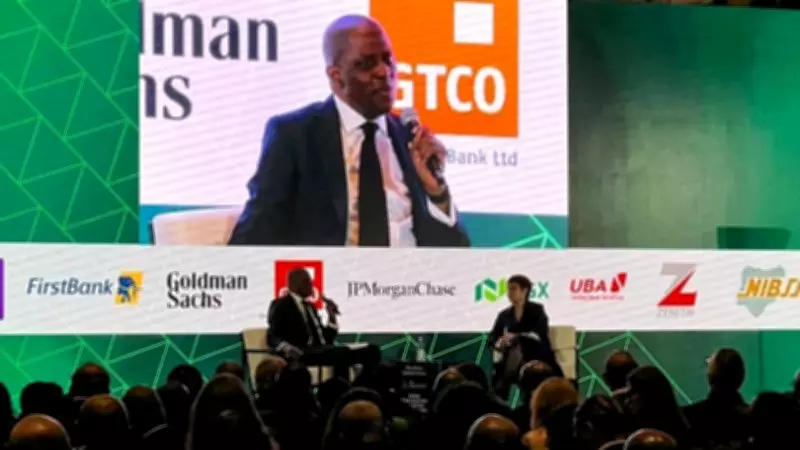
In a fireside conversation with Odile Renaud-Basso, President of the European Bank for Reconstruction and Development (EBRD), CBN Governor Olayemi Cardoso addressed Nigeria's recent economic challenges. He acknowledged that Nigeria faced one of its worst financial crises, with inflation peaking at 37% and excessive money supply. However, he highlighted progress, noting 11 consecutive months of disinflation and improved liquidity. "The financial system we had is dead and buried. What we have now is a new system that has brought liquidity and transparency," Cardoso stated, emphasizing the banking sector's role as ambassadors in Africa and beyond.
International Endorsement and Macroeconomic Stability
Jonny Baxter, British Deputy High Commissioner in Lagos, underscored the UK's partnership with Nigeria, noting that nearly half of capital inflows into Nigeria originate from the UK. He called for converting investor interest into sustainable investments. EBRD President Renaud-Basso endorsed Nigeria's reforms, citing potential in economic stabilisation and demographic growth. CBN Deputy Governor Muhammad Sani Abdullahi reported macroeconomic stability, with foreign reserves exceeding $50 billion and a stabilised foreign exchange market, though caution remains.
Independent validation came from Ravi Bhatia of S&P Global Ratings, who affirmed a positive outlook for Nigeria. Steve Gray of UK Export Finance linked confidence to fiscal transparency, urging recognition of Nigeria's strengths to support its priorities.
Panel Discussions on Capital and Banking Sector
The Forum featured four sessions moderated by executives from Standard Chartered and J.P. Morgan. In the first panel, Chris Chijiutomi of British International Investment distinguished between short-term portfolio flows and long-term patient capital, advocating for more domestic pension funds to sustain development. Olimpia Gjino of IFC described Nigeria as "a very investable country," emphasizing risk management.
CBN Deputy Governor Phillip Ikeazor assured that reforms are designed to endure beyond the current administration, ensuring stakeholder alignment. The second session highlighted banking sector recapitalisation, with Yemisi Edun of First City Monument Bank noting expanded credit capabilities, and Segun Alebiosu of First Bank linking currency reforms to international ambitions. Oliver Alawuba of United Bank for Africa highlighted that over 65% of revenue comes from outside Nigeria, stressing the need to address power issues to boost employment.
Fintech Innovation and Reform Credibility
The third session explored digital infrastructure and fintech's role in mobilising diaspora capital. Luis Oganes of J.P. Morgan noted Nigeria's emergence as a fintech hub in sub-Saharan Africa. Temi Popoola of Nigerian Exchange Group cited technology as a key driver of market flows, while Odunayo Eweniyi of PiggyVest emphasized making investment more accessible.
In the final session, Roosevelt Ogbonna of Access Bank addressed reform fatigue, asserting that credibility from fiscal and monetary alignment mitigates risks. Sanyade Okoli, Special Adviser to the President, called for sticky equity capital to fund growth, noting investor loyalty amid global tensions. Usman Okpanachi of CBN stressed the importance of credible data in building trust, urging the investment community to "follow the data."
The Africa Capital Forum serves as a platform for strategic dialogue on capital mobilisation and financial system development in Africa, bringing together global leaders to shape economic trajectories.




