
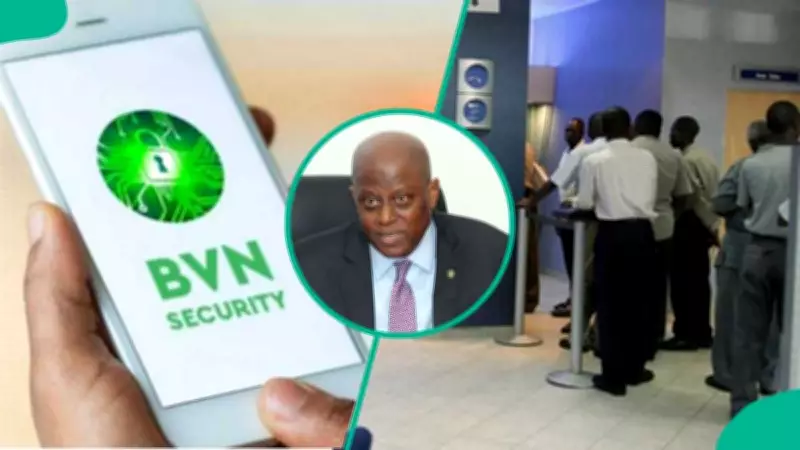
CBN Establishes 18 as Minimum Age for BVN Registration in New Banking Directive
The Central Bank of Nigeria has implemented a significant new regulation that sets 18 years as the minimum age requirement for Bank Verification Number registration. This directive represents a crucial step in the apex bank's ongoing efforts to enhance identity verification protocols and fortify security measures within Nigeria's financial sector.
Implementation and Communication of the New Policy
The CBN formally communicated this policy change through a series of circulars distributed to all banks, financial institutions, and payment service providers on March 12, 2026. Under this updated regulation, only individuals who have reached the age of 18 will be eligible to register for a BVN, which serves as the biometric identification number used throughout the banking industry to uniquely identify customers.
According to the central bank, this measure is specifically designed to tighten customer due diligence procedures and substantially reduce the likelihood that bank accounts could be exploited for fraudulent activities or illicit financial transactions. The policy aims to improve the reliability of the BVN database while strengthening safeguards against identity theft, account manipulation, and various forms of financial crime.
Background and Previous BVN Registration Practices
Prior to this new directive, the BVN framework—originally introduced in 2014 through collaboration between the Central Bank of Nigeria and the Nigeria Inter-Bank Settlement System—did not explicitly establish a universal age threshold of 18 years for enrolment. In practice, banks had been permitted to enrol minors for BVN through accounts opened in their names but managed by parents or legal guardians, particularly for savings products specifically designed for children and teenagers.
In such previous cases, the guardian's details were typically linked to the account while the minor's biometric information could still be captured for identification purposes. The BVN system itself was originally designed to create a single, unique identity for each bank customer across the entire Nigerian banking industry. During standard registration, customers typically provide comprehensive biometric and personal data including fingerprints, facial images, date of birth, phone numbers, and other identifying details.
Alignment with Legal Financial Contract Age Requirements
With this new CBN directive, financial institutions are now expected to ensure that BVN registration is strictly limited to individuals aged 18 and above. This change aligns the BVN registration process more closely with the legal age for entering binding financial contracts in Nigeria, creating greater consistency across financial regulations and practices.
Additional Security Measures Introduced by the CBN
The Central Bank of Nigeria has simultaneously introduced several other significant regulations designed to strengthen security within the banking system and combat digital fraud, with an effective implementation date of May 1, 2026. Under these comprehensive new policies, customers will be permitted to change the phone number linked to their Bank Verification Number only once, a restriction specifically implemented to prevent fraudsters from bypassing essential security checks.
Access to the BVN database will remain strictly restricted to licensed financial institutions, with only limited exceptions permitted by law. The rules also provide customers with the option to opt out of instant transfer services and establish lower personal transfer limits below the current caps of ₦25 million for individual accounts and ₦250 million for corporate accounts.
Furthermore, the CBN has announced a transfer limit of ₦20,000 on newly activated mobile banking applications during the first 24 hours following activation. Banks are also required to enhance identity verification procedures for online account opening and reactivation processes, introduce stronger authentication tools, and restrict mobile banking applications to one device at a time.
Related Developments in Banking Regulations
In a related development, the CBN has issued a separate directive to deposit money banks and payment service providers aimed at improving the acceptance and reliability of foreign-issued payment cards within Nigeria. This initiative addresses long-standing complaints from tourists and Nigerians returning from the diaspora who have frequently encountered difficulties accessing funds using international payment cards.
The directive, contained in a circular dated December 18, 2025, was formally signed by Rita I. Sike, Director of the Financial Policy and Regulation Department at the Central Bank of Nigeria. These comprehensive regulatory changes collectively represent the CBN's multi-faceted approach to strengthening Nigeria's financial infrastructure, enhancing security protocols, and protecting consumers from increasingly sophisticated financial crimes.




