
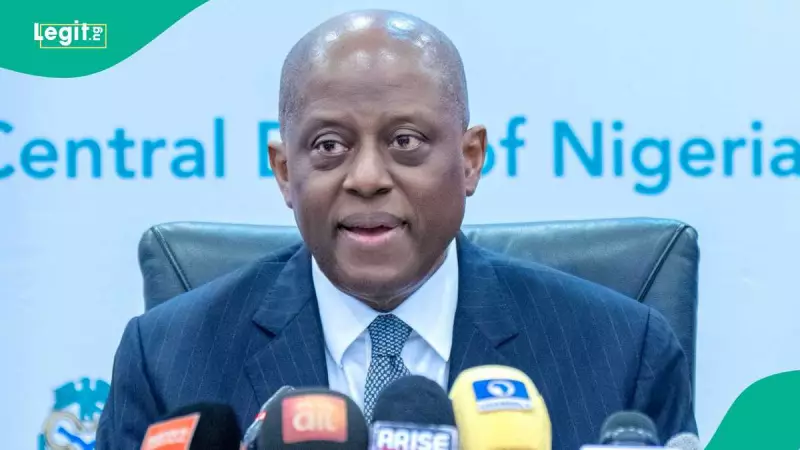
The Nigerian banking landscape is undergoing a seismic shift as institutions race to meet a stringent new capital mandate set by the Central Bank of Nigeria (CBN). In a move designed to fortify the financial system against economic shocks, the apex bank announced in June 2025 that commercial banks must significantly increase their capital bases by March 31, 2026.
The Recapitalisation Framework: A Tiered Approach
The CBN established a tiered minimum capital requirement, compelling banks to bolster their financial foundations. International banks must now hold a minimum of ₦500 billion, while national banks are required to have ₦200 billion. Regional banks face a ₦50 billion threshold, with non-interest banks also subject to revised benchmarks.
This directive, issued under the leadership of CBN Governor Olayemi Cardoso, aims to enhance the banking sector's resilience, boost its capacity to support economic growth, and improve its competitiveness both within Africa and on the global stage.
Frontrunners: Banks That Have Scaled the Hurdle
As the year draws to a close, the CBN has confirmed that a significant number of institutions are already compliant. Reports indicate that 16 banks have successfully met or exceeded their respective capital requirements well ahead of the deadline.
The list of compliant banks showcases a mix of industry titans and agile newcomers:
- Access Holdings (Access Bank) and Zenith Bank were among the first giants to surpass the ₦500 billion mark for international authorisation.
- Guaranty Trust Holding Company (GTBank) and Ecobank Nigeria completed substantial capital raises to achieve compliance.
- Stanbic IBTC Holdings, Wema Bank, and Fidelity Bank are also on the list of institutions that have cleared the hurdle.
- Notably, Premium Trust Bank has emerged as one of the youngest banks to successfully meet its capital target.
Other banks that have scaled the recapitalisation test include Providus Bank, Greenwich Merchant Bank, Lotus Bank, Polaris Bank, Unity Bank, Jaiz Bank, and Union Bank following its merger with Titan Trust.
These institutions have utilised a variety of strategies to raise capital, including rights issues, public offerings, private placements, and strategic mergers or acquisitions.
Banks Still in the Race Against Time
While progress is evident, not all banks have crossed the finish line. Several institutions remain actively engaged in capital-raising efforts to meet the 2026 deadline.
FBN Holdings, the parent company of First Bank, has secured significant capital but reportedly still has work to do to fully meet the ₦500 billion target for its international licence.
FCMB Group is progressing with a major public share offer, and Sterling Bank is incrementally boosting its capital base. The situation appears more pressing for the local operations of Standard Chartered Bank and Citibank, which are said to lag considerably behind the requirements.
Banks that fail to meet the deadline face potential consequences, including licence downgrades, a transition to a smaller licence category, or even an exit from the Nigerian market. This pressure is accelerating discussions around consolidation within the sector.
Broader Impact and Sector Transformation
The recapitalisation exercise is reshaping Nigeria's banking industry in profound ways. Financial analyst Osas Igho predicts that "Nigeria's financial sector will come out stronger and globally competitive" at the end of the process.
The capital raises have injected vitality into the financial markets, with rights issues and public share sales attracting substantial investment. Furthermore, the strengthened capital bases are expected to enhance market confidence, enabling banks to better absorb shocks and increase lending to critical sectors like manufacturing, agriculture, and infrastructure.
Perhaps the most significant structural effect is the wave of consolidation. Legit.ng reports that merger talks are already underway, with one regional and one national bank engaged in discussions that could be finalised in the coming months. This trend suggests the banking landscape may become leaner but more robust, as smaller banks seek partnerships with stronger entities to survive.
As the March 2026 deadline approaches, the Nigerian banking sector's journey towards greater capital adequacy and resilience continues to unfold, marking a pivotal chapter in its development.




