
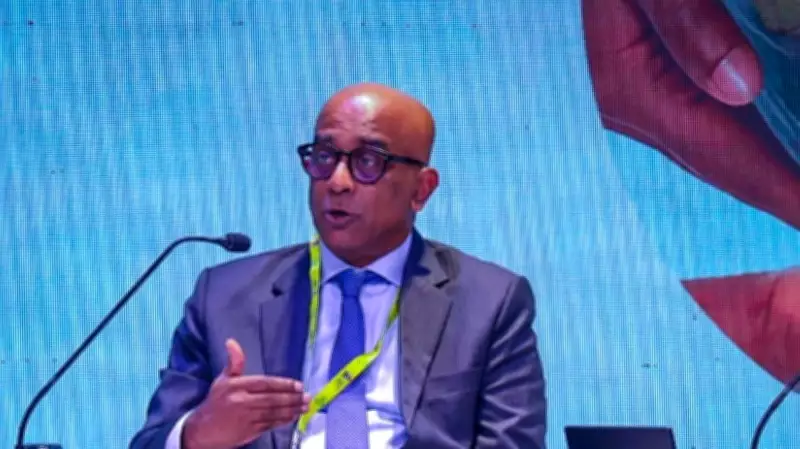
World Bank Director Emphasises Productive Investment as Key to Nigeria's Banking Recapitalisation Success
The Country Director of the World Bank in Nigeria, Matthew Verghis, has declared that the effectiveness of Nigeria's ongoing banking recapitalisation exercise will be measured by how well the funds raised are directed into productive investments that spur tangible economic outcomes. Speaking at the 2026 Economic Roundtable organised by Agusto & Co, Verghis highlighted that the country's transition from economic stabilisation to growth depends critically on this deployment.
Capital Alone Insufficient Without Strategic Deployment
"The real measure of recapitalisation will lie in how effectively savings are channelled into productive investment, determining whether national ambition translates into tangible economic achievement," Verghis asserted. He stressed that strengthening financial intermediation is paramount during Nigeria's current economic phase, noting that capital accumulation alone will not deliver sustainable growth unless it is efficiently and strategically utilised.
At the same event, Agusto & Co reported that Nigeria's banking sector has successfully raised approximately N2.5 trillion as the recapitalisation initiative nears completion, marking one of the most significant structural reforms in the financial industry in nearly two decades. However, the firm cautioned that while meeting capital thresholds has been a primary focus, the more urgent issue now is ensuring these funds are deployed to actively support economic growth and development.
Addressing the Critical Gap in Financial Intermediation
According to Agusto & Co, this recapitalisation is a forward-looking reform designed to bolster the financial system, especially as exchange rate volatility and inflation have eroded capital buffers in real terms. Simultaneously, the demands of a growing economy necessitate stronger bank balance sheets. The firm pointed out that the exercise raises deeper questions about financial intermediation, revealing that domestic credit to the private sector remains disproportionately low compared to peer economies.
Loans currently account for only about one-third of banking assets, reflecting a substantial gap between available capital and its actual deployment into the real sector. Agusto & Co warned that banks will face mounting pressure to lend more effectively as shareholders seek returns on the expanded capital bases, making strategic allocation imperative.
MSMEs and Infrastructure Identified as Priority Areas
The firm identified financing for micro, small and medium enterprises (MSMEs) and infrastructure as key domains where the impact of recapitalisation will be truly determined. MSMEs constitute 97 per cent of businesses in Nigeria and contribute roughly half of the nation's gross domestic product (GDP), yet less than five per cent have access to formal credit, leaving a staggering N13 trillion financing gap.
Recapitalisation will only achieve its intended purpose if capital is channelled to these businesses, particularly women-led enterprises and agribusinesses, which remain severely underserved. Agusto & Co emphasised that de-risking tools such as credit guarantees, fintech partnerships, and innovative financing models are essential to bridge the divide between capital availability and real sector demand.
Infrastructure Deficit and Risk Mitigation Strategies
Regarding infrastructure, the firm noted that Nigeria continues to grapple with a significant deficit despite growing demand from its expanding population. While recapitalisation has enhanced banks' capacity for large transactions, long-term projects remain vulnerable to macroeconomic and currency risks. Mechanisms like infrastructure credit guarantee platforms could help improve risk allocation, project preparation, and investor confidence, thereby facilitating more substantial investments in this critical sector.
Agusto & Co maintained that recapitalisation should not be viewed as an end in itself but as a structural reset aimed at supporting risk absorption, strengthening capital markets, and driving inclusive, sustainable growth. The roundtable concluded that while capital has been successfully raised, the greater challenge now lies in ensuring it is deployed to support businesses, infrastructure, and build a more resilient and dynamic economy for Nigeria.




