
The Rich History of Nigeria's Currency: From Barter to Banknotes
The Nigerian naira, a symbol of national identity, boasts a deep historical lineage that predates the country's independence on October 1, 1960. This article delves into the fascinating evolution of Nigeria's monetary system, highlighting the first means of payment, the introduction of various banknotes, and the reasons behind their color changes over time. It also sheds light on the Nigerian leader whose portrait first graced a naira note, offering a comprehensive look at the nation's financial heritage.
Pre-Colonial and Colonial Exchange Systems
Before Nigeria's independence and during the colonial era, a diverse array of materials and goods served as media of exchange, payment, and debt settlement. Items such as salt, beads, and cowries were commonly used in transactions, reflecting a barter-based economy that laid the groundwork for more formal currency systems. This period underscores the adaptability and resourcefulness of early Nigerian societies in facilitating trade and commerce.
The Introduction of Shillings and Pence
According to information from the Central Bank of Nigeria (CBN), the history of Nigeria's first official currency dates back to the 18th century under colonial rule. In 1880, Shillings and Pence were adopted as the inaugural legal tender, introduced by Britain in West Africa. At that time, the region was a British colony, not yet known as Nigeria. These denominations, distributed by the Bank for British West Africa, remained in use until 1912, when a new currency system was implemented.
The Transition to Pounds and Coins
In 1912, the West African Currency Board (WACB) introduced the Pound as a higher-value currency, alongside the continued use of shillings in coin form. This change was extended to other British-controlled territories, including Ghana, Sierra Leone, and the Gambia. The pound was issued as banknotes, with the highest denomination being £1, while shillings represented the highest coin value, marking a significant step in Nigeria's monetary development.
Post-Independence Currency Developments
Ahead of Nigeria's independence, a new currency was introduced in 1959, bearing the inscription "Federal Republic of Nigeria." This banknote remained in circulation until 1968, symbolizing the nation's emerging sovereignty. In 1973, a major shift occurred as the federal government transitioned from the pound to a decimal system, introducing the naira as the new official currency. At its inception, 1 naira was equivalent to 1 shilling, streamlining the monetary framework.
Key Milestones in Naira Banknotes
On February 11, 1977, the 20 naira (N20) note was introduced to enhance economic efficiency and facilitate better transactions. This banknote was historic as it featured the first image of a Nigerian leader, General Murtala Ramat Mohammed. Subsequently, on July 2, 1979, new denominations of N1, N5, and N10 were issued. In 1984, the colors of all banknotes, except the 50 naira note, were altered to address economic challenges, such as counterfeiting and hoarding.
Modern Naira Notes and Recent Changes
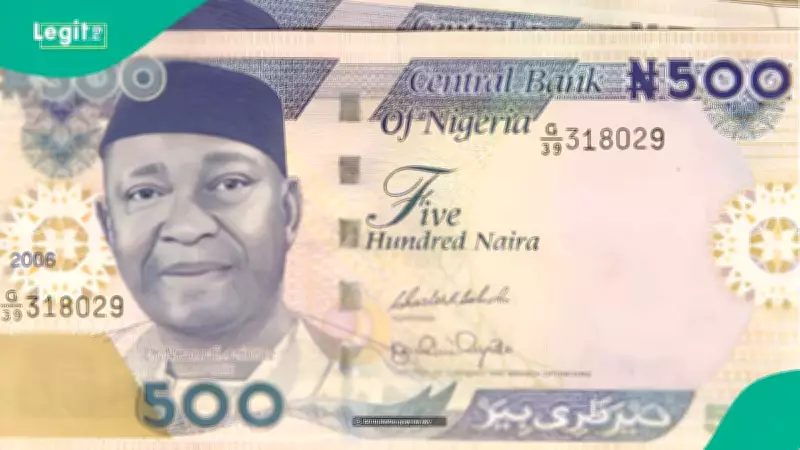
To promote a faster and more effective payment system, higher denominations were introduced in later years. The N100 note debuted in December 1999, followed by the N200 in November 2000, the N500 in April 2001, and the N1000 in October 2005, which remains the highest banknote today. In 2022, the colors of the N1000, N500, and N200 notes were changed to combat issues like hoarding, counterfeiting, and shortages, ensuring the currency's integrity and availability.
Notable Anecdotes and Public Reactions
In related stories, some Nigerians have faced challenges with damaged naira notes stored at home, highlighting the importance of proper currency handling. For instance, a man brought a metal box of ruined notes to a bank in hopes of salvaging them, while others discovered bundles of N1000 notes destroyed in sacks. Additionally, a young Nigerian attracted attention by inquiring about exchanging old naira notes from 2007 left by his late grandfather, sparking public interest and humorous bank responses.
This journey from shillings and pounds to the modern naira reflects Nigeria's economic resilience and adaptation, offering valuable insights into the nation's financial evolution and cultural identity.




