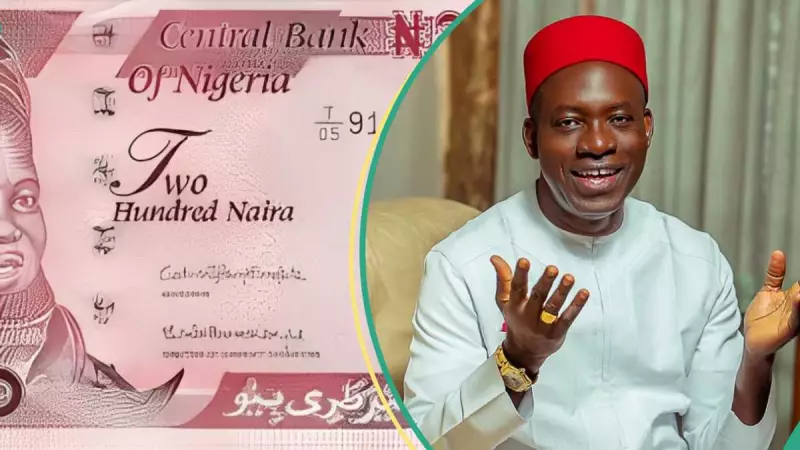
As Anambra state voters head to the polls for the 2025 governorship election, attention has turned to Governor Charles Soludo's past actions as Central Bank of Nigeria governor, particularly regarding the removal of Arabic inscriptions from naira notes.
The Social Media Claim and Its Verification
An X user, Faith Olamide @duke_of_mosho, recently claimed that Governor Soludo removed Arabic inscriptions from Nigerian banknotes during his tenure as CBN governor. The user further asserted that a subsequent CBN governor reinstated the Arabic texts.
According to verified reports from multiple media sources and fact-checking platforms, the federal government indeed removed Arabic script from some lower-denomination naira notes in February 2007. The official explanation cited that Ajami-derived Arabic phrases were no longer necessary since most Nigerians could read and write in English.
Official Reasons Behind the Removal
The Nigerian government provided two primary justifications for this significant change in currency design. First, authorities argued that the removal aligned with Nigeria's 1999 constitution and represented a move to deepen national unity.
Second, the government maintained that Arabic script had become redundant given the widespread literacy in English among the Nigerian population. This decision affected several lower-denomination notes circulating at the time.
Soludo's Role Confirmed
Records from the Central Bank of Nigeria confirm that Charles Soludo served as CBN governor when this policy shift occurred. His tenure from 2004 to 2009 placed him at the helm of the apex bank during the controversial removal of Arabic texts from currency.
The timing of this revelation coincides with the Anambra state governorship election held on Saturday, November 8, 2025, where Governor Soludo seeks re-election against candidates including Nicholas Ukachukwu.
Election Context and Public Opinion
As campaigns and rallies concluded ahead of the crucial election, social media discussions about candidates' past records intensified. The Arabic inscription controversy emerged as part of broader conversations about Soludo's legacy in public service.
Meanwhile, security agencies including the EFCC have intensified efforts to prevent vote-buying in Anambra state. Residents across the southeast region prepared to elect their governor for the next four-year term amid heightened political activity.
In related developments, a Legit.ng poll revealed social media predictions about potential winners of the tightly contested election, while political analyst Donald Okwuosa shared his expectations for the election outcome.