Minimum Wage Crisis Deepens as 20 Nigerian States Fail to Implement ₦70,000 Salary
Nearly two years after President Bola Tinubu signed the ₦70,000 minimum wage into law, a staggering twenty Nigerian states continue to delay full implementation, leaving thousands of workers across the country struggling with outdated salary structures. The policy, approved in July 2024 to combat rising inflation and economic hardship, has faced significant resistance at state level despite federal mandate.
Nationwide Non-Compliance Sparks Labor Unrest
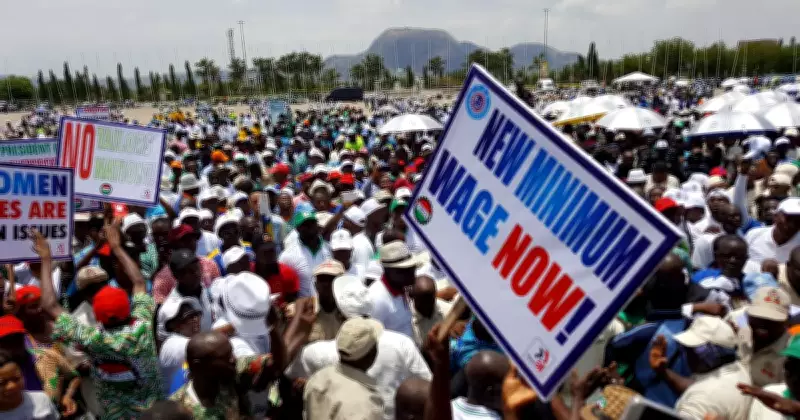
The Nigeria Labour Congress (NLC) has issued a stern warning that states failing to implement the minimum wage will face mass protests on May Day 2026. This confrontation looms as workers in affected states report continued payment of the previous ₦30,000 minimum wage or only marginal increases, particularly at local government and education sector levels.
While some states like Akwa Ibom moved swiftly to implement and even exceed the benchmark, others have cited financial constraints and ongoing negotiations as reasons for delay. The situation has created a patchwork of wage standards across Nigeria, effectively establishing different minimum wages depending on geographical location.
Understanding the ₦70,000 Minimum Wage Policy
The new wage law, which more than doubled the previous ₦30,000 baseline, resulted from extensive negotiations among the Federal Government, labor unions, and the National Assembly. However, implementation requires each state government to undertake three critical steps:
- Agree on the specific salary structure adjustments
- Revise existing salary scales accordingly
- Secure sustainable funding for increased wage bills
These procedural requirements have become the primary bottleneck, with many state governments struggling to complete the process nearly two years after the law's enactment.
States Lagging Behind in Implementation
Based on labor union reports, media investigations, and government disclosures, the following twenty states have not fully implemented the ₦70,000 minimum wage across all sectors:
- Plateau
- Kebbi
- Sokoto
- Nasarawa
- Bayelsa
- Osun
- Ekiti
- Zamfara
- Benue
- Enugu
- Taraba
- Gombe
- Niger
- Bauchi
- Katsina
- Kaduna
- Cross River
- Yobe
- Oyo (delayed rollout)
- Imo (partial implementation)
The implementation gap varies significantly among these states. Some have not approved the wage at all, while others have implemented it partially, often prioritizing state-level workers while neglecting local government staff, teachers, and health workers.
Current Payment Disparities Across States
In several affected states, particularly at local government levels, workers continue to receive the old ₦30,000 minimum wage or only slightly higher amounts. Some states have made incremental adjustments rather than fully adopting the ₦70,000 benchmark.
Notable disparities include:
- Kaduna, Gombe, and Borno are not paying the full wage to local government workers
- Imo, Cross River, and Yobe have been flagged in labor reports for incomplete rollout
- Meanwhile, some progressive states are paying above the benchmark: Lagos (approximately ₦85,000), Ogun (around ₦77,000), Kogi (about ₦72,500), and Imo (up to ₦100,000+ for certain categories)
Root Causes of Implementation Delays
Several governors have publicly insisted they cannot sustain the increased wage bill given their states' financial constraints. The enforcement mechanism presents another challenge: while the federal government sets the wage standard, individual states control implementation, creating a governance gap.
This situation means two Nigerian workers performing identical jobs can earn dramatically different salaries: ₦30,000 in one state, ₦70,000 in another, or even more than ₦70,000 elsewhere. This inequality explains why the NLC is escalating pressure on non-compliant states, with mass protests planned unless implementation accelerates significantly.
The minimum wage crisis highlights broader issues of fiscal federalism and workers' rights in Nigeria, with thousands of public sector employees caught between policy promises and implementation realities nearly two years after legislative approval.