
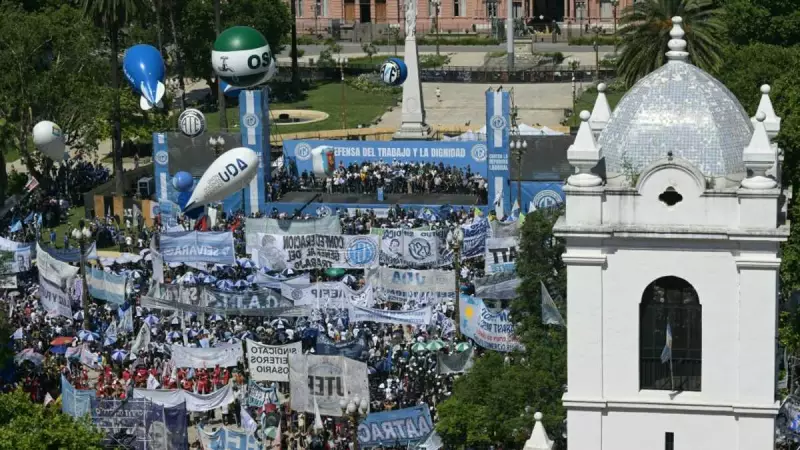
Thousands of Argentine workers took to the streets of Buenos Aires on Thursday in a major demonstration against President Javier Milei's controversial plans to overhaul the nation's labour laws.
What the Protests Are About
The massive protest was organised by the country's largest union, the General Confederation of Labor (CGT). Union leaders and members argue that the proposed reforms, which are currently being examined by a Senate committee, will severely weaken workers' rights and protections.
The labour bill, which began its legislative journey on Wednesday, includes several contentious provisions. It proposes reducing severance pay for dismissed employees and allows for workdays to be extended up to 12 hours. Furthermore, it seeks to lower employers' social security contributions and expands the list of sectors considered "essential," where the right to strike would be heavily restricted.
Government's Stance vs. Union Fears
President Milei's government defends the reforms as necessary to liberalise Argentina's economy. Officials claim the current laws are too rigid and discourage formal, on-the-books hiring. They point out that nearly 40 percent of the Argentine workforce is currently employed informally, without legal registration or protections.
In a recent television interview, President Milei stated, "We are not going to take away anyone's rights," arguing that the changes would ultimately bring more people into the formal job market. The government also says employers would need worker consent for some flexible conditions, like paying part of wages with food vouchers.
However, the CGT and centre-left opposition are not convinced. They fear that workers, anxious to keep their jobs in a tough economy, will feel pressured to accept unfavourable terms without real power to object.
Voices from the Ground
Julio Barroso, a 51-year-old chemical plant worker and union representative who joined the protest outside the presidential palace, captured the mood of many. "The reform is about pitting one worker against another," he said, highlighting concerns that the changes could create a more divided and vulnerable workforce.
The protests come as President Milei, a firebrand libertarian, feels emboldened after his party's success in the October midterm elections. His drive to deregulate the economy is now facing one of its most significant public challenges from the organised labour movement, setting the stage for continued political conflict.




